Oct 19, 2026Guides
Where Real Buyer Inquiries Come From: Three Channels, Three Jobs
Platforms, trade data and search-plus-social are not rivals — they answer three different questions. The mistake is asking one channel to do all three jobs.

A question that keeps resurfacing in trade communities: where do real buyer inquiries actually come from? The answers offered are lists — registers, platforms, social networks, trade shows — and lists create a false choice, as if one channel must be found and the rest abandoned. The useful way to read the question is not which channel but which job: buyer sourcing is several different jobs, and each channel is good at one of them.
This guide separates the three jobs and maps the channels to them. It is about allocation rather than tactics — the tactics for a single channel belong in a separate playbook. Get the allocation right and each channel stops being a gamble.
Job one: the inquiry queue
Some buyers arrive with an intention already formed — they are looking, they have a need, and they are browsing. B2B marketplaces and directory platforms are built for exactly this job: they aggregate buyers who are actively searching, and the platform's own flow handles the first contact. The strength is that intent exists; the limit is that the same buyers are visible to other sellers on the platform, and the buyer is choosing among them.
Buyer tip: treat platform inquiries as a queue to be answered fast and well, not as a strategy. The channel's economics reward response time and specificity rather than volume of listings.
The platform's own rhythm is worth respecting: an inquiry queue rewards whoever answers first and answers specifically, and punishes whoever treats the queue as a list to be worked later. The channel's tempo is set by buyers, not by the seller's calendar.
Job two: evidence-built lists
Some buyers keep their requirements out of public view. They simply import, quarter after quarter, and their buying is visible mainly through records where the market publishes them. Trade data answers a different job — not who is asking, but who has demonstrably bought — and the evidence changes the approach: a list built from observed movement needs no permission to exist, and a first message can cite what the record shows.
Buyer tip: the question to ask of this channel is not how many rows it returns but whether the rows prove buying activity. Evidence of movement is the asset; the contact details are the bridge, and the bridge has its own workflow.
One warning about the evidence channel: it rewards patience more than speed. Records show past movement, so a company that bought last year and stopped needs a question rather than a pitch, and a company moving steadily needs a letter that respects what the rhythm implies. The channel works when read, not when scraped.
Job three: reach people your list does not contain
The third job is discovery beyond both platforms and records: finding companies and people that neither the marketplace nor the record set surfaces. Search engines and professional networks answer this — not as a primary channel but as an extension, useful for filling gaps in a shortlist, verifying a role, or finding a company that has not yet appeared in trade records.
The cost of misassignment
The classic mistake is paying for one channel to do three jobs — for example, buying trade data and expecting it to deliver the stream of ready inquiries a marketplace provides, or sitting on a marketplace and expecting it to produce a strategic buyer list. Each channel's disappointment is the other channel's job, mis-assigned.
Buyer tip: write your channel plan as three sentences — this channel does this job, with this budget, checked this often. A plan with one channel named twice is a plan missing a job.
How the three fit one week
A workable weekly rhythm separates the jobs before it assigns any hours: a short daily pass on the inquiry queue, because response speed is the marketplace's currency; one evidence-list session, building or refreshing the roster from records; and a discovery block only when a shortlist has a hole. The order matters less than the separation — three jobs, three blocks, no block pretending to be another.
The assignment also makes budget conversations easier. Each channel's spend is tied to a job with its own measure, so a disappointing quarter can be traced to the block that missed rather than to sourcing as a whole. That traceability is what stops a single bad channel from taking the whole budget down with it.
Each channel on its own measure
Judging channels by a single metric — leads per month — hides the differences that matter. The inquiry queue is measured by response time and conversion; the evidence list by how many accounts survive qualification; discovery by how many gaps it closed. Each channel gets judged on the job it was assigned, and a channel that fails its own job is replaced or dropped without touching the others.
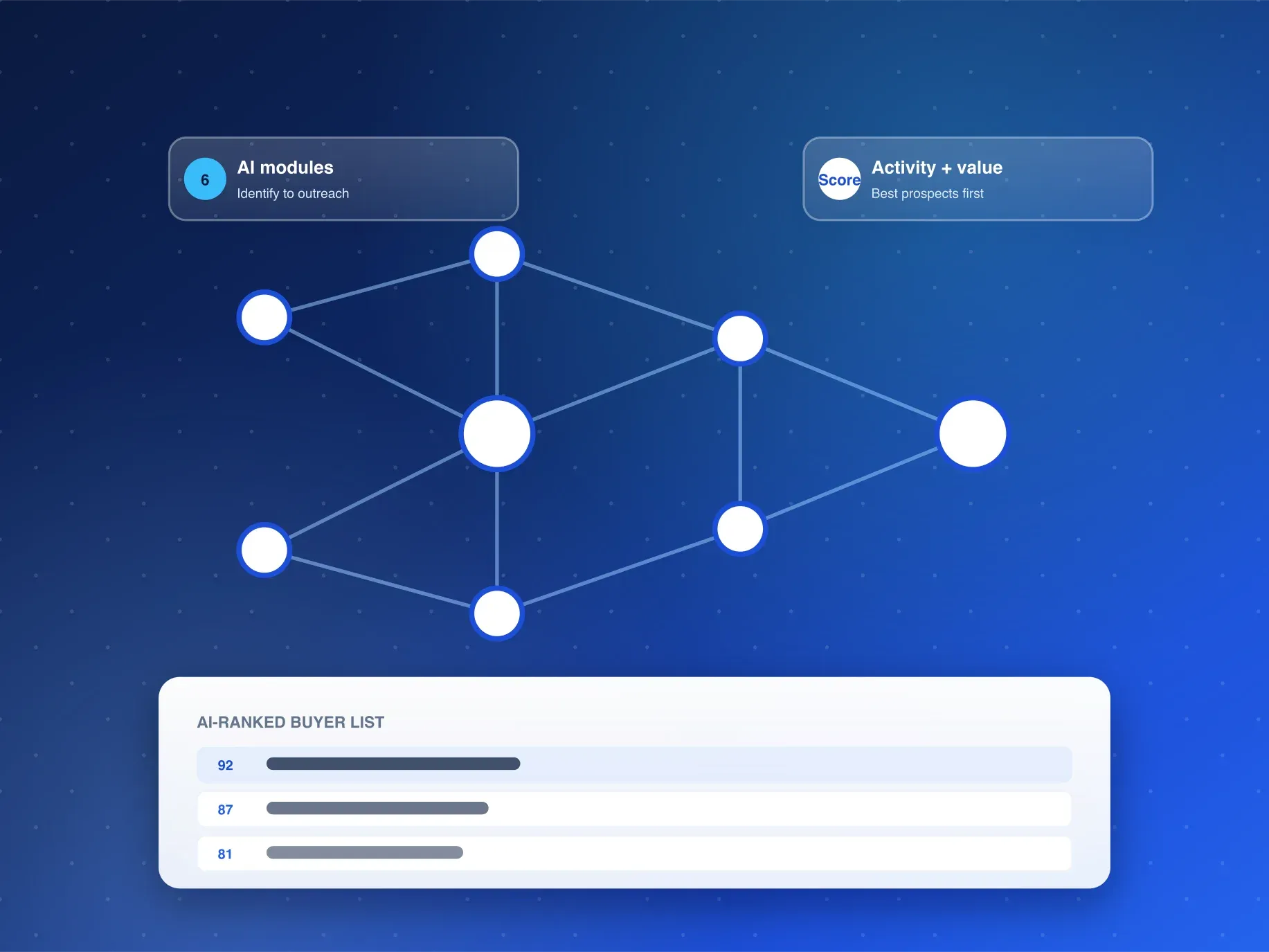
Where the evidence channel scales, the reading and scoring pass can be handed to the AI Buyer Discovery Suite — identification, activity and opportunity value, market recommendation, similar-buyer discovery, outreach lists with emails and WhatsApp contacts, and competitor buyer detection — so the hours saved stay on the queue and the judgment.
Frequently Asked Questions
Do marketplaces produce more inquiries than other channels?
They can, because they aggregate existing intent. But the advantage is shared: those inquiries are also visible to other sellers on the platform, while evidence-built lists rest on documented buying.
Can trade data replace a marketplace?
No — they do different jobs. A marketplace answers who is asking; trade data answers who has bought. A campaign can run on the second alone, but it should not expect the first's ready-made intent.
How do I test the evidence channel on my category?
Testing it is cheap: ask for a sample using the inquiry form or WhatsApp. The answer comes inside a day (Mon-Sat, GMT+8), carrying records for your product line; the rows themselves show whether buying is visible before you commit hours.
Stop making one channel do three jobs — assign each its own. Get a free sample from Customsdatas and test the evidence job on your own category.