Oct 17, 2026Guides
What Each Field in a Customs Record Actually Licenses
A declaration line is not a lead, a market or a trend — it is a set of fields, each with its own evidential weight. Read them one at a time and the line stops overpromising.
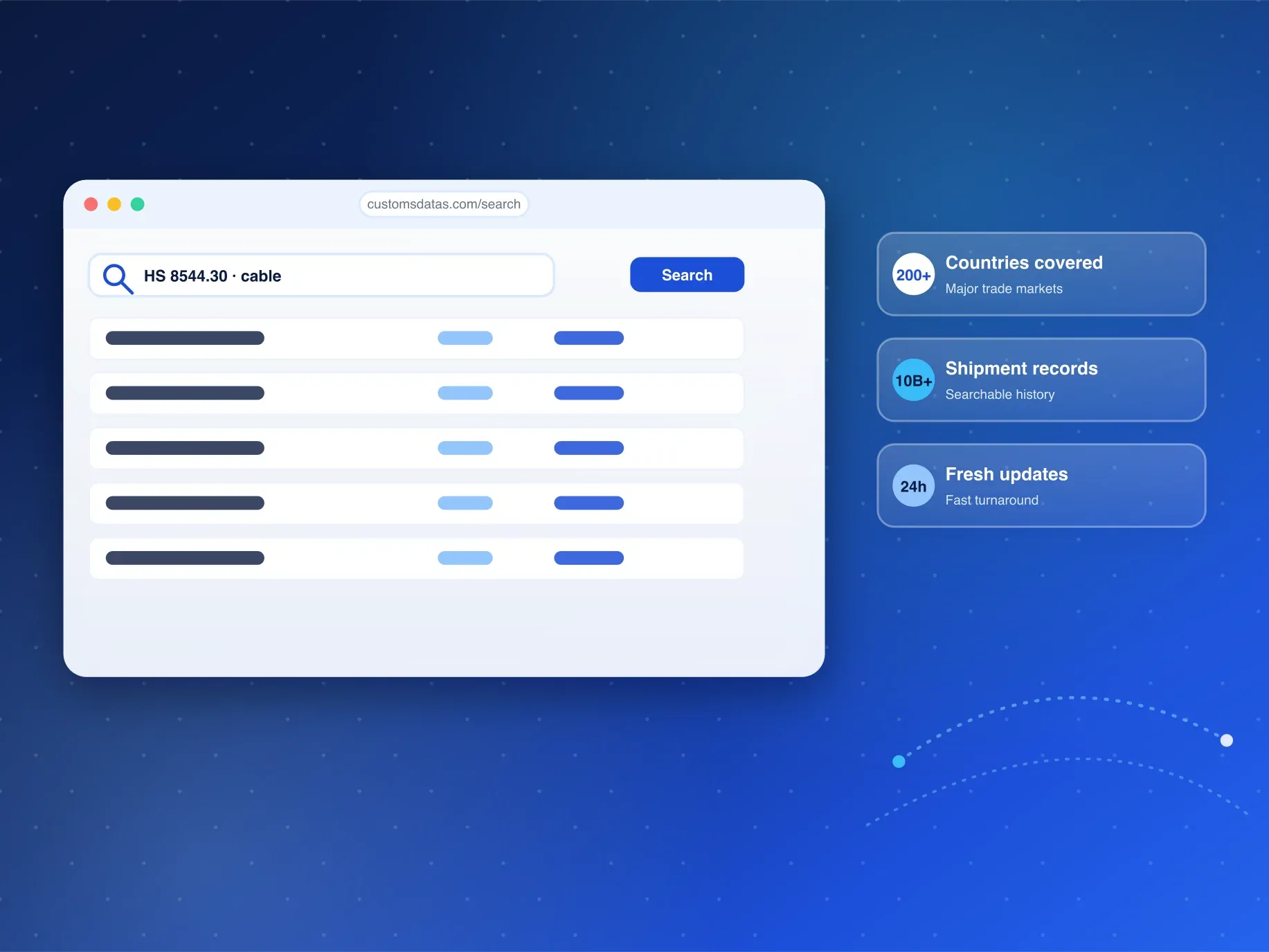
Ask a beginner what a customs record tells them and the answer is usually everything — who bought, what they bought, how much, when. Ask a careful reader the same question and the answer is more interesting: each field tells you exactly one thing, and most of the misreads in trade data work come from asking a field to carry more than it was built to carry. This guide walks the fields of a declaration line one at a time, with the question each one licenses and the questions it does not.
One framing note before the fields: field sets vary by market, and what a given market's records carry is settled by a sample against current records, not by assumption. The anatomy below describes the structure of a commercial trade record wherever those fields exist; treat it as a map of what to look for, not a promise about any specific market.
The item line and its sequence number
A declaration can carry several goods, and each one gets a sequence number — an item line. That number means almost nothing on its own, and everything in combination: it is the anchor that keeps the other fields attached to the right goods. A quantity that belongs to line one read against the description on line two is how a wrong conclusion starts. When field names differ across markets, the item line is still the thing to look for first — without it, the other fields are loose.
Buyer tip: when you read a record, read it line by line, not field by field. A single field column pulled out of its line is exactly how quantity gets matched to the wrong product.
The description: what was said, not what is
The product description is what the declarant wrote — commercial wording, sometimes abbreviated, sometimes with brand or model references. It licenses a reading of what the goods were called. It does not license a conclusion about specifications: two products with the same description can differ in material, capacity or grade, and the description will not show it. Where a question turns on specification, the description is a signpost, not the answer.
The code: a classification, not a catalogue
The HS code is the classification the goods were declared under, which is a statement about the goods' category in a legal tariff sense — not a product catalogue entry. A code can cover a family of related products, and one product can appear under more than one code across markets or over time. What the code licenses is comparability: within one code and one market, rows are comparable with each other. Across codes or markets, the comparison needs care.
Quantity, weight, value: three different rulers
These three fields look like variations on one number and are not. Quantity counts units; weight measures mass; value measures declared worth. Each licenses a different comparison: quantity for units of the same product, weight for logistics and density, value for placing a flow economically. The triple read is the discipline — a flow light in weight but high in value, or heavy and cheap, tells you which kind of product and which kind of buyer you are looking at.
Buyer tip: never substitute one ruler for another in silence. Converting quantity to weight or value to volume without saying so produces numbers the record never contained — and those numbers travel into presentations.
The parties: who is named and in which role
Party fields, where a record carries them, name the registered participants of the transaction, and the role matters as much as the name: the buying side and the selling side are different parties with different reasons to talk to you. What a party field licenses is an identity — this company participated in this movement, in this role. It does not license a conclusion about the company's size, its decision-makers, or whether it will take a meeting. Those are separate questions with separate work.
One habit makes the party fields usable: write the role beside every name you keep. A shortlist where roles are unnamed mixes buyers, sellers and intermediaries into one column, and the first outreach round discovers the mixture for you.
The date, and the series it joins
The date field places the movement in time, and its meaning depends on which date the record carries — declaration, arrival, or some other event. What it licenses is a reading of rhythm when you have several rows: spacing between dates shows cadence. A single date licenses almost nothing about the present; a series of dates licenses a pattern, and only a pattern makes the time field useful.
A line, assembled
The fields only become an instrument when read as a line: item anchored, description and code defining the category, the three rulers giving scale and texture, the parties attaching identities and roles, the date placing it in time. A line read this way licenses one honest sentence — this party, in this role, moved goods of this category, at this scale, around this date. The rest of a campaign is built from many such sentences, never from one.
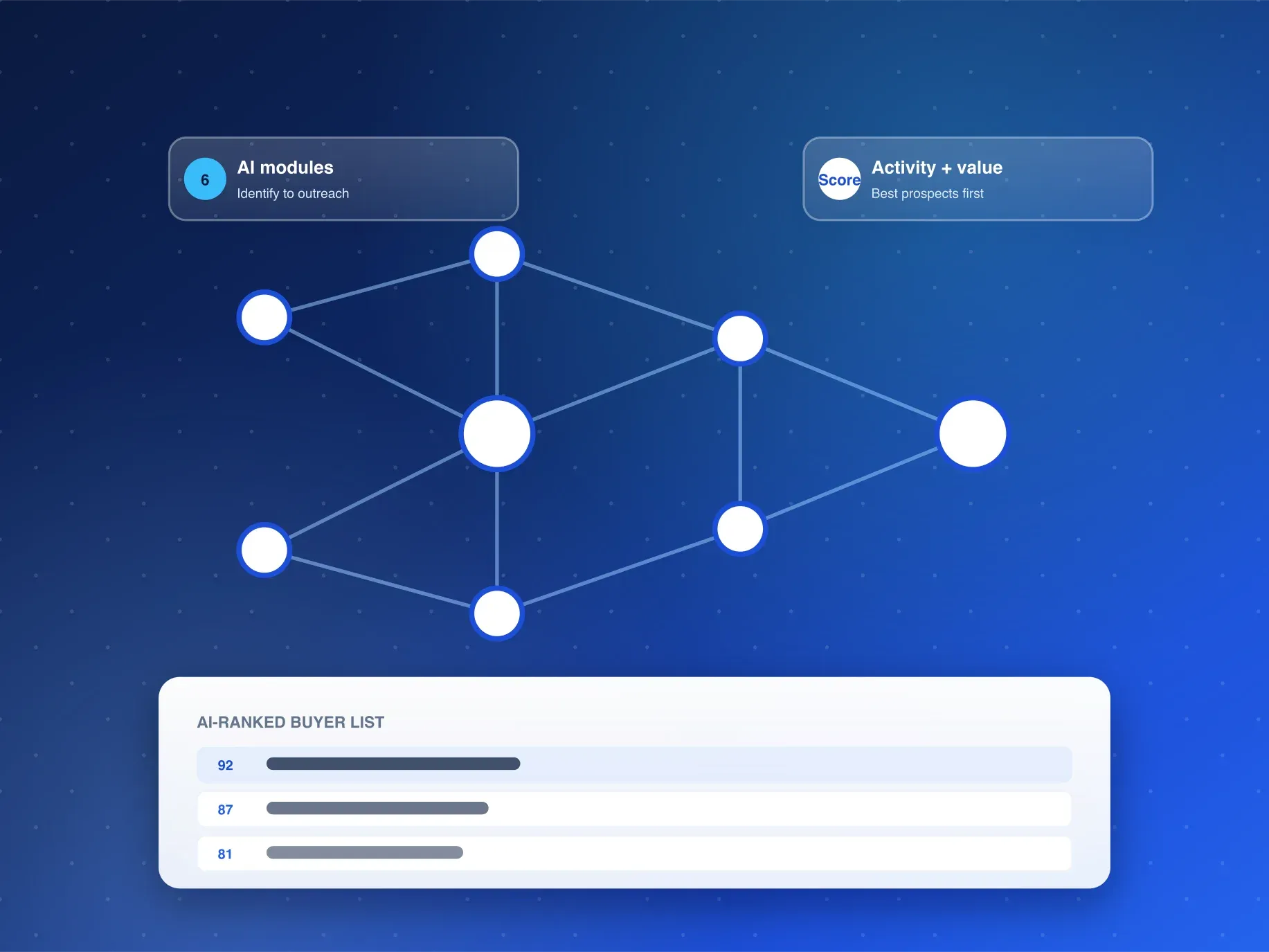
Reading one line is a discipline; reading a list is where the AI Buyer Discovery Suite changes scale. Its six modules — identification, activity and opportunity value, market recommendation, similar-buyer discovery, outreach lists with emails and WhatsApp contacts, and competitor buyer detection — work over accounts whose field-level reading is already done.
Frequently Asked Questions
Why does one record have several item lines?
Because one declaration can cover several goods. Each line carries its own description, code and scale fields; the sequence number keeps them attached to the right goods. Reading field by field instead of line by line is how quantities get paired with the wrong product.
Can I compare two records with different codes?
With care, and preferably after mapping both to a common level. Within one code and one market, rows are directly comparable; across codes or markets, the classification may cover different product families, so the comparison needs an explicit bridge.
How do I see the actual fields for my market?
Field sets differ by market; name your product line in a message via the inquiry form or WhatsApp, and a sample for it follows in 24 hours (Mon-Sat, GMT+8).
A field answers one question; a line answers the first question a campaign asks. Send Customsdatas your product line and ask for a sample that shows the real anatomy within 24 hours.