Sep 26, 2026Country Guides
Togo Customs Data (2026): A Two-Direction Workflow on Asymmetric Fields
Togo runs import and export windows with different field sets, in English. How to read each side for what it can answer — and combine them into a gap analysis.
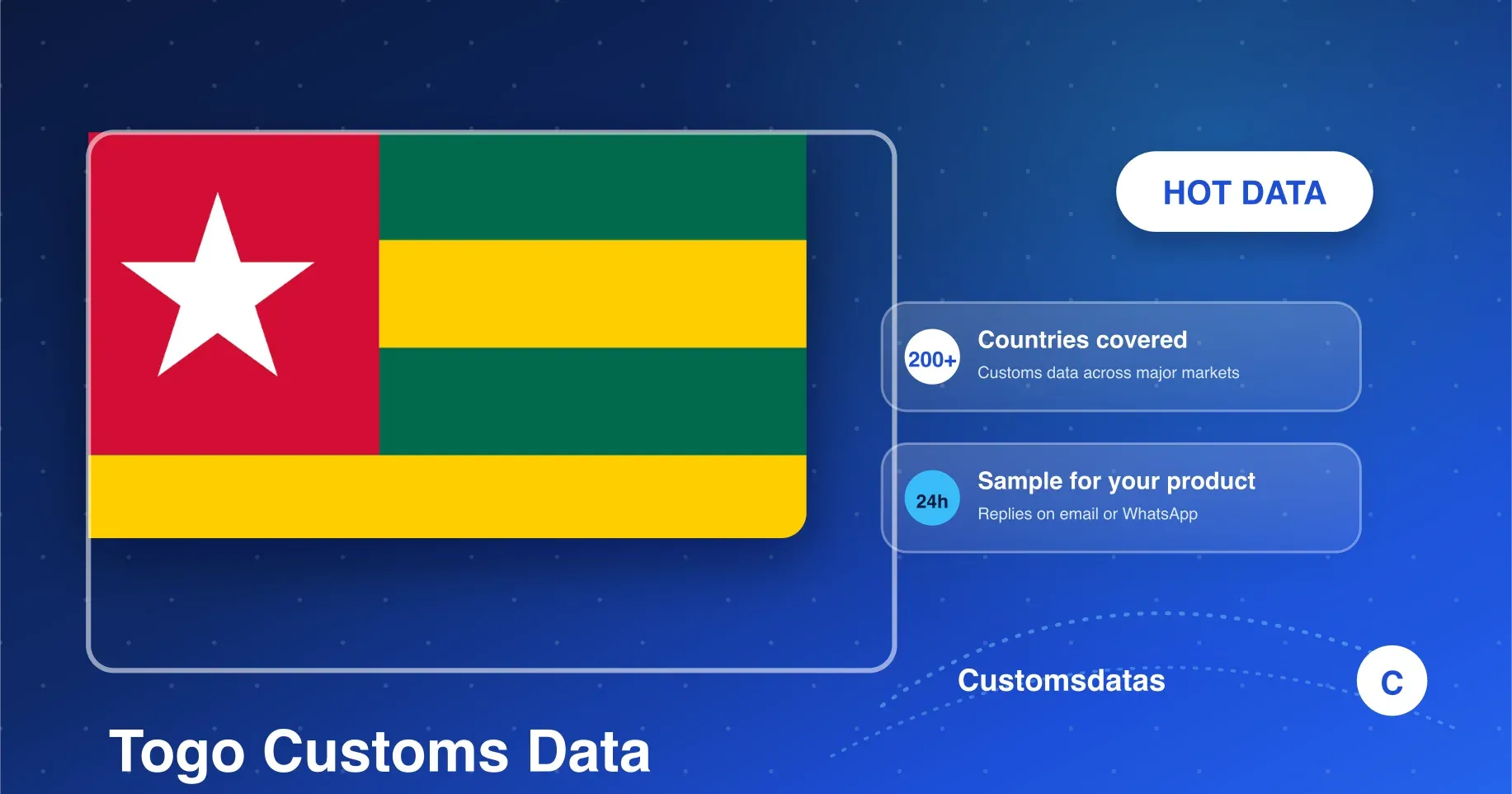
Togo appears on Customsdatas with a NEW flag and a field set well worth studying before the first search: the import side carries product description, quantity, weight, value and brand, while the export side carries the exporting party, quantity, weight, value and brand — the description field on imports only, the party-name field only on exports. The records are in English, with air freight coverage and regular updates.
That combination — asymmetric fields, both directions, English records — defines the working method. This guide walks each direction for the questions it can actually answer, then shows how the two combine into one workflow.
Import window: flows and scale, no names
The import window reads by description and scale: quantity, weight and value on every match, with the brand field adding a channel dimension for branded categories. What that side lacks is names — no party field on imports — so the read maps flows and brands, with English records making the search frictionless.
Read the three scale columns together: quantity without weight suggests light goods, weight without quantity suggests bulk, and value places each flow economically. For a sourcing or sales decision, that triple read is usually enough to qualify or discard a transaction before any contact.
Buyer tip: on the import side, search by description and rank by scale; the window returns flows and brands rather than named buyers, so let the scale columns do the qualifying.
The export side: named parties, scale fields
The export side is where Togo breaks from many asymmetric datasets: it names the exporting party. Alongside quantity, weight, value and brand, that field makes the outbound window a working supplier map — who ships from Togo, at exactly what scale, and under which brands across periods.
For buyers sourcing from West Africa, that is a direct vetting instrument: a supplier's export history is a stronger reliability signal than any reference list. Read consistency across periods, not single large declarations.
Combining the two directions
The workflow ties the sides together at the category level. Imports tell you what the market absorbs and at what scale; exports tell you who already ships from it and how consistently. A category with strong inbound flows and a thin export roster is an opening for new suppliers; strong flows with established exporters is a relationship market, entered through the incumbents or around them.
Buyer tip: run the two directions in one session and keep the results side by side. The gap between what Togo imports and what it exports in your category is the market's most honest opportunity statement.
Brand fields in both directions
The brand field appears on both sides of Togo's records, and each side answers a different question. On imports, brands show which international labels already hold the market. On exports, they show which brands the country's own production and re-export trade carry — a read on local packaging, assembly and re-export activity that single-direction datasets cannot provide.
For private-label sellers, the unbranded share of both windows is the more interesting number: it measures how much of the market moves on specification rather than label, which is exactly the segment a new supplier can enter.
Moving by air, refreshed on schedule
Air freight coverage is included — relevant for lighter, higher-value goods — and the data is refreshed regularly. The practical effect of regular updates on a both-directions dataset is that the import-export gap analysis stays current: the opportunity statement you read this quarter can be re-read the next.
Togo's place in regional trade
Both Togolese windows reward attention to regional context: Togo is a compact economy whose trade is widely associated with a transit and commerce role in its sub-region. Expect the import window to carry categories serving not only domestic demand but re-export flows, and the export window to include parties whose business is exactly that regional commerce. Reading either side without that context overstates or understates what the records mean.
The brand fields sharpen the read: branded flows in transit-oriented categories look different from branded flows in domestic consumption, and the two-window structure gives you both views to compare.
A working session, end to end
One session is enough for the first pass. Open the import window on your product description and read the scale columns; open the export window on the same category and read the named parties; set the two windows side by side and write one sentence per category — absorbed at X, shipped by Y, gap is Z. That sentence list is the market's first map, and it takes an afternoon, not a quarter.
Buyer tip: keep the session's outputs as two dated lists rather than one merged file. The import and export views refresh on different rhythms in practice, and separated lists make the next gap analysis a comparison instead of a rebuild.
When the gap sheet needs names
The gap analysis produces a category-level answer; the pipeline needs names. On the import side, description and scale qualify the flows; on the export side, the named parties are already listed. Feed the combined shortlist to the AI Buyer Discovery Suite and it runs the scoring pass — identification, activity and opportunity value, market recommendation, similar-buyer discovery, contact lists with emails and WhatsApp, and competitor buyer detection.
Frequently Asked Questions
Which fields can I search in Togo's records?
Imports: product description, quantity, weight, value and brand. Exports: exporting party, quantity, weight, value and brand. Both directions are covered, with English records.
Why does the import side have no party names?
The field sets differ by design. Import records read by category and scale; the exporting party field sits on the export side, which makes the outbound window the named-party view.
How do I request both directions at once?
Request a free sample through the inquiry form or WhatsApp. The team replies within 24 hours (Mon-Sat, GMT+8) with Togolese records matched to your product line.
Want to read both directions of Togo's trade on your own product? Request a free sample from Customsdatas and run the gap analysis within 24 hours.