Oct 4, 2026Country Guides
Taiwan Customs Data (2026): Flow First, Names Second
The documented import window describes flows — description, code, quantity — with no party column in the list. How to read the flow first, then attach names from the layers beside it.
Taiwan's coverage on Customsdatas spans three listed layers — shipping records, statistics and a company directory — and one detail is worth noticing before the first search: the documented import window lists product description, HS code and quantity, with no party column in the list. The records run in English, and the listed coverage carries no air component and no regular update.
A window without names settles the order of work. Instead of opening with who, you open with what and how much — the flow — and the names arrive afterwards, from the layers standing beside the window. Read in that order, the flow does something a name-first search cannot: it shows you the shape of the category before any company is allowed to colour it.
The window is a flow instrument
The three listed fields each answer one question about movement: the description says what kind of goods, the HS code says under which classification, and quantity says how many. Together they describe a category's traffic without attaching it to a company — which is exactly what you want for the first pass, because category choice should not depend on which names happen to appear.
Read the flow in bands rather than totals. A category's listed movements cluster into high and low quantity bands, and the shape of that clustering tells you whether the trade runs on a few large movements or many small ones — a distinction that will decide how you use the names once you have them.
Two shapes are worth naming early. A log-normal shape — many small movements, a tail of larger ones — describes a broad market where a new supplier can start mid-list. A spike shape — most of the volume sitting in one band, usually the top — describes a market organised around a few large operations, and that is a different sales conversation from the first day.
Why flow-first is not a downgrade
A common instinct treats a nameless window as a defect and rushes to the directory to fix it. Resist that rush for one pass. Company layers bias the category read toward whoever happens to be documented; the flow window has no favourites. Spend the first session inside it, and let it choose the two or three categories that deserve the naming work.
Attaching names from the directory
The directory layer is the natural partner to a nameless window: it holds the company side of the picture that the flow window omits. The working question to carry into it is narrow — for the chosen category, which businesses in the directory plausibly sit on the moving side, and what role does each play? The directory answers with context; the flow has already told you where to aim it.
Buyer tip: write the flow first, and leave the name column blank beside each line. The blank column is the to-do list for the directory pass — and an honest record of what the window alone could not say.
Verifying movement through shipping records
Shipping records describe the physical movement behind trade, and they serve a different job than the flow window: verification. Once a shortlist of names exists, shipping entries let you check that a party's goods have actually been moving — physical movement is the least ambiguous kind of evidence, because it records something that demonstrably travelled.
Use it as a confirm, not a discovery tool. You arrive knowing whose movement you want to see; browsing the movement records without a question is how a verification layer turns into a time sink.
Let the frame pick the category
The statistics layer frames the choice from above, at the aggregate level, which is what tells you whether a flow worth reading is also a market worth entering. The practical order is statistics for the shortlist, flow window for the detail, directory for the names, shipping for the check.
The dossier the passes produce
The output of the sequence is a small dossier: two or three categories chosen on aggregate and flow evidence, a name list attached from the directory, and a movement check behind each name. Each line can say where it came from, which is the property that survives the first conversation with a prospect.
Keep the dossier short on purpose. The sequence is designed to spend its effort on two or three categories read properly, not on ten skimmed ones — and a short dossier is the one that gets re-used, because its claims fit on a page and its blanks are visible rather than hidden.
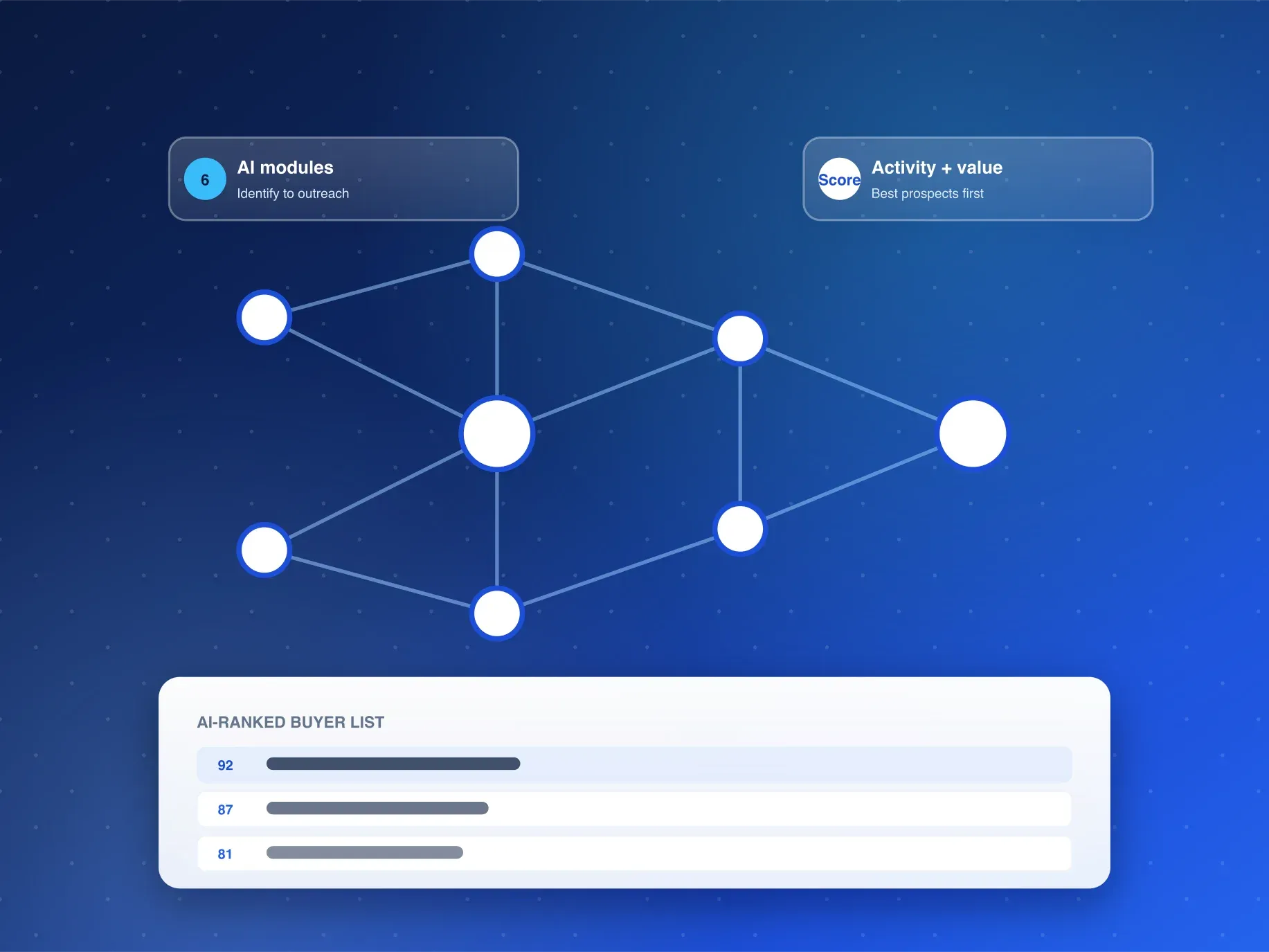
A scoring and contact pass from the AI Buyer Discovery Suite — identification, activity and opportunity value, market recommendation, similar-buyer discovery, outreach lists with emails and WhatsApp contacts, and competitor buyer detection — then ranks the named list, with the blank-column notes as its starting brief.
A dry run over the layer records
The coverage table keeps the export window's fields out of view, and the finer details of each layer's records are read on a sample run against current data: what each search returns, how parties are recorded where they exist, and how fresh the window runs. That check takes minutes and keeps the whole sequence sitting on real columns.
Frequently Asked Questions
Which fields are documented for the import window?
Product description, HS code and quantity — no party column appears in the documented list. The records are in English; the listed coverage shows no air component and no regular update. The export window's fields are settled on a sample run.
Can I build a contact list without names in the window?
Yes — by sequence rather than by luck. The flow window chooses the categories, the directory supplies the company context, and the shipping layer confirms movement before anyone joins the shortlist.
How do I start a flow-first read on Taiwan?
Send a request through the inquiry form or by WhatsApp, and Taiwanese records matched to your product line arrive; expect an answer within 24 hours (Mon-Sat, GMT+8).
Ready to turn Taiwan's flow window into a named list? Request a free sample from Customsdatas — the flow-first pass begins within 24 hours.