Oct 2, 2026Country Guides
Sri Lanka Customs Data (2026): Working a Yearly Stocktake
An annual refresh turns the file into a yearly stocktake. How to read it as one — and what the shipping layer contributes in the months between.
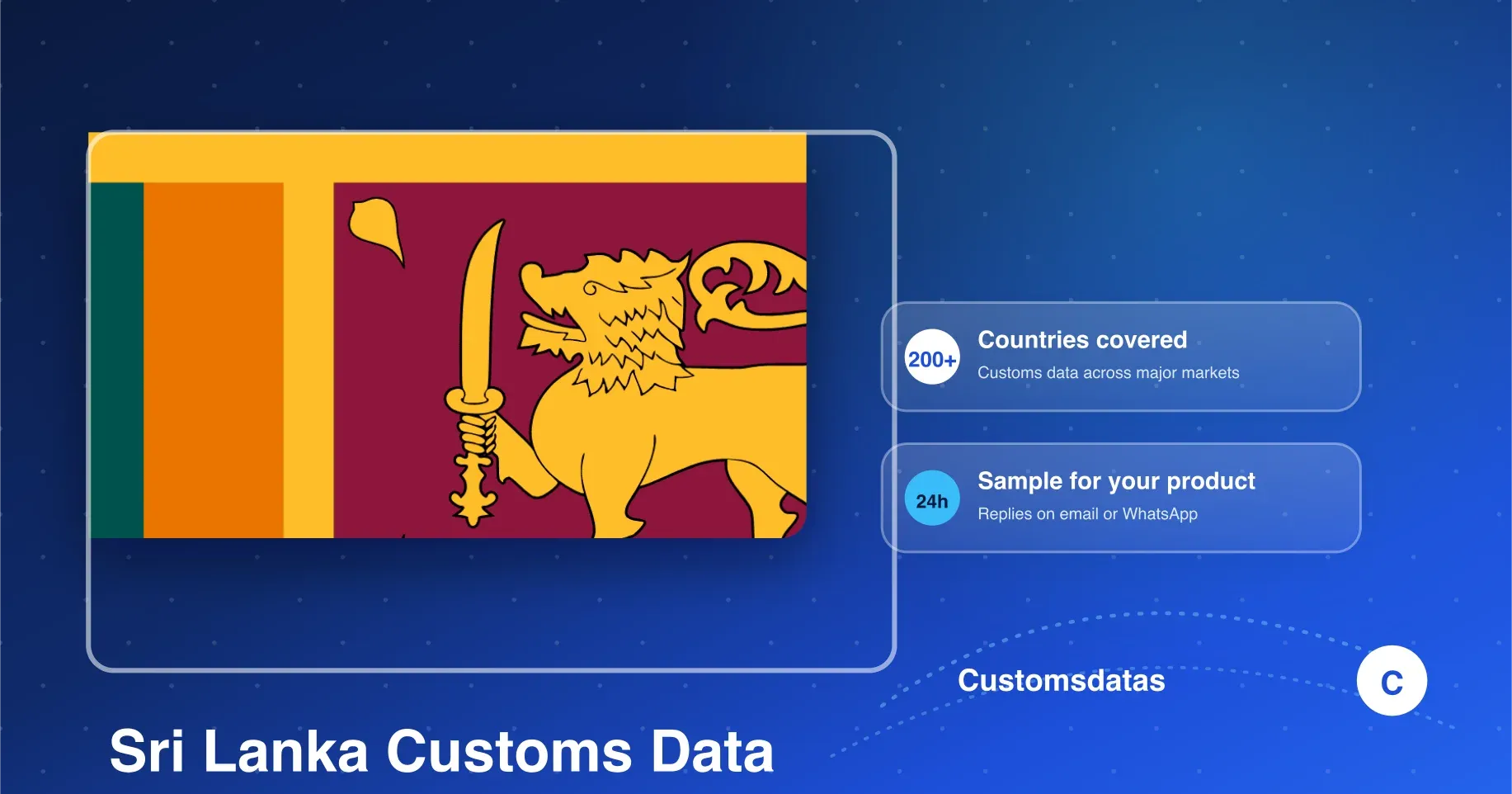
Sri Lanka carries two layers on Customsdatas — trade and shipping — an English-language record set, air freight coverage, and a refresh rhythm with a distinctive shape: it updates yearly. Both directions list exporters, product description, HS code, quantity, weight, value and brand.
An annual cadence changes the character of the work. A monthly file supports hunting — chasing movement as it appears. A yearly file supports a stocktake: one complete, deliberate count of what the market holds, taken at a known date, and read with the same rigor an accountant brings to a year-end inventory.
Why a yearly file wants a stocktake
Frequency determines what a file is good at. Reads between updates cannot chase the newest movement, because the newest movement may already be in the file and simply not yet visible as new. What a yearly file does offer is depth: one stable, complete picture of a full cycle, with every field on both sides filled in.
Buyer tip: date the stocktake the day you pull it and treat that date as the file's character. A yearly record read in month ten is a historical document with current uses — never a live feed, and never presented as one.
Reading a full cycle at once
A yearly window compresses seasonality into adjacency: within one file you can see whether a category's movements cluster in particular months or spread evenly, without waiting a year to observe it in real time. That seasonal shape is one of the most valuable things an annual file gives, and it is invisible in higher-frequency reads.
Read the shape before the totals. A category that loads into two months behaves nothing like one that moves steadily, even at identical annual scale — and the first read chooses your supplier strategy: seasonal stocking versus continuous supply.
There is an internal consistency check worth running on a yearly file: the seasonal shape should repeat across the parties in a category. If one account loads into the peak while another spreads evenly, you may be looking at two different businesses sharing a code — a distinction worth settling before either joins a shortlist.
The weight and value columns
With weight, value and quantity all listed on both sides, the physical and commercial dimensions can be read together. Weight and quantity give the density signature — light and numerous versus heavy and few; value places each flow economically. Read all three as a set, and a category's character emerges without a single assumption.
Buyer tip: compare density signatures within a category, not across categories. Two rows of the same code read against each other are a finding; a row of steel against a row of tea is only trivia.
The bridge between counts
The shipping layer is what keeps a yearly file useful in the eleven months between refreshes. It describes the physical movement behind declarations, and it can be read for continuity: parties that keep appearing physically while the declaration stocktake ages.
Treat the shipping read as the bridge, not a second annual file. Its job is to confirm that relationships seen in the stocktake are still moving — and to catch a name that started moving after the count was taken, so the next stocktake starts already knowing what to look for.
Brand and specification
The brand column appears on both directions here too, and in a smaller market its density is quickly read: branded trade signals established labels holding shelf position, while unbranded or sparsely branded categories move on specification — the opening a new supplier can actually use.
One caution specific to an annual file: brand presence is measured once a year, so a label that entered six months ago may not appear until the next count. Where a category looks unbranded, the shipping layer is the place to test whether that is holding or simply awaiting the next update.
The eleven months in between
The working rhythm of a yearly file is a mild inversion of the familiar one: the stocktake quarter does the structural work — rosters, bands, category choices — and the following months run on the shipping layer and on conversations. Nothing about that rhythm is slower than a monthly read; it is simply organized around a different clock.
Keep a dated stocktake file and a running bridge file, and the next annual update lands on prepared ground instead of starting from zero. The comparison between two stocktakes — not either one alone — becomes the market's trend line.
The two-file habit also settles the awkwardness of a stale stocktake with a live conversation. When an account asks how current your information is, the honest and complete answer is two dates: the count it was drawn from, and the last bridge entry that touched it.
Working a dated roster into outreach
A finished stocktake yields a ranked, dated roster with density signatures, brand status and seasonal shape noted per account — the most defensible possible starting sheet, because every entry was read once, deliberately, against a complete cycle.
The finished stocktake then moves to the AI Buyer Discovery Suite for scoring and contact work — identification, activity and opportunity value, market recommendation, similar-buyer discovery, outreach lists with emails and WhatsApp contacts, and competitor buyer detection — and because the stocktake is dated, every score stays honestly labeled as of its count.
Frequently Asked Questions
What does Sri Lanka's coverage include?
Trade and shipping layers, both directions listing exporters, product description, HS code, quantity, weight, value and brand. English-language records, air freight coverage, and an annual refresh.
Is a yearly update a disadvantage?
It is a different instrument. Yearly files excel at depth and seasonality — one complete cycle read at once — while shipping records provide continuity between counts.
How do I start a stocktake on Sri Lanka?
Name the categories you handle on the inquiry form or WhatsApp; a Sri Lanka sample is dispatched inside 24 hours (Mon-Sat, GMT+8).
Ready for the full-year picture on the category you sell? Request a free sample from Customsdatas and take the stocktake within 24 hours.