Oct 1, 2026Country Guides
South Korea Customs Data (2026): Reading Rhythm When Value Is Missing
South Korea's import record lists quantity but not weight or value. How to qualify accounts by cadence and count — and re-measure the rhythm as the file refreshes.
South Korea appears on Customsdatas with an unusual configuration: the coverage spans trade, shipping, statistics and a company directory; the import record lists exporters, product description, HS code and quantity; the records come in English; air freight is covered; and the file refreshes on a regular cadence. What the import record does not list is weight and value.
Losing weight and value sounds like losing the measuring instruments. It is more precise to say they are replaced: where value would have ranked accounts by money, quantity and refresh rhythm rank them by cadence and count instead. This guide is about turning that substitution into a method rather than mourning the missing columns.
A record without value still has a pulse
Quantity on every listed movement plus a file that refreshes means two readable dimensions survive: how many movements an account makes, and how large each one is in units. Value would have combined them into one money number; here they stay separate, which is not entirely a loss — a rhythm misread as smallness is impossible when the two dimensions are visible side by side.
Buyer tip: read count before size. An account with many modest movements has a different relationship with its suppliers than one with a single large movement, and in a record without value that distinction is the most reliable thing you can still see.
Cadence bands as a qualifier
Sort the accounts in your category into cadence bands: frequent and steady, frequent and irregular, occasional, and one-off. The bands are the qualification sheet — an account that imports monthly is a supply relationship waiting for a second supplier, while a one-off movement may be a project that ended before you arrived.
Because the file refreshes, the bands are testable rather than impressionistic: pull the same category again later, and each account's band either holds or moves. An account that climbs a band between pulls is doing something new; one that drops is worth a question, not a write-off.
The bands also travel well into internal discussions. Saying an account sits in the frequent-and-steady band requires no monetary estimate and invites no debate about arithmetic — the observation is right there in the counts, and anyone can re-derive it from the same pull.
Who the account is, not just how often
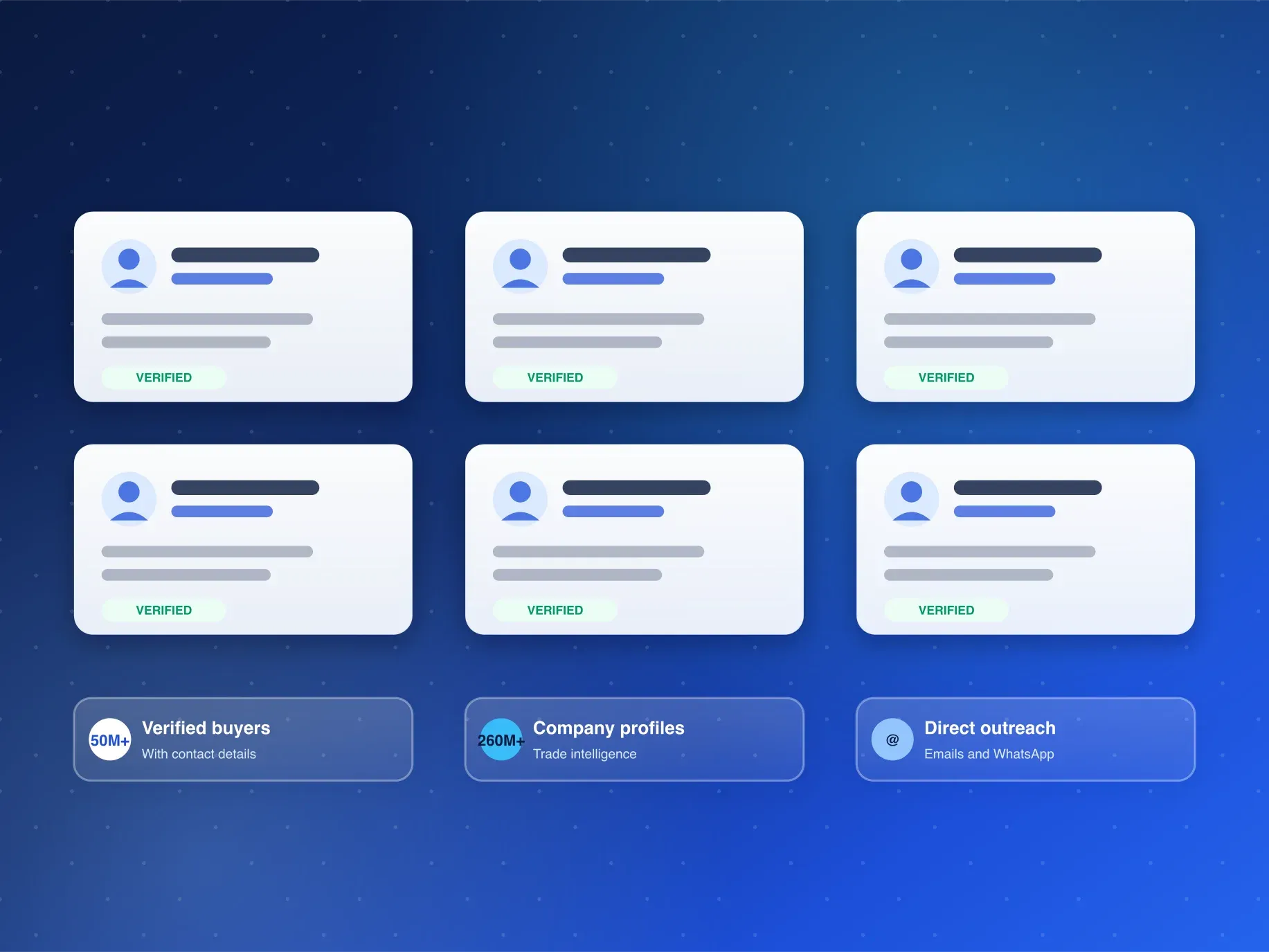
The company directory matters differently in a thin-field market. With weight and value absent, the record can say how often and how much, but rarely what the business is — the directory supplies that missing context, letting you tell a trading house from a manufacturer from a distributor without inferring it from quantity alone.
Use it as a filter rather than a lookup: screen the cadence-qualified names through the directory before outreach, and the first letters go to the accounts whose role matches your offer — not merely to the accounts with the best rhythm.
The pairing pays off in both directions. A frequent cadence plus a manufacturer's profile says a producer restocking its own line — a buyer conversation. The same cadence with a distributor's profile says a reseller serving downstream demand — a partnership conversation with different terms. Same numbers, different letter, and only the directory told you which.
Comparing in counts, not currency
When you shortlist by cadence, keep the comparisons in counts. Unit totals travel honestly between accounts of the same product family; any translation of quantity into money would be arithmetic the record never supported. A shortlist that ranks by movements and unit bands stays defensible; one that ranks by estimated value quietly invents a column.
Buyer tip: annotate each shortlisted account with its band and its two most recent touch points. When the reply comes weeks later, those three facts are what let you write a follow-up as if no time had passed.
Air coverage inside a rhythm read
Air freight coverage widens the cadence picture: lighter, higher-value goods move by air in patterns that surface routes do not show, and their rhythm tends to be faster. Read air-lane accounts as a separate cadence table rather than merging them — a monthly sea importer and a weekly air importer are different relationships even in the same category.
Re-measuring against the baseline
The refresh cadence is what converts the method from a snapshot into an instrument. Set a baseline pull, date it, and re-pull on the file's own rhythm; then read three things: bands that held, bands that moved, and names that entered. Each re-pull is cheap because the method is already defined — count, band, compare.
Keep a one-line note per move you observe — account, old band, new band, date it changed. The note file becomes the account intelligence you carry into every conversation.
Rhythm first, letter second
The output of the method is a banded shortlist: accounts sorted by rhythm, filtered by role through the directory, annotated with recent touch points, and refreshed against the latest pull. Small, comparable, and re-measurable — exactly the shape outreach can consume.
A word on what the method deliberately does not do. It does not attempt to reconstruct money values from quantity — that arithmetic would vary by product, supplier and term, none of which the record settles. The rhythm read stays inside what the file states, which is precisely why it survives its first cross-examination.
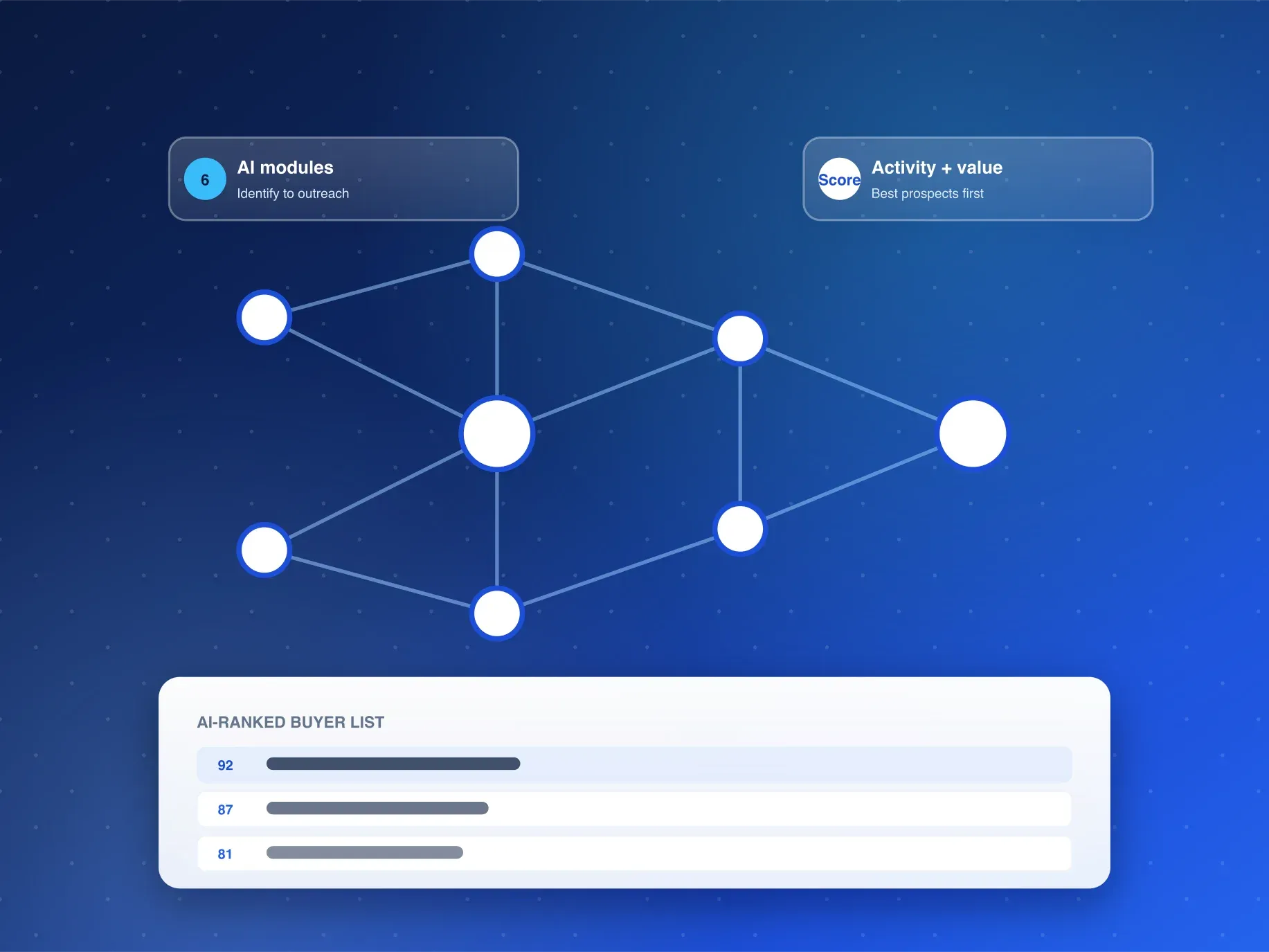
The banded shortlist then reaches the AI Buyer Discovery Suite, which handles the scoring and contact pass — identification, activity and opportunity value, market recommendation, similar-buyer discovery, outreach lists with emails and WhatsApp contacts, and competitor buyer detection. Cadence has already done the first half of the ranking; the suite finishes it.
Frequently Asked Questions
What does South Korea's import record list?
Exporters, product description, HS code and quantity. Weight and value are absent from the listed import record — which is why cadence and count carry the qualification work.
How do I size an account without value?
In counts: movements per period and units per movement. Keep the comparison inside a product family, where unit quantities are comparable, and read the combination of the two rather than either alone.
How do I start a cadence read on South Korea?
Ask through the inquiry form or WhatsApp for records shaped to your product line; a South Korea sample reaches you within 24 hours (Mon-Sat, GMT+8).
Want to see your category's import rhythm in counts rather than guesses? Request a free sample from Customsdatas and set the baseline today.