Sep 28, 2026Country Guides
Niger Customs Data (2026): The Four Rungs From a Record to a Market
A single trade layer under a NEW flag keeps the working set small. The discipline that pays here is knowing exactly what each rung of evidence licenses — before acting.
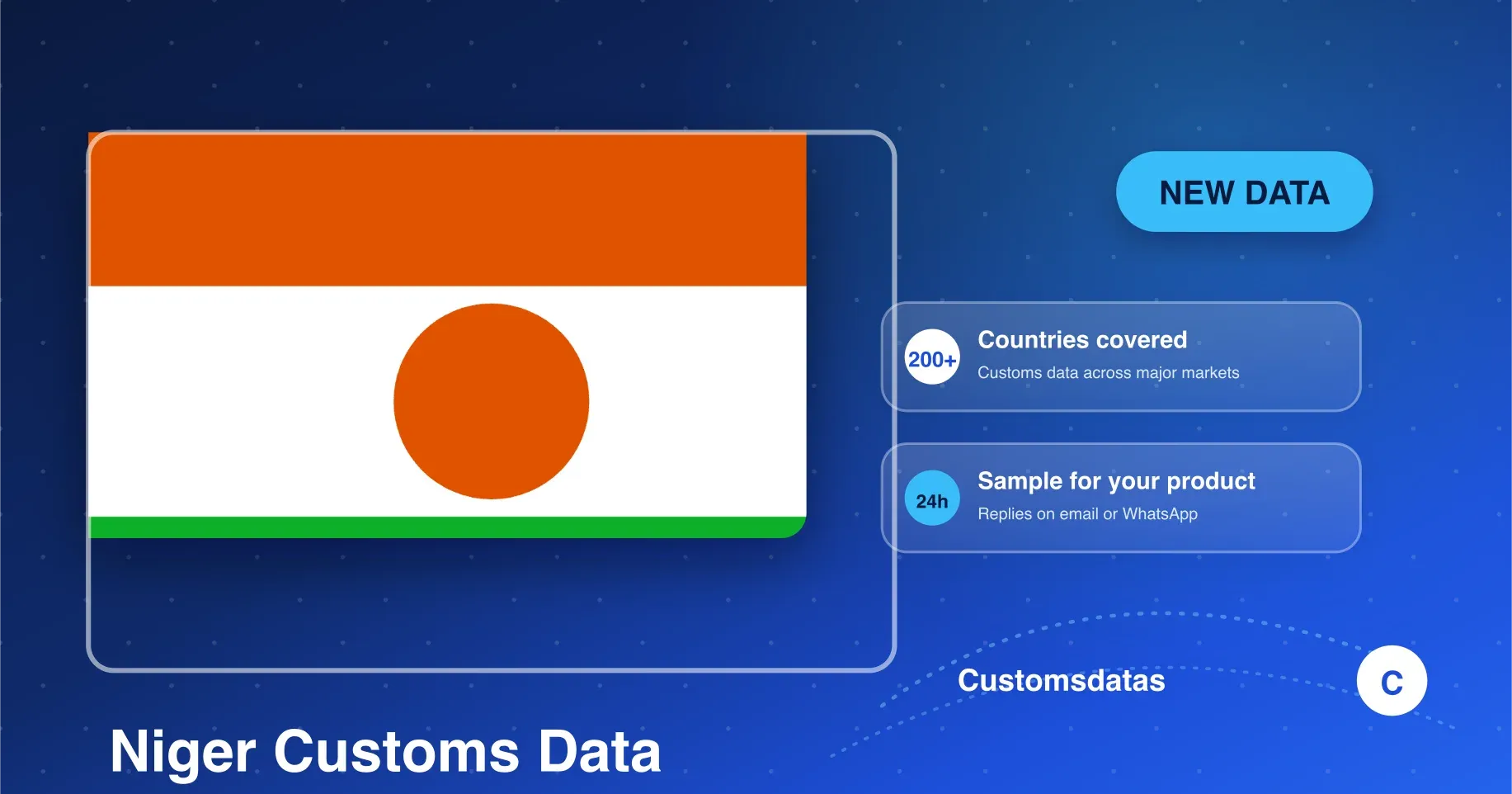
Niger appears on Customsdatas with one record type — trade declarations — under a NEW flag. One layer keeps the working set narrow, and it rewards a specific discipline: knowing how much evidence each decision actually requires. Most wasted effort in a thin market comes from treating first evidence as final evidence — acting on something that was always just a starting point.
Read as a ladder, the evidence from a trade layer has four rungs between a single record and a market worth a campaign. The climb is not bureaucracy; each rung is a different question, answered by a different pattern in the same file.
Four rungs between a record and a market
The rungs form a sequence because each one adds a dimension the previous rung lacks: one event, then repetition, then spread, then timing. Skip a rung and the conclusion inherits the missing dimension as a blind spot — the kind that only shows up when a prospect does not reply.
Rung one: one movement is a delivery, not a demand
A single declaration proves something narrow: goods of this description crossed the border, at this scale, around this date. It does not prove demand, budget, or the slightest interest in a second purchase. Rung one is where every search starts, and where thin-market mistakes incubate — because one record looks just as tidy as one of a thousand.
Buyer tip: before you write anything down, name the rung you are standing on. A note built from rung-one evidence should read like a note, not like a forecast.
Rung two: repetition makes a party a habit
The same party appearing across periods turns a transaction into a habit, and a habit is the first thing in this file that hints at a deliberate buying process. Repetition is what separates a business that sources this category from a business that once received it.
Read repetition at the party level rather than the category level. A category that looks busy can be a handful of one-off events; a party seen twice across a window, in the same product family, is a pattern with a name attached.
Rung three: spread turns a habit into a market
Multiple parties showing the same habit is what turns one company's behaviour into a market signal. Spread answers the question a campaign actually asks: if I invest in this category, is there more than one conversation at the end of it?
The honest form of this test is a count, not an impression. Three parties repeating a pattern is a small market; three hundred records from one party is not a market at all. Counting keeps the two from being confused.
One further reading note: count parties, not rows. A category can show a long page of movements while most of them belong to the same two names, and that reading behaves closer to rung two than to rung three — a habit wearing the costume of a market.
Rung four: recency decides the timing
The same habit last seen two years ago is history; seen across the last two quarters, it is a conversation waiting to happen. Recency is the rung that converts knowledge into permission to act, because it tells you the pattern is still alive rather than merely well documented.
Buyer tip: escalate one rung at a time — note, shortlist, campaign, contact. Promotions that skip a rung are how thin markets produce fat mistakes.
What each rung licenses
The value of the ladder is that it licenses action in proportion to evidence. Rung one licenses a note in your own file. Rung two licenses a place on a shortlist. Rung three licenses a campaign decision — effort spent building a list for outreach. Rung four licenses the first message itself, because it supplies the live reason to write.
Run the mapping backward when a decision feels rushed: if you cannot say which rung a decision rests on, the honest answer is usually a lower one than the plan assumes.
Climbing one rung at a time
The climb is measured in refresh cycles, not in hours. Each new pull of the file is a chance to see a party move from one-off to repeat, or a pattern spread from one name to several — and in new coverage, the file itself is still filling in between pulls, which makes the rhythm of re-reading part of the method.
Keep the pulls dated and comparable. Two dated sheets side by side turn a static reading into a trajectory, and a trajectory is what tells you whether a party is climbing toward the top rung or drifting toward the archive.
What the ladder needs from the file
The ladder rests on what a Niger search can actually reach today, and that reach comes from a sample run on current data rather than from another market's documentation. A general description of a market and the file you actually pull are different instruments; only the second one shows which rungs are live.
Read the sample against the ladder before you commit search terms: it tells you which rungs the current file can even reach, so effort goes into climbing rather than guessing.
Frequently Asked Questions
Why map evidence to rungs at all?
Because in a thin market the cost of acting early is high. The ladder makes the evidence behind each decision explicit, so you escalate when the pattern supports it rather than when the calendar suggests it.
Does the ladder work for a bigger market?
The rungs apply everywhere, but thin markets make them visible: fewer records mean each rung's limits are easier to see, which is why working Niger carefully teaches habits that carry into larger files.
How do I start climbing on Niger's data?
Ask the team through the inquiry form or WhatsApp for Niger records tied to your product line; a reply follows inside 24 hours (Mon-Sat, GMT+8).
Want to see which rungs Niger's file can reach before you commit? Request a free sample from Customsdatas and pull the current records within 24 hours.