Sep 26, 2026Country Guides
Nicaragua Customs Data (2026): Organizing a Small Market Around Repeat Purchase
Nicaragua's NEW trade coverage rewards a repeat-purchase lens over volume rankings. How to find the accounts that buy again — and build on them.
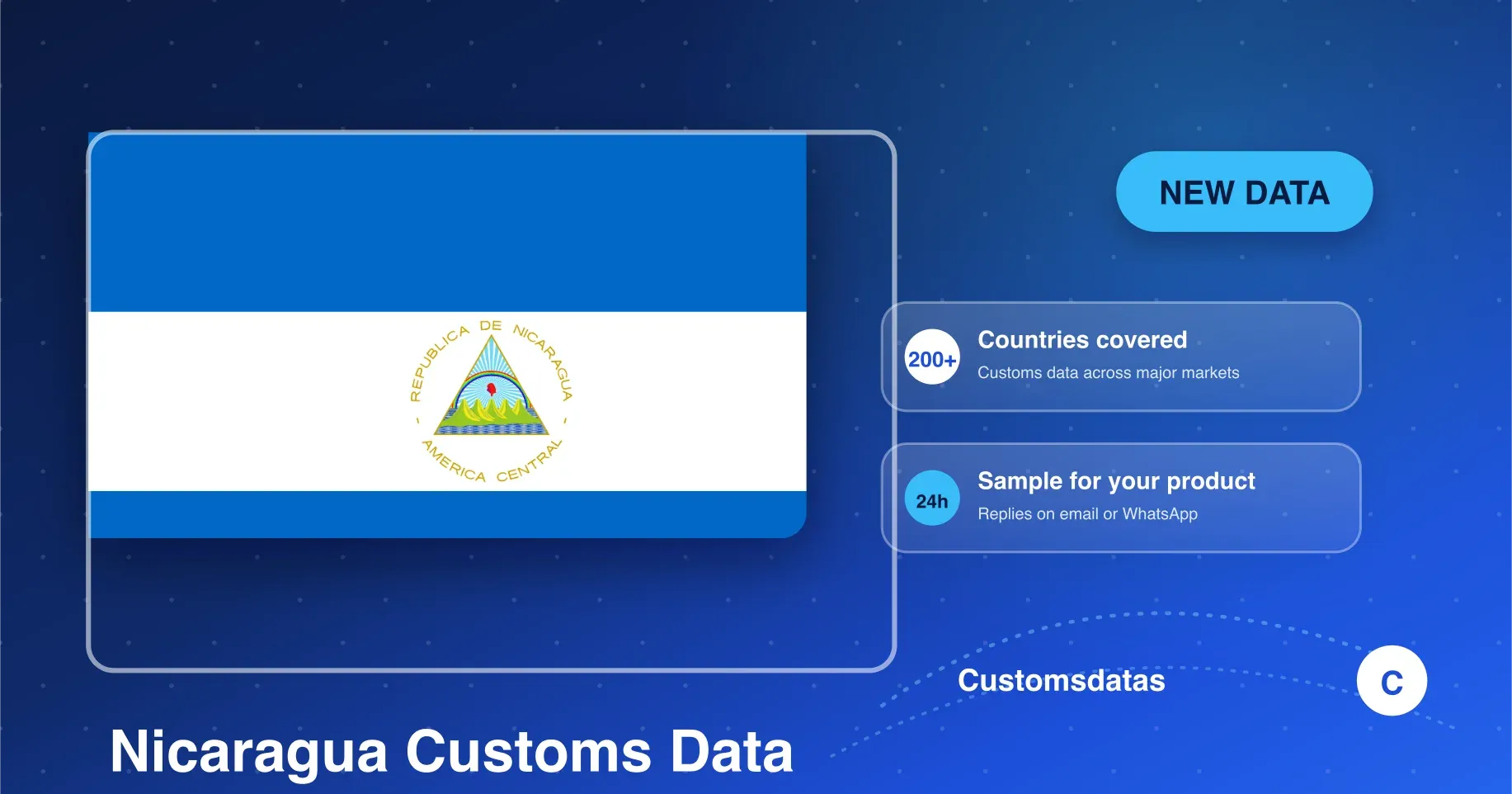
Nicaragua appears on Customsdatas as newly added trade coverage under a NEW flag. It is a small Central American market, and small markets punish the standard playbook: rank by volume, chase the top names, launch. This guide proposes a different signal to organize around — repeat purchase — and explains why it outperforms size in a market of this scale.
Why size misleads in small markets
Volume rankings are built for markets with depth, where the biggest names can absorb your capacity. In a compact market, the biggest declared flows often belong to distributors whose scale you cannot serve or whose categories only brush yours. Chasing them wastes the market's most practical advantage: that its trade is legible end to end.
Repeat purchase is the better lens because it answers the question a small-market seller actually has: who buys again? A modest account that reorders on a steady rhythm is a business; a large one-off is an anecdote. In a market where every account is readable, that distinction is available for every name on the list.
Finding the repeaters
Start from your category and read the parties that return, noting for each how many distinct periods it appears in. What counts as repeat varies by category rhythm — monthly for consumables, quarterly for equipment cycles, seasonal for agricultural inputs — so set the definition before the search and let the records answer it.
How far your category search really reaches is confirmed on a sample run; once calibrated, the read itself is mechanical: parties, periods, and the pattern between them.
Buyer tip: two periods is a signal, three is a relationship. Hold Nicaragua's repeaters to the three-period standard before investing outreach, and let the two-period accounts sit in a watch list until they earn promotion.
Reading the repeat pattern
A repeat purchase is not just recurrence; it has a shape. Note whether the quantities hold steady, grow or step up — steady signals a replacement program, growth signals an expanding account, steps signal project buying. The shape tells you what kind of offer fits before you write the first line.
Regularity also has a voice. Tight intervals between declarations point to channel replenishment; wide, even gaps point to planned procurement. Neither is better, but they answer to different messages — availability and terms for one, specification and lead time for the other.
Which accounts hold the repeat trade
Compact Central American economies tend to concentrate repeat imports in a few durable channels — distribution houses serving retail, industrial buyers feeding production, and agricultural accounts moving with the seasons. Expect the repeater list to be short enough to know personally and stable enough to plan around.
That stability is the strategic point. A market of twenty steady relationships, each readable and each reordering, is a better customer base than a rotating roster of large one-offs — and it is the kind of base a focused supplier can actually build in a market this size.
Buyer tip: keep the repeater list dated and re-run it after each data refresh. New names entering the repeat club are the market's quiet announcement that demand is widening.
Repeat purchase as a risk filter
Repeat purchase also reads as a risk instrument. Newer entrants to a market move cautiously — small orders, multiple suppliers, short commitments — and their records show it. Repeaters show commitment: dedicated channels, stable quantities, a buying rhythm that implies obligations on their side of the table. Screening for repeats is therefore also screening for accounts that can honor a supply relationship.
In practical terms, the repeater file answers a credit-and-capacity question that first-contact enthusiasm always overstates. Before promising production slots, check whether the account has kept promises visible in its own records — and in a fully readable market, that check costs minutes.
What the watch list is for
The two-period accounts are not noise; they are the market's pipeline. Some are new importers testing a category, some are established accounts trying a second supplier, and a few are irregular buyers whose rhythm simply has not completed a cycle yet. Keep them dated, re-check after each refresh, and promote the ones that cross the three-period line.
The promotion rule matters as much as the list itself. Promote on the record, not on enthusiasm — and when an account promotes, it should enter the working list with the same full read the original repeaters received.
The repeater file becomes the outreach list
The first message writes itself from the record: cite the pattern you observed — the rhythm, the quantities, the consistency — and position your offer against it. An opening that shows you read the account's history lands differently in a market where everyone knows everyone.
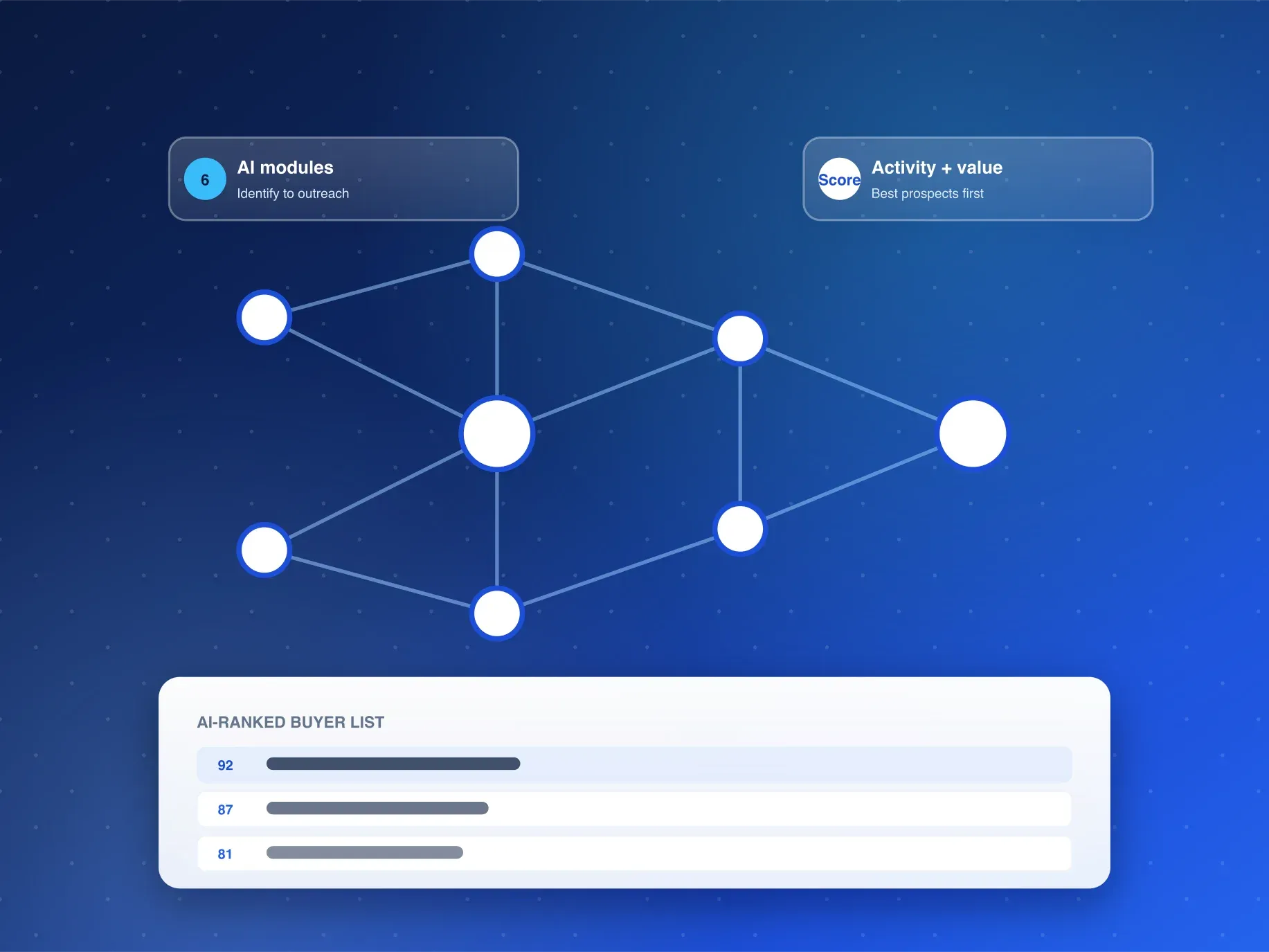
When the working list is set, the AI Buyer Discovery Suite supports the rest — identification, activity and opportunity-value scoring, market recommendation, similar-buyer discovery, outreach lists with emails and WhatsApp contacts, and competitor buyer detection — widening the base the repeater method built.
A note on expectations to close the method out: repeat purchase is a slow-building asset. The first read might surface a handful of true repeaters, and the discipline is to be content with that — a small base of proven accounts, grown one refresh at a time, is how compact markets compound. The records will keep scoring the market for you; the only job is to keep reading them.
Frequently Asked Questions
What coverage does Nicaragua have on Customsdatas?
Trade declarations, under a NEW flag marking recently added coverage.
How many repeats make a qualified account?
Two appearances are a signal; three across the periods that match your category's rhythm are a relationship worth outreach. Set the definition before the search and apply it evenly.
Can I test my category on a sample?
Request a free sample through the inquiry form or WhatsApp. The team replies within 24 hours (Mon-Sat, GMT+8) with records matched to your product line.
Want to find who buys twice in your category? Request a free sample from Customsdatas and read the Nicaraguan records within 24 hours.