Sep 24, 2026Country Guides
Mongolia Customs Data (2026): Running a NEW Market as a Bounded Pilot
Mongolia's NEW coverage rewards a quarter-long pilot over a campaign. How to define it, set the bar and decide scale, hold or shelve.
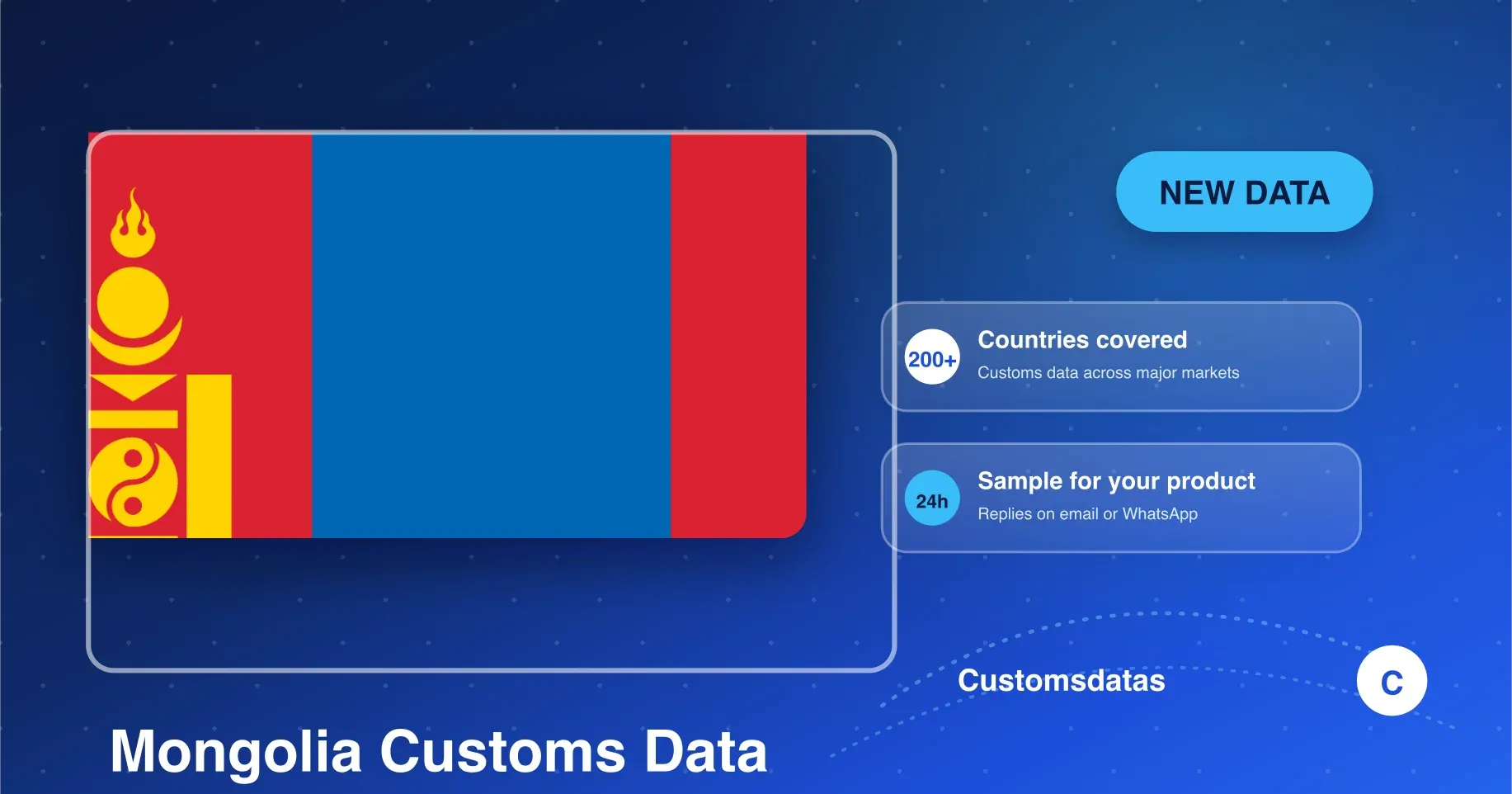
Mongolia's coverage on Customsdatas is new — trade declarations, added recently and carrying the NEW flag. New coverage is tempting: the records are unworked, and the instinct is to launch. This guide argues for the opposite first move. Run the market as a bounded pilot — a definition, a bar and an exit decision agreed before the first search.
Why a pilot, not a campaign
A campaign commits budget, brand and team attention. A pilot commits one category, one quarter and one setup afternoon. On newly covered markets, the pilot's real product is information: whether the category has the buyer depth to justify anything larger.
Buyer tip: the pilot framing is also protection. If the answer is no, a quarter of light effort is spent, not a campaign — and if the answer is yes, everything learned transfers straight into the scale-up.
Define the pilot in one line
A workable definition names one category, one direction, one quarter and one measurable bar. Anything broader stops being a pilot and quietly becomes a launch with worse planning.
The one-line definition doubles as a boundary: every search either serves the pilot or gets logged for a later one. That single rule keeps a light exercise from growing into an unplanned commitment.
Keep the search narrow on purpose
Resist broad sweeps. Work one product family at a time, read the counterparties it returns, and widen only after the first pass is fully read. How far your product line can be searched is best confirmed on a sample run — treat that sample as the pilot's calibration step.
Narrow also means patient. Where the visible pool is modest, each account read is a meaningful fraction of the whole, so a careful first pass pays for itself immediately.
Commit the bar before the search
Decide the pass condition in advance: a number of qualified counterparties, a required level of activity on their records, or a fit threshold against your product line. Bars set after the search are opinions; bars set before it are decisions.
Buyer tip: write the bar down with a date beside it. When the quarter closes, the pre-committed bar turns the result into a scale, hold or shelve call instead of another round of impressions.
Read the results like an experiment
At quarter-end, compare the pilot against your core markets on the same measures: how many qualified accounts the category returned, how deeply their records read, and how concentrated the opportunity is. A small, deep pool is easier to work than a wide, shallow one — concentration is a friend.
Watch the classic pilot decoys: novelty excitement inflating the read, conclusions drawn from samples too small to support them, and grading effort instead of the pre-committed bar.
Give the pilot a keeper, not just a bar
A bar decides pass or fail; a keeper decides what survives either way. Name one person to hold the pilot's notes — the category read, the shortlisted accounts, the replies — so the outcome feeds the next decision instead of evaporating with the quarter.
Buyer tip: put the keeper's one-page summary in the same file as the bar. Six months later, the summary is the only thing anyone will actually reread.
The pilot's honest budget line
Budget the pilot honestly and it stays light: a setup afternoon, a sample run for calibration, a weekly read of new accounts, then the quarter-end review. The heaviest cost is the discipline of the single-category rule — and that discipline is precisely what the pilot is testing: whether your team can work one market narrowly when the records invite otherwise.
The scale-up decision
Three outcomes, decided by the bar: scale means committing more categories and effort; hold means the signal is promising but thin; shelve means the market answered no this year, for this category. All three are wins — each costs a quarter and returns a decision.
Whatever the outcome, the decision and its reasons should outlive the quarter: the workings you keep during the pilot mean the next market starts with a file to open rather than a blank page.
From pilot list to first contact
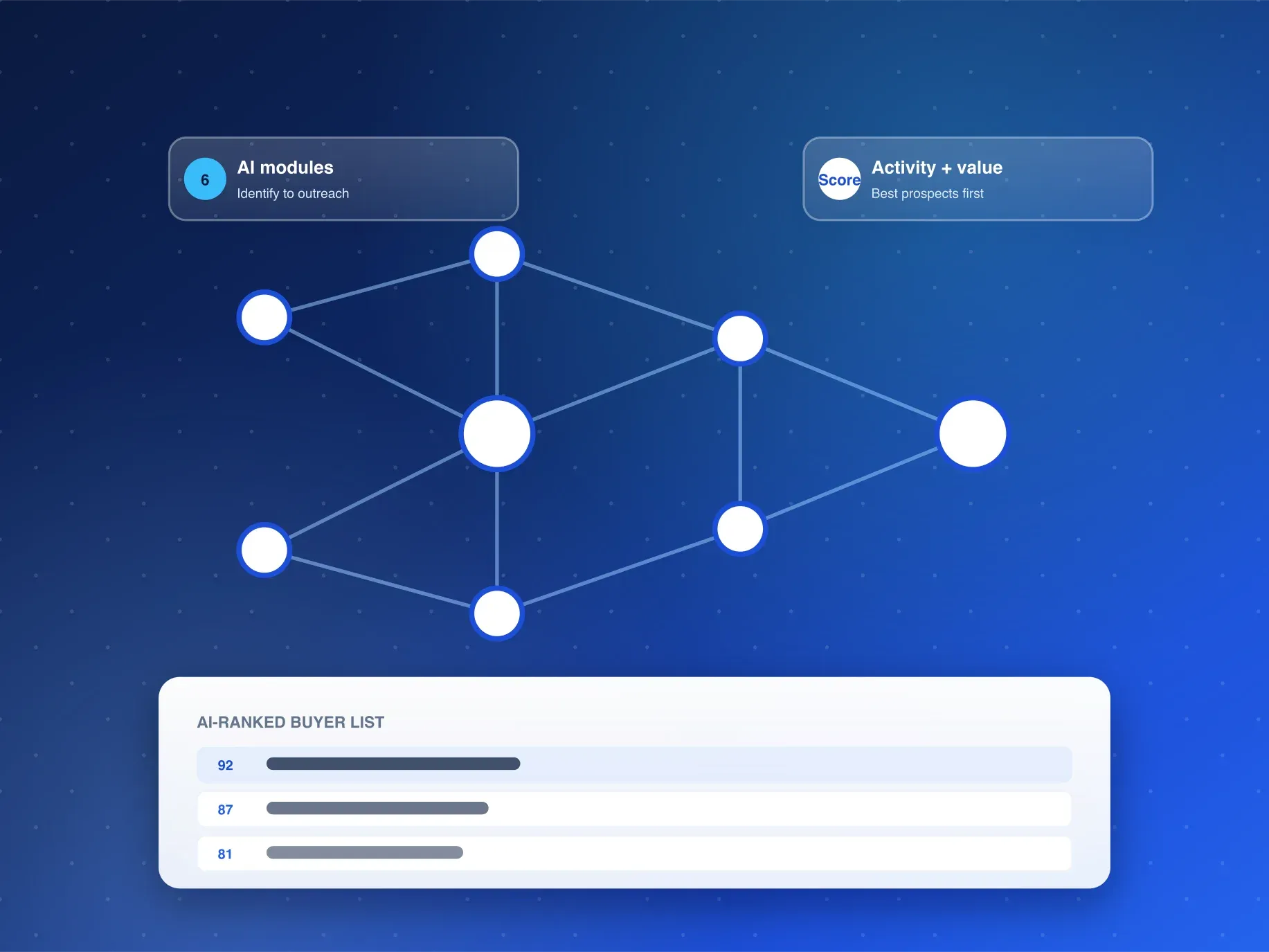
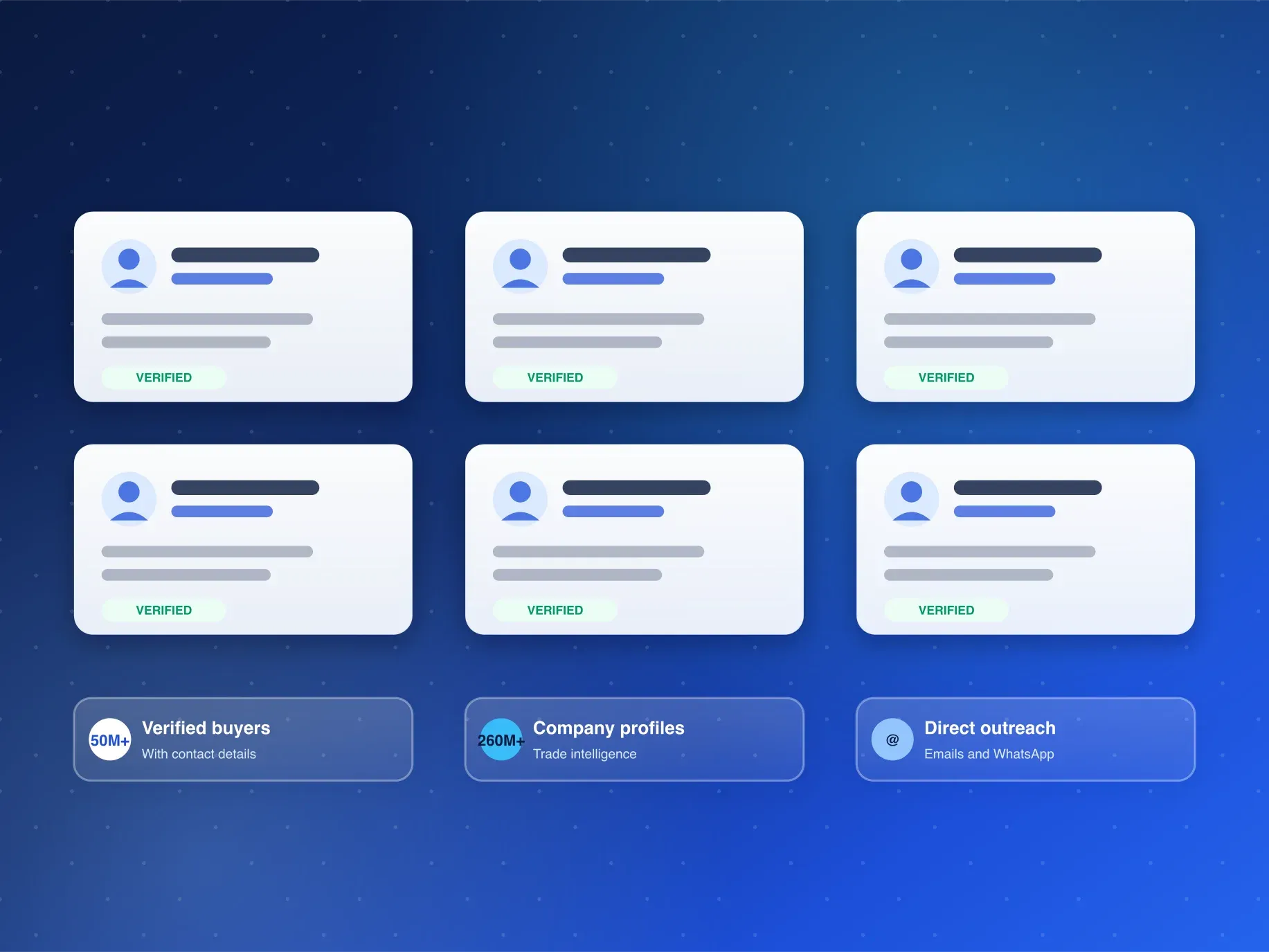
Accounts that cleared the bar move straight into contact, opening with observations from their own records. The AI Buyer Discovery Suite supports that step — identification, activity and opportunity-value scoring, market recommendation, similar-buyer discovery, outreach lists with emails and WhatsApp contacts, and competitor buyer detection — which lets the pilot's short list widen deliberately rather than by improvisation.
And one line on what the pilot is not: it is not a backdoor launch. If mid-quarter the results look strong, resist widening the category early — a completed narrow pilot is a decision; an interrupted one is a campaign with worse planning and no clean conclusion.
Keep the bar fixed and the scope fixed, and let the quarter finish. The discipline is the product.
There is also a useful comparison to run inside the pilot itself: split the quarter in half and compare the accounts found in each half. A healthy read returns new qualified names in both halves; a read that front-loads everything in week one usually means the category was already known to your team, and the market itself is still unexplored.
Frequently Asked Questions
What coverage does Mongolia have on Customsdatas?
Trade declarations only, with a NEW flag marking the recent addition.
Why not launch immediately on a newly covered market?
Because a launch commits budget before the market has answered, while a pilot ends with a decision either way. Buy the decision first.
How do I start the pilot?
Send your product name or HS code through the inquiry form or WhatsApp. The team replies within 24 hours (Mon-Sat, GMT+8) with sample records for your category.
Want to spend one quarter learning instead of guessing? Request a free sample from Customsdatas and build the Mongolia pilot read within 24 hours.