Oct 6, 2026Country Guides
Malaysia Customs Data (2026): A Complete File Deserves a Standing Routine
Full fields on both sides, English records, air freight and a regular refresh leave nothing to work around. The method becomes a routine you run, not a puzzle you solve.
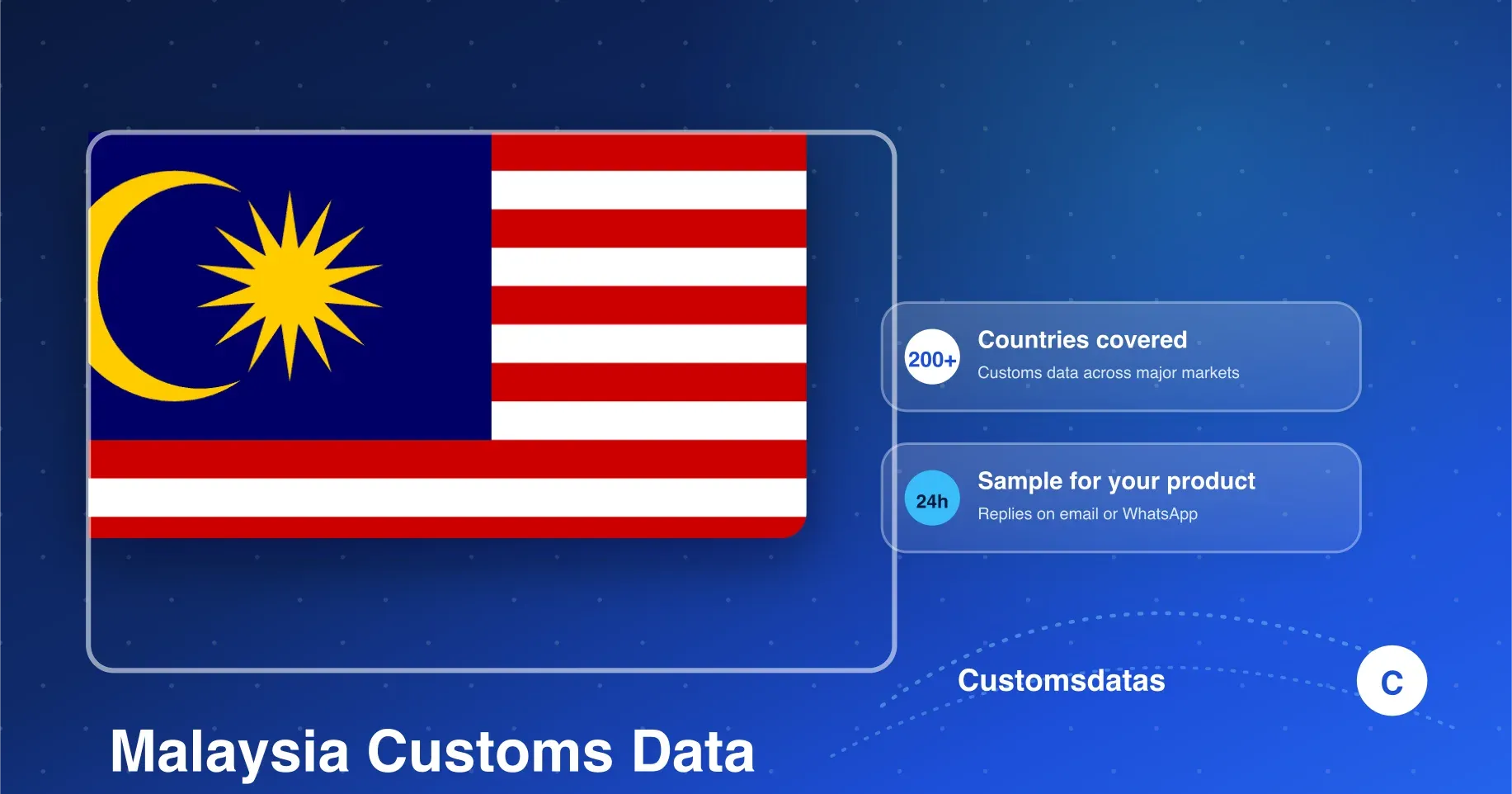
Malaysia arrives on Customsdatas with the kind of coverage that removes excuses: a trade layer and a shipping layer, both directions carrying exporters, product description, HS code, quantity, weight, value and brand, records in English, air freight covered, and a file that refreshes regularly. There is no missing column to route around, no language barrier to budget for, no stale window to caveat.
That completeness changes the nature of the work. In constrained markets, the method is built around what the file cannot say. Here the puzzle inverts: with nothing to work around, the risk is drift — searches run when inspiration strikes, lists rebuilt from scratch each quarter, findings that never compound. The answer is a standing routine: a fixed cycle you run the same way every time, so that each pass adds to the last one instead of replacing it.
What completeness actually buys
A complete file does not make the market easier to understand; it makes the work repeatable. Every question a sourcing campaign asks — who trades the category, at what scale, on which labels, how recently — can be answered from the same columns, in the same form, on every pull. That consistency is the raw material of a routine, because a routine is just a set of questions asked on a schedule.
Buyer tip: write the routine down before the first pull — which searches, which columns, which day. An undocumented routine drifts within two cycles, and drift is the one failure a complete file cannot prevent.
The weekly half-hour
The routine itself needs to be small enough to survive a busy quarter. One shape that works: a fixed half-hour on the same day each week. Re-run the category searches, note which names entered or left, check the air lanes for anything the surface trade has not shown yet, and append the differences to a running log. Nothing clever — the value is that it happens every week regardless of mood.
Because the file refreshes regularly, the weekly pass has something real to compare against. A routine over a static file degenerates into re-reading; over a refreshed one, it becomes a live instrument — the log grows, and the log is the asset.
A log that compounds week by week
Each week's half-hour adds a thin layer: dates, names, movements, small notes. Individually the layers are trivial; stacked over a quarter they become something no single pull can produce — a trajectory for every account in the category. Who is steady, who is growing, who appeared twice and vanished: the log answers from accumulated evidence rather than impression.
Buyer tip: keep the log append-only. Corrections go in as new entries with a reason, never as edits — an append-only log is auditable, and auditability is what lets a colleague trust it without re-doing the work.
Both directions, one routine
The symmetric field set lets the same weekly pass cover both sides of the trade without changing shape: run the buying-side searches, run the selling-side searches, log both. Over weeks, the two logs start to answer each other — a selling-side name that appears just as a buying-side name goes quiet is the kind of transition only a standing routine catches in time to act on.
The air check inside the weekly pass
Air freight coverage earns its slot in the routine rather than a separate project. Lighter and higher-value categories often show movement in the air lanes first, so the weekly check on the air roster works as an early-warning line for the categories you track — small effort, placed where it changes decisions.
The monthly harvest step
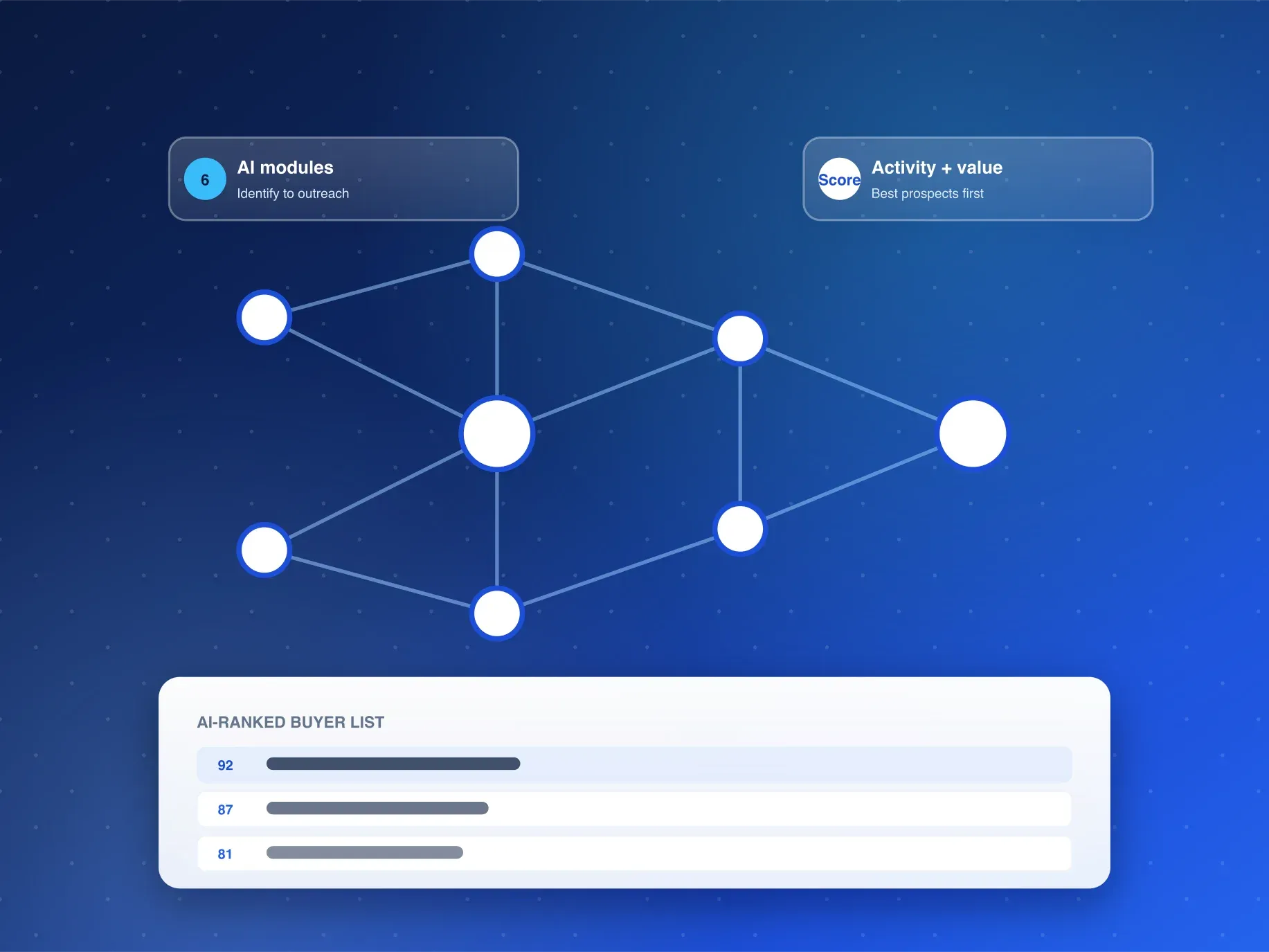
Once a month — not every week — the log gets turned into action: pull the accounts whose trajectory earned it, rank them, and let the AI Buyer Discovery Suite run its scoring and contact pass over the month's shortlist — identification, activity and opportunity value, market recommendation, similar-buyer discovery, outreach lists with emails and WhatsApp contacts, and competitor buyer detection. The monthly list is short because the log has already done the watching; the suite spends its effort on accounts with a history.
How the routine survives a busy quarter
Routines die quietly, so plan for it: fix the calendar slot, keep the pass to half an hour, and let the monthly action step provide the payoff that justifies the weekly cost. A routine that produces a ranked list every month funds itself; one that only accumulates notes does not survive the first busy season.
The monthly step also gives the routine a natural place to change its mind. If a category stops repaying attention, the log will show it before the calendar does, and dropping one search from the fixed set is a decision made on evidence rather than fatigue. Routines that can prune themselves stay honest; routines that only grow become chores.
The first cycle is the hardest — the searches need tuning, the log needs structure. From the second cycle onward the routine runs on rails, and the complete file underneath it finally pays what completeness promised: not a one-time answer, but a market that stays read.
Frequently Asked Questions
What does Malaysia's coverage include?
Trade and shipping layers, with the seven documented items — exporters, product description, HS code, quantity, weight, value and brand — present in both directions. Records come in English as the working language, air freight is part of the coverage, and the file refreshes on a regular rhythm.
Why a routine instead of a one-off read?
Because completeness removes the constraints that structure one-off reads elsewhere. A standing weekly pass turns the refreshed file into a compounding log — trajectories, not snapshots.
How do I set up the routine on Malaysia?
A sample request through the inquiry form or WhatsApp brings Malaysian records matched to your product line, with the reply landing inside 24 hours (Mon-Sat, GMT+8).
Want the first cycle of the routine running on your category? Request a free sample from Customsdatas and log the baseline within 24 hours.