Oct 2, 2026Country Guides
Kazakhstan Customs Data (2026): Reading Without a Weight Column
Kazakhstan's records list quantity and value but not weight, in Russian, with regular updates. How to rebuild the missing dimension from what is there — and where to stop.
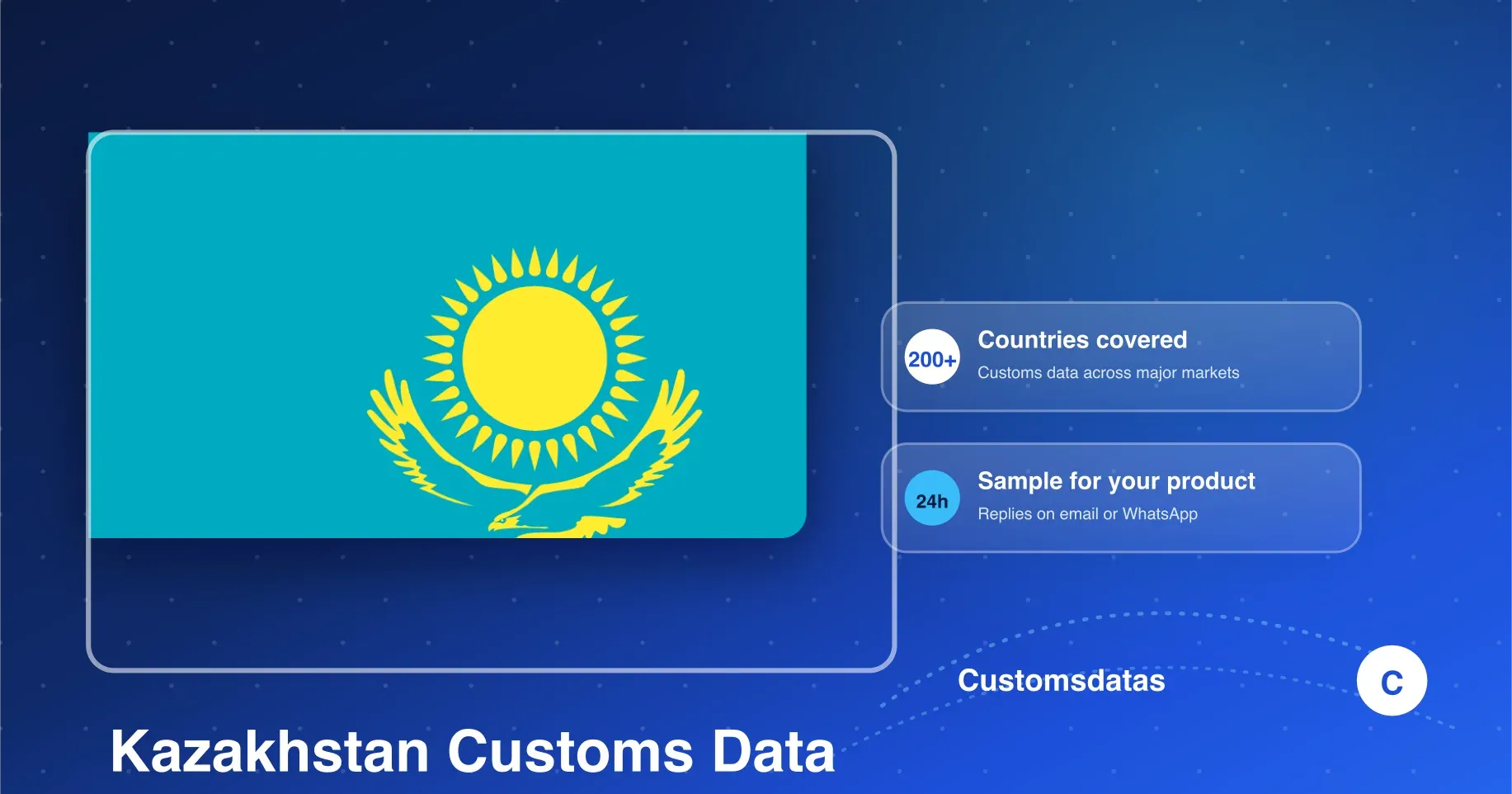
Kazakhstan appears on Customsdatas with one trade layer, records in Russian, air freight coverage, regular updates — and a field set worth reading before the first search: exporters, product description, HS code, quantity, value and brand all appear in both directions. The weight column is absent.
A missing weight column narrows what a file can say, but it does not empty the file. Quantity and value survive, and the relationship between them carries part of what weight would have carried. This guide works that relationship deliberately, and marks clearly where the records stop answering.
Six of seven, and the missing one
Weight serves one job in trade data: it measures how much of the shipment is mass. That is what turns a record into a freight-and-logistics instrument. Without it, you cannot compute density, and you cannot compare a tonne of steel against a tonne of textiles — the mass dimension is simply absent from every row.
Buyer tip: mark the absence before you plan around it. A read that silently assumes weight — quoting per-kilo costs, estimating container fill — will produce numbers the file never contained, and those numbers surface at the worst moment, in front of a buyer.
It helps to say what the missing column costs in practice. Weight is what a freight quote consumes, what a packing list reconciles against, and what a density comparison needs. Three use cases, one absent field — which is why logistics questions belong to a different source, and why everything else does not.
What quantity and value still say
Quantity measures count — pieces, units, standard packages — and value measures worth. Together they describe the commercial side of every movement: what moved, how many, at what declared value. That is a complete commercial picture; it is only the physical densification that is missing.
Read the two dials together. A movement carrying high value at low quantity is a premium or specialized product line; high quantity at modest value is the volume end. The same category can host both, and separating them by this ratio is how you tell a product family from a raw commodity.
Unit value as the second dimension
Divide value by quantity and you get unit value — a number the file fully supports, because both of its ingredients are listed in every row. Unit value clusters tell you where a category's center of gravity sits: tightly grouped rows suggest a standardized product; a wide spread suggests mixed specifications moving under one code.
Buyer tip: treat unit value as a band, not a decimal. Report the range your shortlist spans rather than an average — a band survives scrutiny, a single average invites arguments about which rows went in.
Brand as a third dial
The brand column present in both directions adds a channel axis. Where brands concentrate, the category moves on label; where the field is empty across a category, it moves on specification — and specification markets are where a new supplier conversation starts most easily.
Read brand density by category before reading it by row. One branded movement proves a label exists; a category half-filled with brands proves the label controls purchase decisions, which is a finding you can plan around.
Term lists in two vocabularies
Records arrive in Russian, which shapes the search terms rather than the method: product descriptions follow Russian commercial vocabulary, while HS codes and brand names often travel untranslated. Build your term list in both vocabularies and let the codes anchor what the words miss.
The regular update rhythm then keeps the reading honest: run the same terms against a later window and compare what entered, what held, and what went quiet — the same discipline any updated file rewards, applied to the columns this one actually contains.
One habit smooths the bilingual friction: fix your term list once and reuse it across pulls. A stable, dated query set turns language drift into a controlled variable, and the refresh comparison then measures the market rather than your own translation choices.
Where the file stops answering
Freight questions are out of scope: without weight, the file cannot price transportation or compare modes. Treat any logistics estimate built on this data as an estimate from another source entirely — and say so.
What remains in scope is more than it sounds: which accounts trade the category, at what commercial scale, on what unit-value band, under which brands, and how any of that changed since the last pull. That is a complete sourcing map for everything except mass.
A ranked sheet from six fields
The output is a ranked sheet where every account carries four readings — quantity band, unit-value band, brand status, trajectory since the last pull — and no invented mass. Compact, defensible, and ready for the next step.
That sheet then feeds the AI Buyer Discovery Suite for a scoring and contact pass that opens with identification, activity and opportunity value, market recommendation, similar-buyer discovery, outreach lists with emails and WhatsApp contacts, and competitor buyer detection. Each ranking the suite hands back stays inside the six listed fields.
Frequently Asked Questions
Which fields does Kazakhstan's coverage list?
The field set runs the same in both directions: exporters, product description, HS code, quantity, value and brand — weight is not listed. Russian-language records, with air freight coverage and regular updates.
Can I still compare shipments without weight?
Commercially, yes — quantity and value carry the comparison. Physically, no: mass comparisons need a weight column this file does not list, so keep logistics questions on a separate sheet.
How do I run a first read on Kazakhstan?
Describe your category on the inquiry form or WhatsApp, and your Kazakhstan sample goes out inside 24 hours (Mon-Sat, GMT+8).
See the six-field read applied to a category you already sell? Request a free sample from Customsdatas; the unit-value bands follow within 24 hours.