Oct 18, 2026Guides
Found an Import Record — Is It Worth Developing? Four Screens
A record in hand is a decision point, not a green light. Four screens — role, goods, time, scope — decide in minutes whether this company deserves the next hour of your work.
The moment a promising record appears, two instincts compete: drop the current work and write to the company, or doubt the record entirely and move on. Both skip the same step. A record is neither a green light nor noise — it is a decision point, and the decision is whether this company deserves the next hour of your work. Four screens answer that, in the order that eliminates fastest.
Each screen below is deliberately shallow: one question, answered cheaply, and the record either advances or retires. The deep work — reading a record's fields and finding the person behind it — is covered elsewhere on this site; this guide is only the order in which to decide whether that work is worth starting.
Screen one: what is this company's role?
The first screen is role, because role decides whether the company is even a candidate for what you sell. A record names a participant in a transaction, and that participant can be an importer who uses the goods, a distributor moving them onward, or a service party whose name appears in the paperwork without owning the trade. The question is not what the company does in general, but what it did in this movement. A company's own description of itself — manufacturer, trader, importer, distributor, logistics provider — gives a declared role to compare with the record, and that declaration is a better starting point than an inference from a single movement.
Buyer tip: if the role is still unclear after a quick look at the company's own description, that is itself an answer — the record is not ready to develop, and the company can wait until a clearer one appears.
Screen two: substance, not proximity
The second screen checks substance: is what the company moved actually in your product family, or merely close enough to look plausible on a list? Sharing a category is not sharing a need. If your offer solves a specific problem inside that family, the screen asks the harder version of the question — does the record suggest this company buys that kind of thing, or only that it buys somewhere nearby?
Buyer tip: write down the one sentence that connects the record's goods to your offer. If the sentence needs qualifications to survive, the fit is weak, and weak fits are where wasted outreach usually begins.
Screen three: recent enough, repeated enough?
The third screen asks whether the movement is current enough to act on and repeated enough to mean anything. A single movement is a moment; a run of movements is a pattern. The screen passes a record when it sits inside a recent series, or when a second data point can be checked before any letter is written. A record that is both old and alone is parked, not developed.
Buyer tip: a single large movement can be the most seductive and least reliable record in the file — one-off projects can look exactly like them. Let a second data point settle it before any letter.
Screen four: what is the record's scope of proof?
The fourth screen is scope: what decision can this record support? It is evidence of one movement by one company, and that is enough to justify one question. It is not evidence of a market, a category trend, or a company that is still buying. The screen's job is to stop a single record from being promoted into a plan — a plan needs several records that survived the same four questions.
What earns the next hour
A record that clears the four screens has earned the next hour: reading its fields properly, attaching the right person, and writing a first message that cites what was observed. A record failing any screen is not lost — it is filed with the reason, and the reason is what makes the next search smarter. Over weeks, the failed screens teach you which languages and which categories keep producing weak fits, and your searches narrow accordingly.
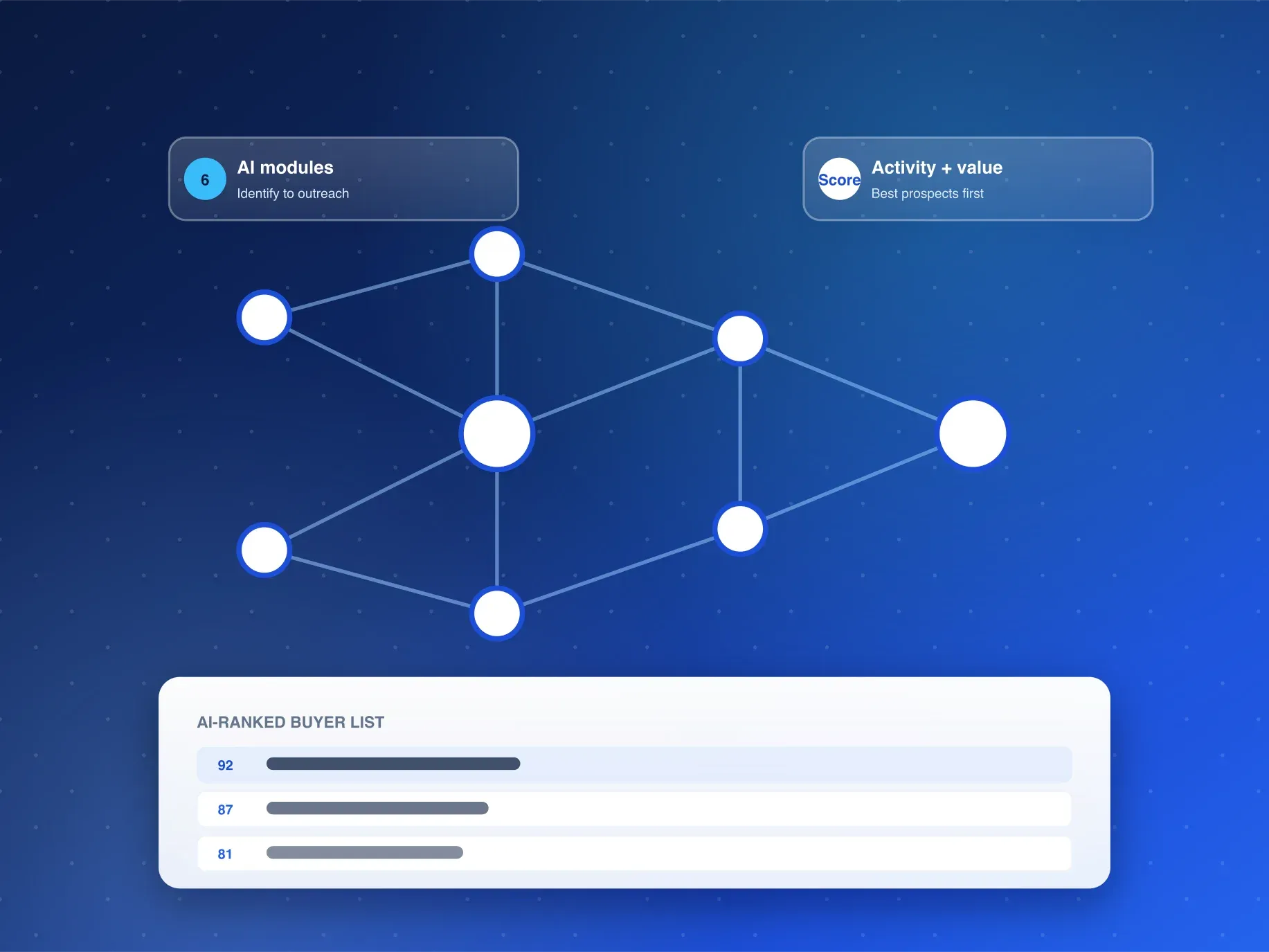
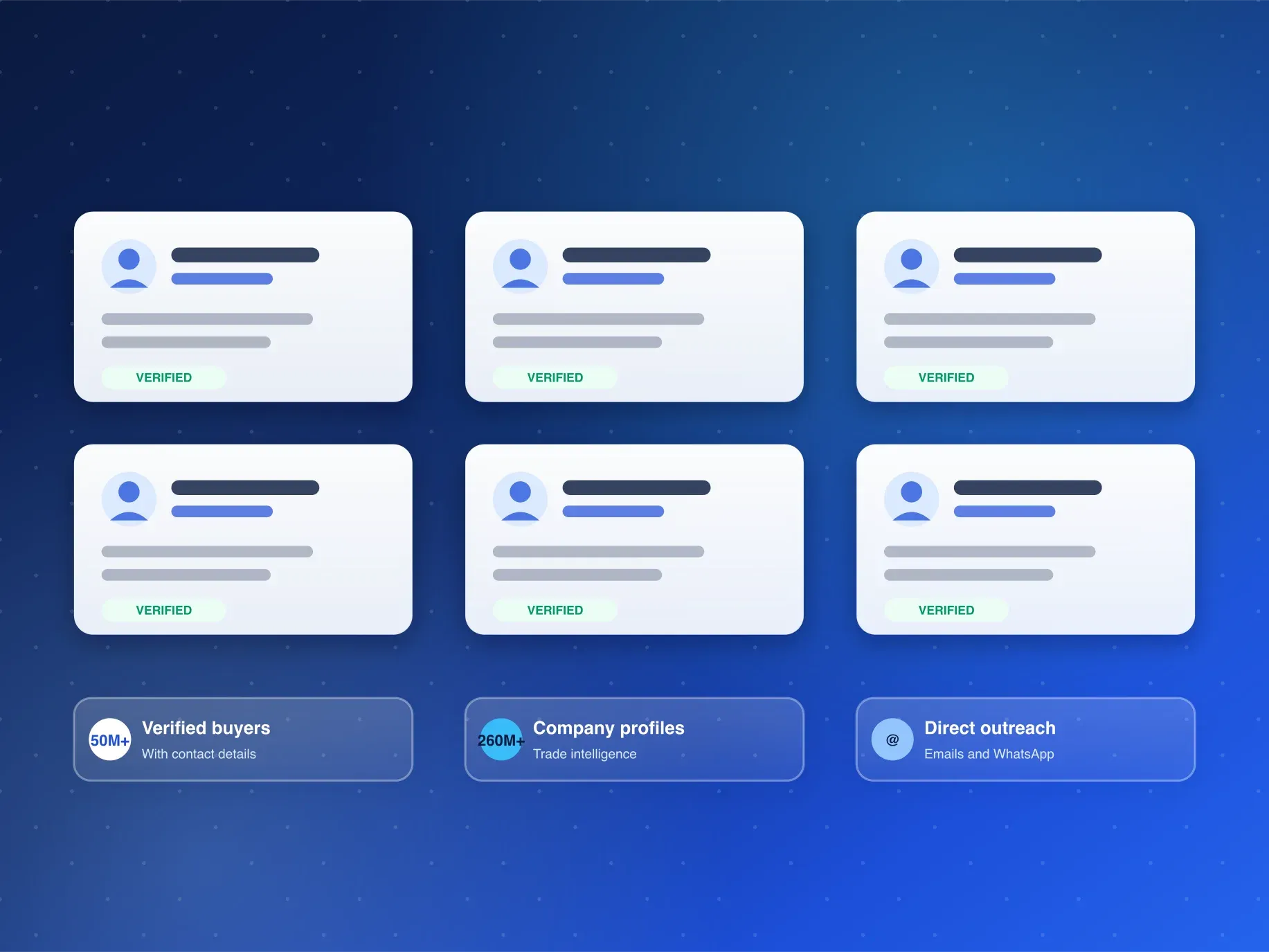
When the screens start passing records consistently, the volume becomes the next problem, and that is where automation earns its place: the AI Buyer Discovery Suite runs its scoring and contact pass — identification, activity and opportunity value, market recommendation, similar-buyer discovery, outreach lists with emails and WhatsApp contacts, and competitor buyer detection — over accounts your screens have already cleared once.
Four screens in four minutes
Run in order, the screens are fast because each one is cheap to answer and each one can retire a record before the expensive work begins. The survivors are worth the hour. The habit worth building is the pause itself — the moment between finding a record and acting on it, filled with four honest questions instead of an impulse in either direction.
The screens also improve your search terms over time. Each failed screen leaves a note — role unclear, goods adjacent, date stale, scope thin — and a stack of such notes is a map of where your searches keep overreaching. Narrowing the search by what survives is cheaper than refining the same search repeatedly.
Frequently Asked Questions
Is one record ever enough to write a letter?
Rarely, and not on its own. One record can justify a question, not a pitch — the letter should cite the observation and ask the question the record earned. Claims about the company's demand need a pattern, and a pattern needs more than one movement.
What if the company's role stays unclear?
Then the record is not ready, and forcing the role guess is how outreach goes to the wrong desk. File it with the open question and let a later record or a quick look at the company's own description settle it.
How do I run these screens on real records?
The screens need live material: describe what you sell and where you sell it in one message, then request a sample by the inquiry form or WhatsApp. The sample reaches you inside a day (Mon-Sat, GMT+8), and the four questions can be run the same afternoon.
Stop treating each record as a lead — put it through four questions first. Ask Customsdatas for a free sample and triage your first batch the day it arrives.