Oct 6, 2026Country Guides
Iraq Customs Data (2026): The Market That Is, Not the One Reported
News-heavy markets get described twice — once by headlines, once by records. Working the movement layer as the primary source keeps the read anchored in what actually moved.
Iraq appears on Customsdatas with a single documented layer — shipping — and no field breakdown in the coverage table, so the record details are settled on a sample run against current data. The configuration is spare. The method this guide works is built for a situation that recurs in heavily reported markets: descriptions arrive from reporting, risk briefs and secondhand summaries, with conclusions attached.
Where that situation holds, the habit that pays off is reading the records as the primary source and treating every verbal description of the market as a claim to be checked. The question this guide works is not what is happening in Iraq — the file will not editorialize — but how to organize a read so that what you conclude stays anchored to what actually moved.
Two descriptions of one market
A market can be described in words or in movements, and the two versions rarely match. Words compress: they generalise, they carry the dramatic periods, they arrive pre-interpreted. Movement records cannot editorialize — an entry exists because goods travelled, full stop. Neither version is complete alone, but only one of them can be checked line by line.
Buyer tip: keep two columns in your working sheet — what you heard, and what you saw. The gap between them is not a problem; it is the actual research agenda, itemized.
Let the movement file speak first
With shipping as the single documented layer, the primary-source discipline has a concrete form: let the movement records define the market's cast. Parties that appear, categories that move, the rhythm of arrivals — these are observations, and observations survive being quoted. Treat the layer as the ground truth for who is actually trading, whatever the narrative says about the market's mood.
The read is pattern-first: the same party appearing across the window matters more than any single large entry, and a category showing steady arrivals matters more than a burst. Continuity, not size, is what a single movement layer is best at showing.
Every claim becomes a search
Every verbal claim about the market — that a category is booming, that a channel has closed, that buyers have shifted — becomes testable once the file is open: search the category, count the window, and let the presence or absence of movement answer. Some claims will confirm cleanly; some will dissolve. Both outcomes are worth having on paper.
Buyer tip: write the claim down before you run the test, in the words you heard it. A test against a remembered paraphrase proves nothing when the original claim resurfaces.
What the gaps are worth
A market read against its reporting will also produce absences: a category everyone discusses that barely moves, a channel assumed busy that shows thin records. Absence in a movement file is not proof of absence in the economy — coverage has limits, and the sample run will tell you how far the records reach. But an absence is a question with a date on it, and questions like that keep a market read honest.
Keep the tested claims in the same file as the observations, separated by a line. When a claim confirms, it becomes context worth citing; when it dissolves, it becomes a dated correction worth remembering the next time the same narrative resurfaces. Markets described loudly for years accumulate both kinds of entries, and the file is what keeps them from blurring.
Calibration before conclusions
Because the coverage table leaves this market's field sets unlisted, the sample run is where the read earns its footing: what the movement records actually carry, how parties are recorded, and how current the window runs. Run it before testing any claim — a test is only as good as the record grammar underneath it.
One more calibration habit: read the sample with a colleague's questions in hand. The record grammar that seems obvious to you may puzzle someone else, and the notes you write for their questions are the ones that make the file shareable when the campaign widens.
The picture that survives testing
The work product is a short, sourced picture: parties observed moving, categories with continuity, claims tested and marked as confirmed or dissolved, and the sample-run notes on what the records cover. Small, checkable, and quotable — every line can show its entry.
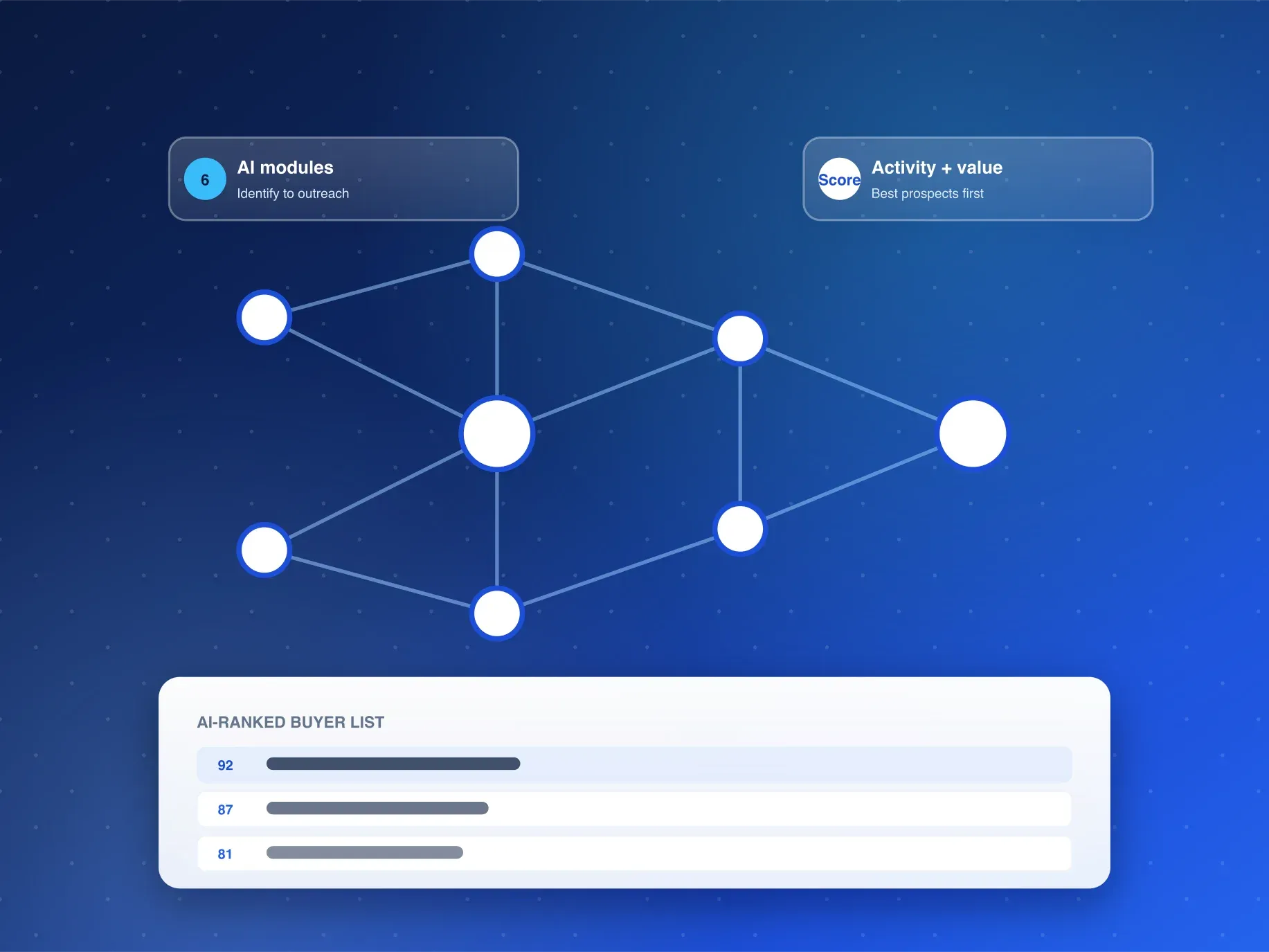
The AI Buyer Discovery Suite then works that picture through its six modules — identification, activity and opportunity value, market recommendation, similar-buyer discovery, outreach lists with emails and WhatsApp contacts, and competitor buyer detection — and the verified shortlist it ranks is one you can defend to the most skeptical person on your team, because none of it came from a headline.
An opening built on what moved
The verified picture changes the tone of the first letter. An opening built on observed movement — the category, the cadence, the window — lands differently from one built on market chatter, and prospects in any heavily-reported market can tell the difference immediately. Evidence, quoted carefully, is the most respectful opening a first message can have.
Frequently Asked Questions
What does Iraq's coverage include?
A single documented layer — shipping. Its field-level details are not broken out in the coverage table and are confirmed on a sample run against current data.
Why treat records as the primary source?
Because verbal descriptions of a market arrive pre-interpreted and cannot be checked line by line, while movement records are observations — and observations are what a sourcing decision should stand on.
How do I start an evidence-led read on Iraq?
Ask via the inquiry form or WhatsApp, and Iraq movement records matched to your product line come back within 24 hours (Mon-Sat, GMT+8).
Want to test what you have heard about the market against what actually moved? Request a free sample from Customsdatas and check the first claim within 24 hours.