Oct 15, 2026Guides
How to Determine Your Product's HS Code: A Working Framework
A lookup tool returns candidates; determination is a decision made against rules. A working framework for settling the classification — and why it decides what your data search can even see.
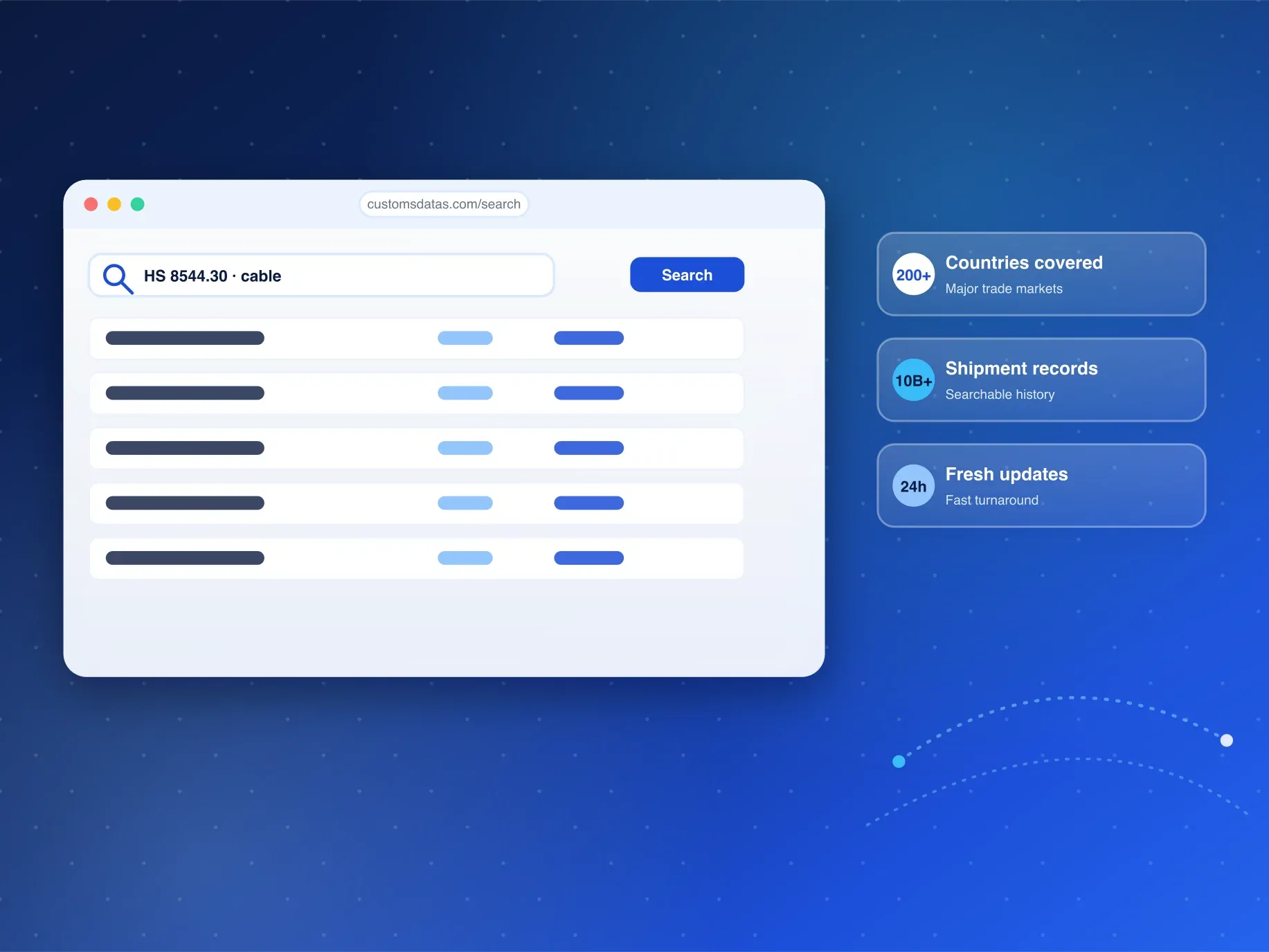
How to determine the HS code for a product is one of the most persistent questions in trade work, and it hides a false assumption: that the code exists somewhere, waiting to be found. In practice, determination is a decision — a classification made against rules, where plausible candidates must be weighed and one commitment made. Confusing the two is how searches start from the wrong key and end in the wrong market.
This framework covers the decision side: how the classification narrows, how to handle the everyday reality of multiple plausible codes, what the settled code decides downstream in your data work, and how to verify the choice before it costs you a quarter of misdirected effort. (The search side — turning a code into a buyer list — is its own workflow, covered in the beginner's guide on this site.)
Determination is a decision, not a lookup
A lookup returns candidates; a determination commits. The difference only becomes visible when a product could sit in more than one place — which, for anything beyond the most standard goods, is the normal case. A commitment needs a reason attached to it, because the reason is what survives the first challenge, whether from a colleague, a customs broker, or a surprising empty result in your own data.
Buyer tip: write one sentence per candidate code saying why it fits or fails — the reasoning is the artifact. Teams that record it settle classifications in minutes the second time; teams that skip it re-litigate the same product every quarter.
The cascade: chapter, heading, subheading
The classification system narrows in layers: a broad family of goods, then a product type within it, then a precise slot. Each level asks a sharper question, and an error early in the cascade poisons everything below it — refine a subheading flawlessly and still be wrong if the chapter was wrong to begin with.
The working practice is to descend one level at a time, and at each level write the single phrase that separates your product from its nearest neighbours. If no such phrase comes, you are not at the right level yet — the distinction between your product and its neighbours is exactly what the level exists to draw.
Buyer tip: classify in the tariff's own words, not your product catalogue's — a heading that fits only through a marketing synonym is the wrong fit.
One product, several plausible codes
Multiple candidates are the norm, not a sign of confusion. Materials, function and packaging can each pull toward a different slot; composite goods, kits and multi-purpose items create genuine ambiguity that no tool resolves by itself. The goal is not to eliminate ambiguity — it is to make a consistent, defensible choice among the plausible options.
Buyer tip: when two codes stay plausible after the cascade, look at where your product's competitors sit in the records. Commerce often settles what theory leaves open, and the codes under which your category actually moves are the working truth for search purposes.
What the code decides downstream
The settled code becomes the search key for every data workflow that follows: it defines the market slice you will see, the buyers who surface, and the trends you can read. A code too narrow reads as an empty market; a code too broad drowns the read in noise. This is why the determination is not a prelude to the search; it is where the search's ceiling is set.
Three anchors for verification
First anchor: the rules themselves, re-run as a stranger would. Walk the cascade again without your familiarity with the product and see whether the conclusion still holds — familiarity is the most common source of overconfident classifications.
Second anchor: published rulings, where they exist. Some customs authorities maintain searchable databases of classification decisions; when one covers your product family, it outweighs any private opinion, including yours.
Third anchor: the market itself. Where your sample records show the product actually moving, the codes riding on those movements are the practical confirmation — for data purposes, the market's usage is the final checkpoint.
The same product, classified the same way
No one can promise a classification that will never be questioned. What can be promised is consistency: the same product classified the same way across quarters, markets and team members. Consistency is what makes your data reads comparable with each other — and comparability is where the value of trade data actually lives.
Buyer tip: keep a classification note — product, chosen code, the one-sentence reasoning, date. It becomes the reference that stops three people from running three different searches for the same product.
The settled code as a search asset
With the code settled and verified, the downstream work is bounded by the choice: everything your search can show you sits under the code you committed to. The determination has become an asset — a reproducible key to a market you can re-read any time.
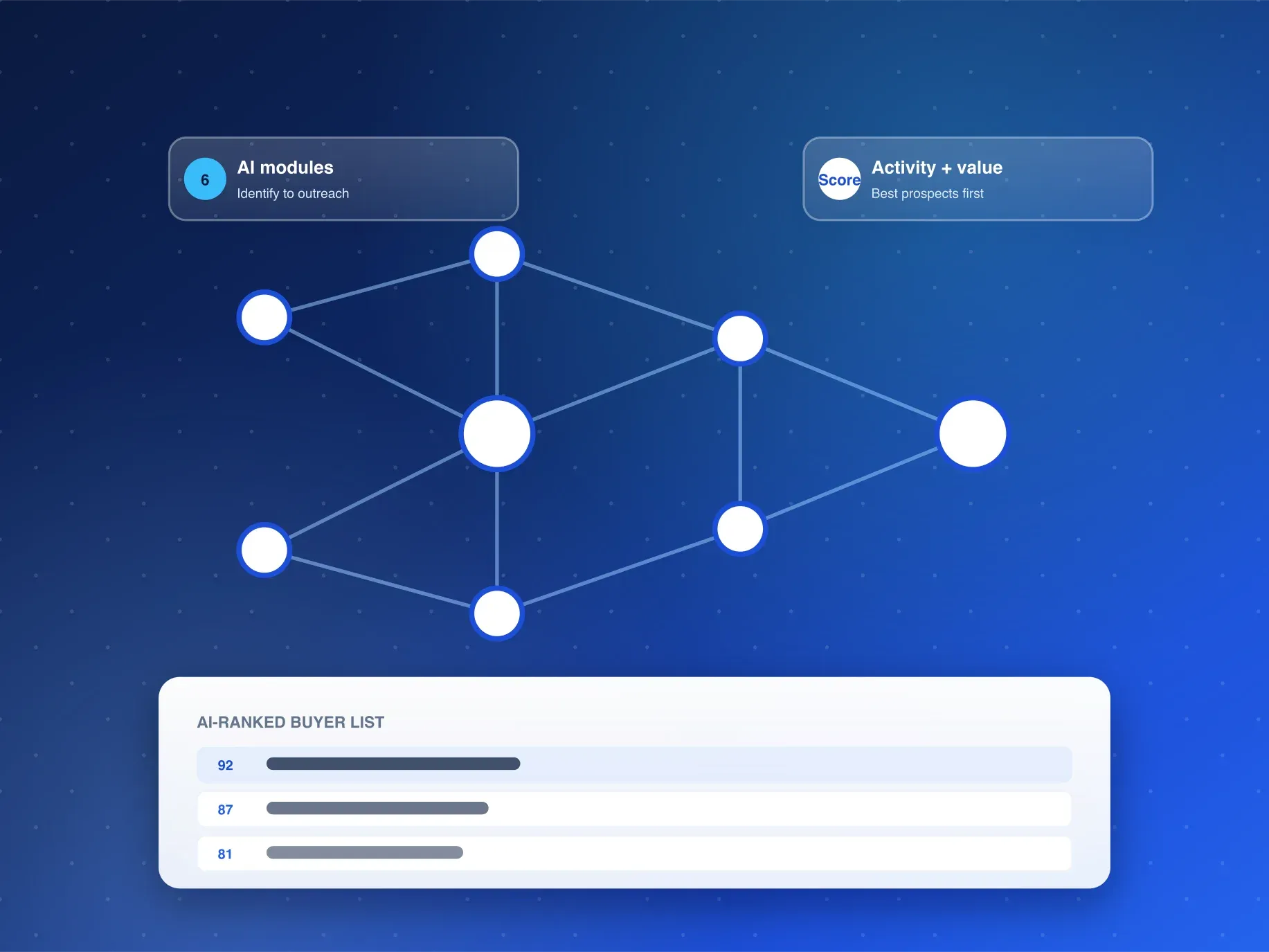
The platform's buyer-discovery layer then works from the same settled code. The AI Buyer Discovery Suite provides identification, activity and opportunity value, market recommendation, similar-buyer discovery, outreach lists with emails and WhatsApp contacts, and competitor buyer detection — reading the slice that code defined.
And the sample doubles as a final sanity check on the classification itself: settled code, chosen market, and still nothing moving where you expected movement means revisit the cascade or the market — the sample has just saved you a quarter.
Frequently Asked Questions
How do I know my code is right?
Right, for practical purposes, means defensible and consistent: the cascade reasoning holds, no published ruling points elsewhere, and the market's own records support it. Perfection is not the standard available to anyone — defensibility is.
My product seems to fit two codes — what now?
That is normal rather than a problem. Decide by practice: which code does the market itself use for your product family. When theory leaves two candidates open, commerce picks the working one.
Do all countries use the same code for my product?
The first six digits are standard across the system's members; beyond six, national extensions differ, and some authorities add their own subdivisions. For search purposes, use the code that the target market's records use.
Settle the code before you pay for a search — request a free sample from Customsdatas and test your classification against real movement within 24 hours.