Oct 16, 2026Guides
How to Confirm What a Country's Customs Data Actually Covers
Before searching a market, confirm three things: which layers it exposes, what the fields carry, and how fresh the window runs. A coverage check that prevents the most expensive kind of surprise.

A question that appears in trade communities, usually with a specific country attached: how does one search the customs data of this or that market? Behind the country-specific phrasing sits a general problem — a market's data coverage varies, and searching it well begins with confirming what the coverage actually is. The question that matters first is not how to search but what there is to search.
This guide turns that into a three-part coverage check that works for any market on any platform, including this one. Run it before the first search, and the most expensive surprise in trade data work — a campaign built on fields a market does not publish — stops being possible.
Check one: which layers does the market expose?
Markets publish different kinds of records: some expose declaration-level trade, some carriage records, some aggregates only, and many publish combinations. Each layer answers a different question — commercial structure, physical movement, market size — and knowing which layers a market exposes tells you which questions are even askable. A campaign planned around a layer the market does not publish fails before it starts.
Buyer tip: write the layers down as a checklist — declaration, carriage, statistics, and any extras the market offers — and mark which are present. The checklist is the first page of every market read you will ever do.
Check two: what the fields carry
Within the exposed layers, fields vary market by market: some records name parties on both sides of a movement, some name only one, some carry scale columns and some do not. The field question is answered one way only — on a sample against current records. A coverage page lists what a market can carry in principle; a sample on current records settles what it carries in practice.
The field check is also where searching vocabulary gets confirmed: which description wording the market's records use, whether codes or words are the more reliable handle, and how parties appear. A market searched with the wrong vocabulary reads as empty, and the emptiness is an artifact of the search, not of the market.
There is one field-level question worth singling out: whether the market's records name parties at all. Some markets publish only the flow without the participants, and that single fact decides whether the market supports list-building or only sizing. It is the difference between a market you can work and a market you can only watch.
Check three: the window's freshness
Freshness decides what kind of work the market supports. A file that refreshes regularly supports momentum reads — what changed since the last pull. A static file supports census reads — a complete picture at a known date. A market whose window is older than your planning horizon changes your plan's shape, and only the coverage check catches that before the plan is made.
Buyer tip: record freshness per market, not per platform. The same platform's different markets refresh on different rhythms, and a plan built on the freshest market's habits will quietly mis-time the rest.
One worked example
The check is quick enough to walk through with a real case. Take a market commonly asked about — Germany, say, the phrasing that recurs in the forums. The coverage check asks the same three questions of it: what layers are exposed, what fields those records carry, and how fresh the window runs. The answers are read off the market's coverage page and confirmed on a sample; they are not inferred from neighbouring markets or from the market's economic reputation.
The point of the example is the method, not the market: every country gets the same three questions, and the ones whose answers surprise you are the ones where the check just paid for itself.
The example also teaches the ordering: coverage before search, always. The temptation is to type the market's name into a search and judge by what returns — but an empty return can mean an empty market, a thin coverage, or a wrong vocabulary, and only the three checks separate the three causes. The checks cost minutes; the confusion they prevent costs quarters.
Sequence: confirm, then commit
Run in this order — coverage, then search — the workflow changes character. Searches become tests of a known coverage rather than explorations of an unknown one, and thin results get read correctly: as a property of the market's published records, not as a verdict on the market itself.
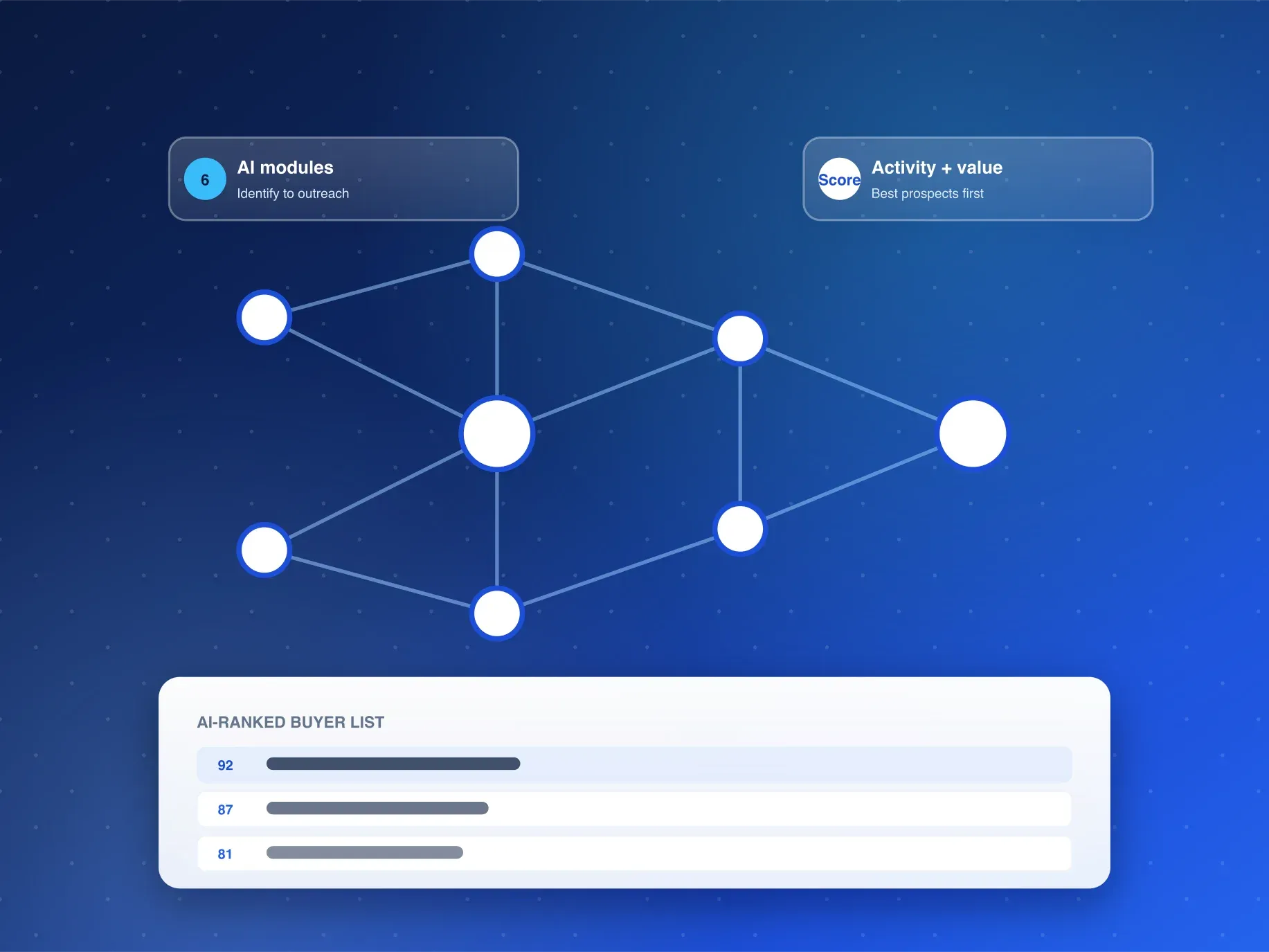
From a confirmed coverage, the searching follows the dimensions every guide here describes — product, company, direction, geography, window — and the results land on ground you prepared. The AI Buyer Discovery Suite then applies its six modules — identification, activity and opportunity value, market recommendation, similar-buyer discovery, outreach lists with emails and WhatsApp contacts, and competitor buyer detection — over what the confirmed coverage actually supports.
One closing habit: file the coverage check with the market's name on it. Coverage changes — platforms expand, fields shift, windows refresh — and a check filed today becomes the comparison baseline for the next one. Markets you re-read deserve a coverage history, the same way they deserve a search history.
Frequently Asked Questions
Where do I find a market's coverage information?
On the platform's coverage page for that market, then confirmed on a sample. On Customsdatas the per-market layer and field information sits in the country guides on this site, and the sample run settles what the records carry on the day you read them.
Why not just search and see what comes back?
Because a search over unknown coverage cannot tell an empty market from an empty search. The coverage check makes the difference visible before you spend the search.
How do I run the check for my target market?
State your product line and the market's name in the message, sent through the inquiry form or WhatsApp; the sample is delivered within 24 hours (Mon-Sat, GMT+8).
Confirm the coverage before you commit the plan — request a free sample from Customsdatas and verify your market's three answers within 24 hours.