Sep 23, 2026Country Guides
Ghana Customs Data (2026): Working a Complete Seven-Field Import Window
Ghana's HOT import coverage opens all seven fields — party, description, code, quantity, weight, value, brand — in English. A field-by-field working guide.
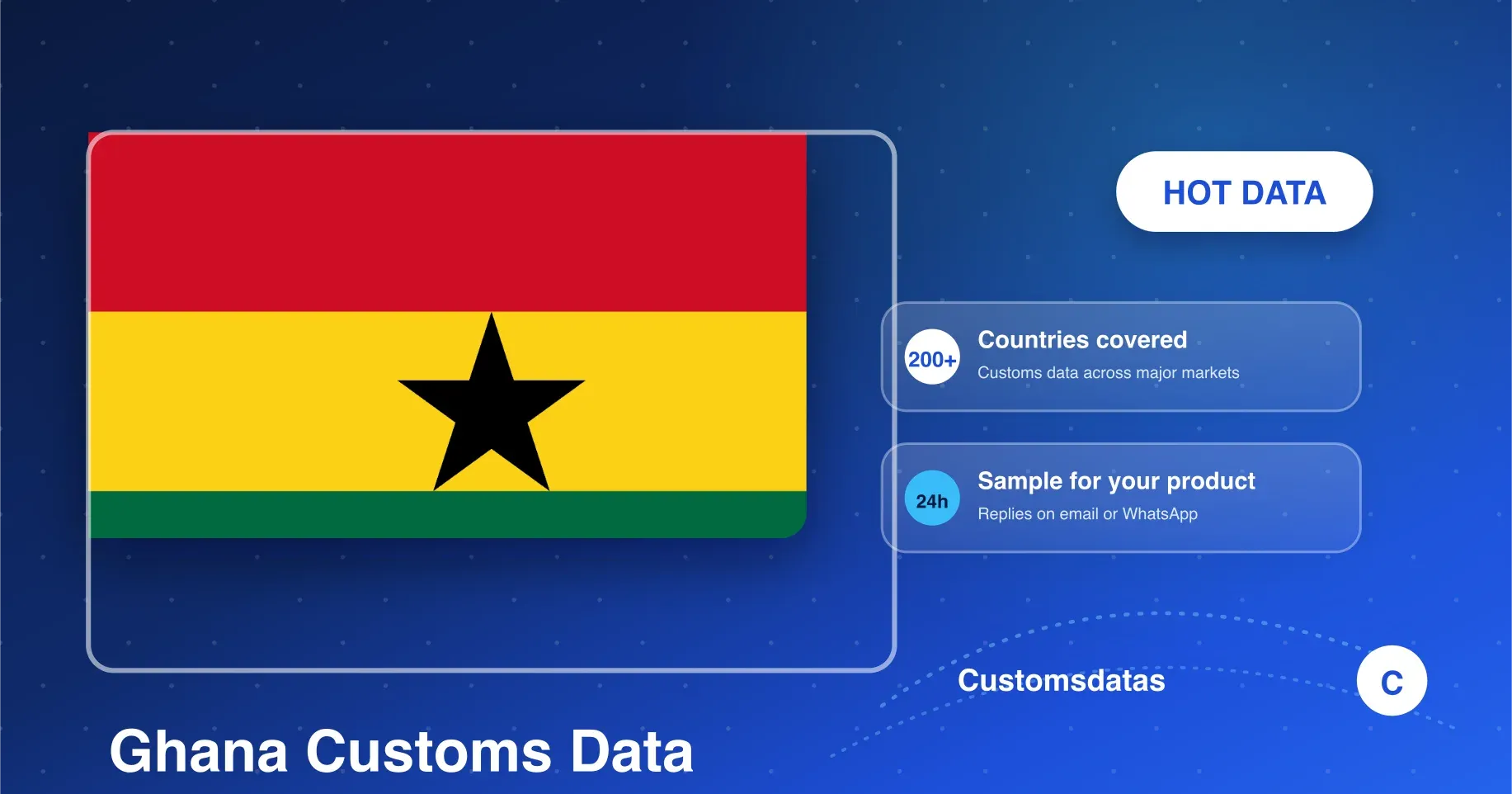
Ghana holds a HOT flag on Customsdatas, and its record set earns the label on completeness: the import window opens all seven searchable fields — the exporting party, product description and HS code, plus quantity, weight, value and brand — and the records are kept in English.
A full-field, single-direction dataset is a particular kind of tool. It cannot show you both sides of a trade relationship, but what it does show, it shows completely. For anyone selling into West Africa, that completeness is exactly the part that matters: you are looking for who buys, what they buy, and how much of it.
Seven fields, one direction — what that buys you
Because the description and brand fields are both present, Ghana supports two search routes that narrower datasets force you to choose between. Keyword searchers can find their category by how declarations describe it, and code searchers get the full quantitative read — quantity, weight and value — on every match.
The brand field is the one to respect most. In consumer and equipment categories, brands are what actually move through channels, and Ghana's import records name them. If your category is brand-driven, the brand column maps which labels hold shelf space in the market and which importers carry them.
Buyer tip: for Ghana, run description and code searches as two passes and merge the results. The description pass catches loosely coded goods; the code pass catches everything; the overlap is your cleanest shortlist.
Reading scale without guesswork
With quantity, weight and value all searchable, every candidate account can be measured three independent ways. Weight tells you mass, quantity tells you pieces, and value places the account economically — and where the three readings disagree, that disagreement is information.
A Ghanaian importer with high quantity but modest value is running volume business; one with modest weight but high value imports specialty categories. Both may fit your product, but they will never fit the same pitch. The three-column read tells you which conversation you are having before it starts.
Buyer tip: sort Ghanaian results by recurrence first, then read the scale columns. The party that appears month after month under your code is the working supply relationship; the one-time large declaration is usually an event, not a channel.
Searching directly, without a translation step
Ghana's declarations are in English, which removes the keyword-adaptation step that markets with local-language records require. Description searches work as typed, and no separate vocabulary of translated trade terms has to be built before the first useful query.
That matters more than it sounds. In language-gated markets, whole search strategies live or die on term preparation; in Ghana the barrier is simply classification quality — know your code family well and the records open directly.
The West Africa read
Within West Africa, Ghana's import window is one of the fullest single-market views available on the platform. For sellers mapping the region, the practical approach is to treat Ghana as the anchor: build your category and code vocabulary here, where all fields are open, and carry that vocabulary to neighboring markets as their coverage allows.
The seven-field window also supports regional pricing reality: value per unit in Ghana gives you a West African benchmark, useful for positioning before you commit shipment economics to the region.
Buyer tip: when you price for Ghana, check the value column against your own cost structure early. Import-driven markets punish margin assumptions that were never tested against real declared values.
Turning seven fields into a qualification scorecard
The full field set also lets you score accounts inside the search itself. For each Ghanaian counterparty, record four readings: how many periods it appears in, its typical declared value band, whether its declarations are branded or unbranded, and whether its quantities move in steps (bulk program) or steadily (replacement demand). Four readings per account, taken straight from the record, and your shortlist arrives pre-qualified instead of being a raw list of names.
Buyer tip: keep that scorecard as a file per category, not per search session. Ghana's window is refreshed regularly, and a scorecard that lives across quarters becomes a buyer watch-list — accounts moving up the bands are accounts entering their buying season.
What the air file adds, and how fresh it is
Air freight coverage is included, relevant for higher-value and lighter goods entering the region by air, and the data is refreshed regularly — the window you search reflects recent trade rather than a historical snapshot.
One factual framing note for your team: Ghana's current coverage on the platform is the import side. Plan the workflow around that: the inbound window names every party you need for outreach; there is no outbound half to cross-check against, so declaration recurrence over time is the consistency check.
From the shortlist to conversations
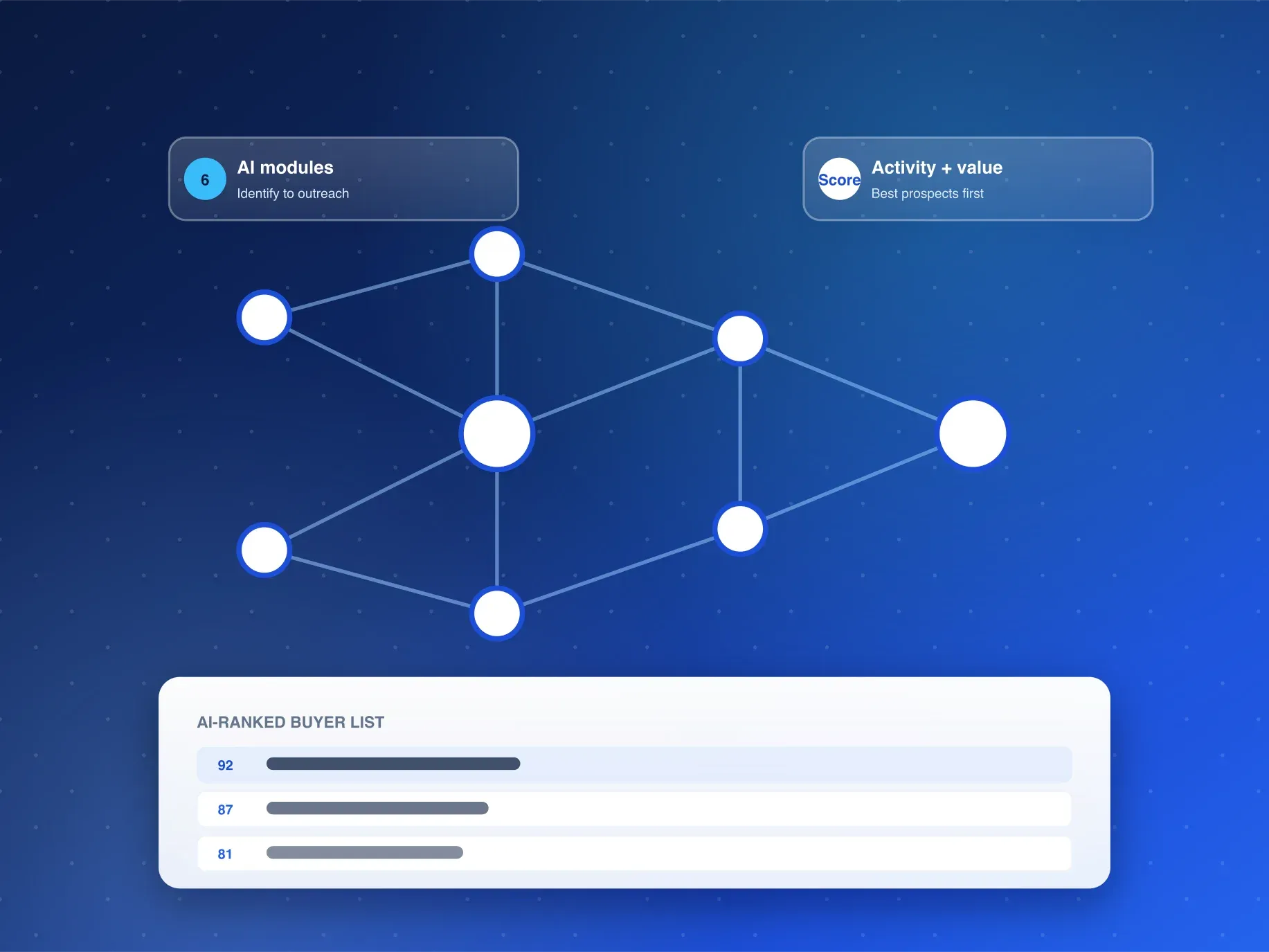
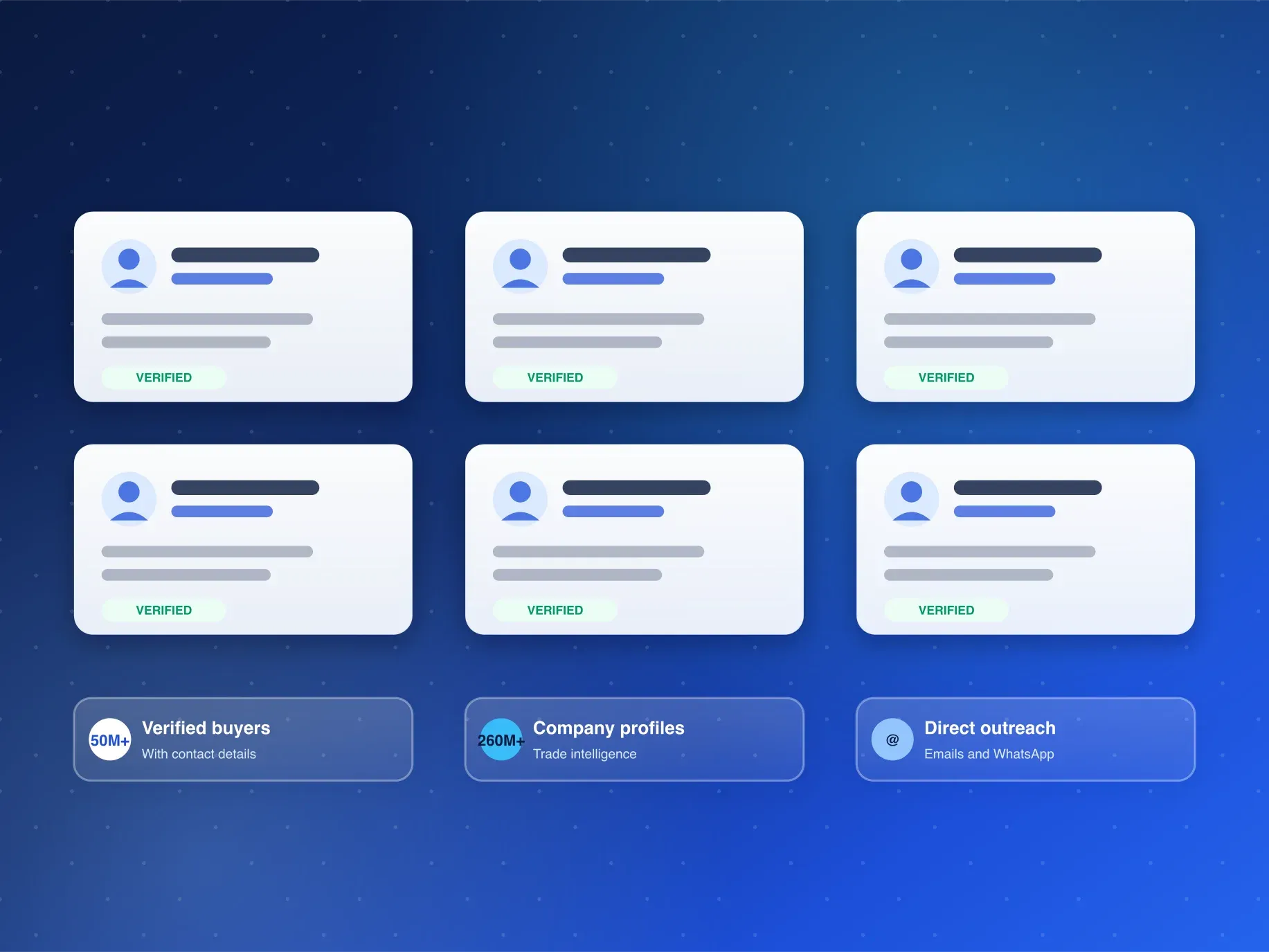
Once the Ghanaian list is ranked, the AI Buyer Discovery Suite handles the scoring pass — purchase activity and opportunity value — and generates outreach lists with emails and WhatsApp contacts, while the similar-buyer and competitor modules extend and round out the targets. On a single-direction file, starting the outreach from the fullest possible account read is what keeps the first calls productive.
Frequently Asked Questions
Which fields can I search in Ghana's records?
Seven fields, all on the inbound direction: who ships (the exporting party), what was declared (product description, HS code) and at what scale (quantity, weight, value, brand).
Do Ghana's records need translation?
No. Ghanaian declarations are written in English, so a description query runs exactly as typed — no keyword preparation or substituted trade terms required.
How do I request samples for my product?
Send your product name or HS code through the inquiry form or WhatsApp. The team replies within 24 hours (Mon-Sat, GMT+8) with Ghanaian records matched to your line.
Want the full seven-field window on your own category in Ghana? Request a free sample from Customsdatas and read the whole record set within 24 hours.