Sep 27, 2026Country Guides
Gabon Customs Data (2026): Working a New-Coverage Market at the Right Resolution
Gabon's record set is a single trade layer on new coverage. How to read it at a resolution it can actually support — and where the file stops answering.
Gabon arrives on Customsdatas under a NEW flag, with a single record type: trade declarations. That combination sets the honest first question — not what the file returns, but what one layer can support. A trade layer shows movement: what crossed the border, in which category, at what scale, and when. On its own it does not hand you a verified buyer roster. Read at the right resolution, one layer is enough to build a working shortlist; read at the wrong one, the same file produces confident nonsense.
The work, then, is calibration. Decide in advance what a qualifying hit looks like, let concentration and timing carry the ranking, and treat field-level details as something to confirm on a sample run rather than to assume from a neighbouring market's documentation. This guide sets out that method in the order you would actually use it.
One layer, read at the right resolution
A single trade layer answers questions of flow, category and scale. In a market Gabon's size, that resolution often travels further than it would elsewhere, because a compact market tends to have fewer moving parts: fewer active parties, fewer overlapping relationships, and less noise between what a record shows and what the market is actually doing. Where a larger market buries its signal in volume, a compact one lets an individual record carry real weight.
Buyer tip: write the question before you write the search. Which Gabonese accounts buy industrial pumps in repeated, mid-size lots is a question a trade layer can answer. Find me buyers is a wish, and it produces a list nobody can defend the moment the first reply comes back blank.
What NEW coverage changes about the first pass
The NEW flag describes the age of the coverage, not the quality of it. New coverage means the first passes are reconnaissance: categories fill in, names repeat, and the picture sharpens month by month. Treat the opening run as a baseline you will re-read, not as a verdict you act on immediately.
That has a practical consequence worth building into your routine: keep dated result sets. In three months, the most valuable artefact you own will not be today's list but the comparison between today's list and the one you pull next quarter, because the movement between them is what separates an established flow from a one-off shipment.
Small markets, loud signals: concentration
Concentrated markets distort scale in both directions. A single large declaration from one account can dominate a category's totals for an entire period, which makes the category look busy when the reality may be one project. The counter-move is to read parties rather than categories: how many distinct accounts show up, and how often each one returns.
Where the same handful of names keeps reappearing, treat that group as the market's backbone and build your first outreach around it. Where every record carries a new name, you are probably looking at project work or at a category that is still forming — which is useful intelligence in itself, but it is not a repeat-purchase pipeline.
Timing beats totals in sparse coverage
With a small record count, totals mislead and recency informs. A category with twelve declarations spread over three years describes a different opportunity than a category with twelve declarations in the last two quarters, even though the headline number is identical. Read the timing first and the magnitude second.
Buyer tip: rank your shortlist by how recently an account moved and how regularly it moves, then by size. On a thin file, a modest buyer with a steady rhythm is usually a better first conversation than a large buyer with a single appearance.
The overreach trap
The characteristic failure of a thin file is overclaiming. Three declarations in a category is evidence of activity, not proof of a market. Phrases like everyone imports this, or the country does not produce that, cannot be supported by a small sample, and they will eventually be contradicted by the data itself.
The safer habit is to state what you observed and let the reader draw the conclusion: the file showed this pattern across this window. Re-read the same window next quarter. If the pattern holds, you now have a claim with two observations behind it instead of one.
What only a live sample shows
What a Gabonese search can surface, and where it stops, is settled by a sample run on current data — the record layout is something to read, not to assume. Coverage tables describe what a market can carry; a sample shows what it carries today. Those are different questions, and only the second one should shape a campaign.
Treat that confirmation as a fifteen-minute step rather than a research project: request the sample, read the actual columns, then commit your search terms to what you can see.
A shortlist worth defending
The shortlist that comes out of a thin file is small, and that is its virtue. A dozen names read carefully beats four hundred rows skimmed, especially in a market where each record carries more relative weight. What matters at this stage is that every name on the list can be traced back to a specific observation: this party, this category, this window, this scale.
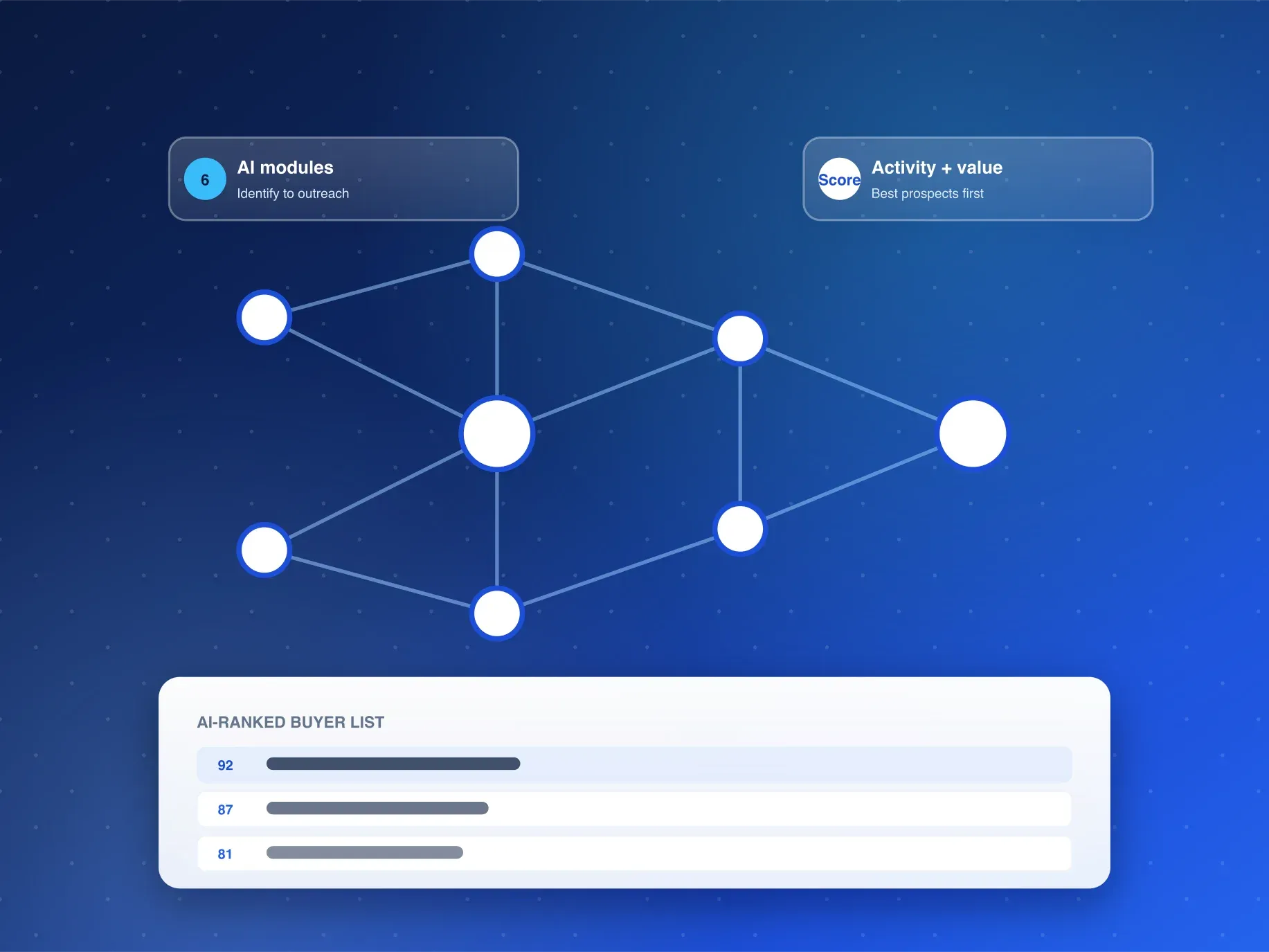
Feed that shortlist into the AI Buyer Discovery Suite for the scoring and contact pass — identification, activity and opportunity value, market recommendation, similar-buyer discovery, outreach lists with emails and WhatsApp contacts, and competitor buyer detection. The suite extends a defensible list; it does not rescue an indefensible one, which is why the reading work comes first.
Frequently Asked Questions
What does Customsdatas cover for Gabon?
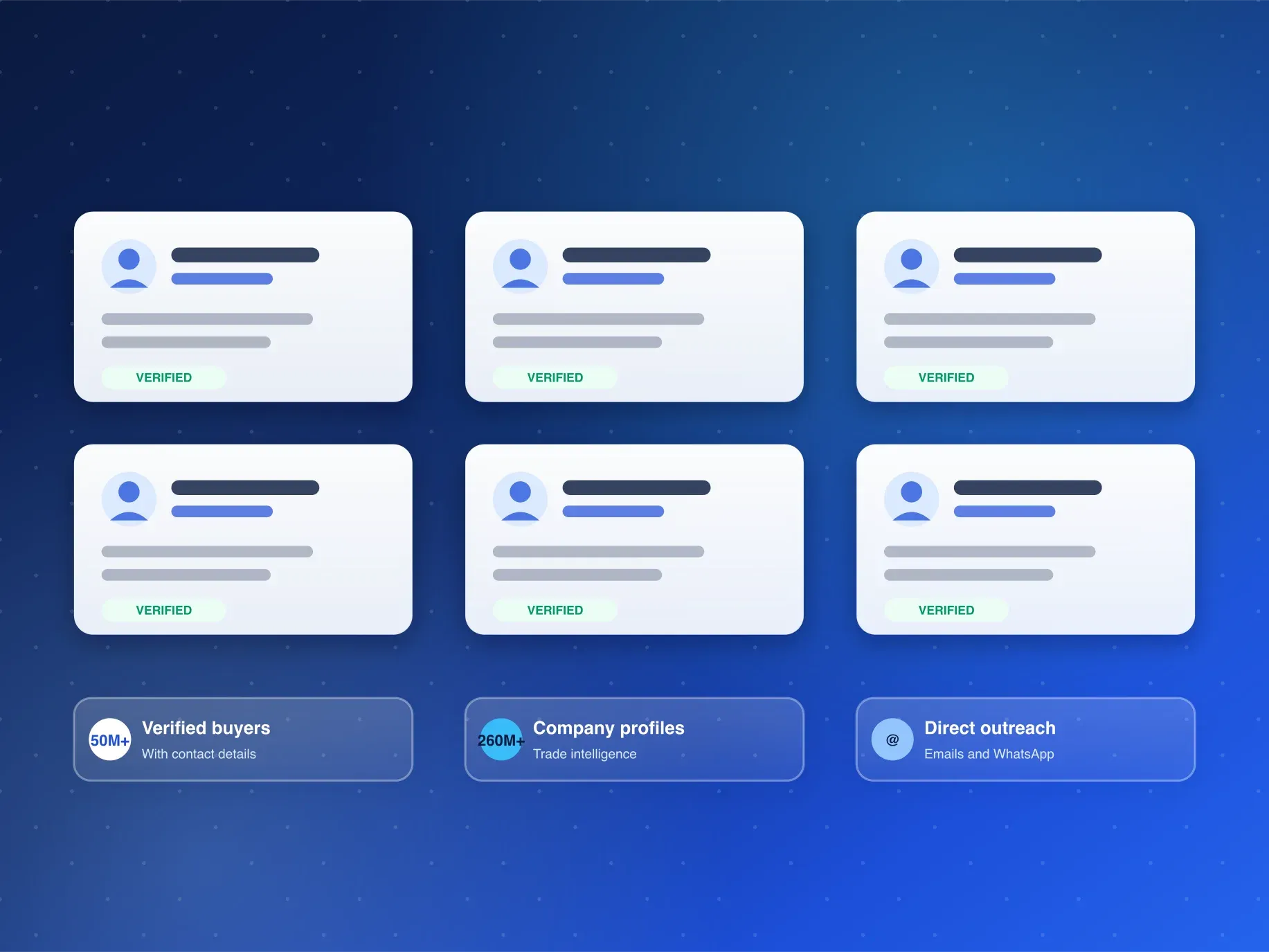
Gabon carries a trade layer on new coverage. Across the platform you get 200+ countries, 10B+ records, 50M+ buyers and 260M+ companies, with six AI tools on top. For Gabon specifically, confirm the current field set on a sample run before you plan around it.
Is one record type enough to build a pipeline?
For flow, category and scale questions, yes. A trade layer tells you what moves and how recently; the scoring and contact layers then turn those observations into names you can approach.
How do I get a Gabonese sample?
Request one through the inquiry form or WhatsApp. A reply comes within 24 hours (Mon-Sat, GMT+8) and carries records matched to your product line.
Want to see what a Gabonese sample actually returns before you plan a campaign around it? Request a free sample from Customsdatas and open the current record set within 24 hours.