Sep 26, 2026Country Guides
DR Congo Customs Data (2026): Slicing a Resource-Weighted Market
The DRC's records carry two economies in one ledger. How to fence off the extractive headline flows and read the import market beneath them.
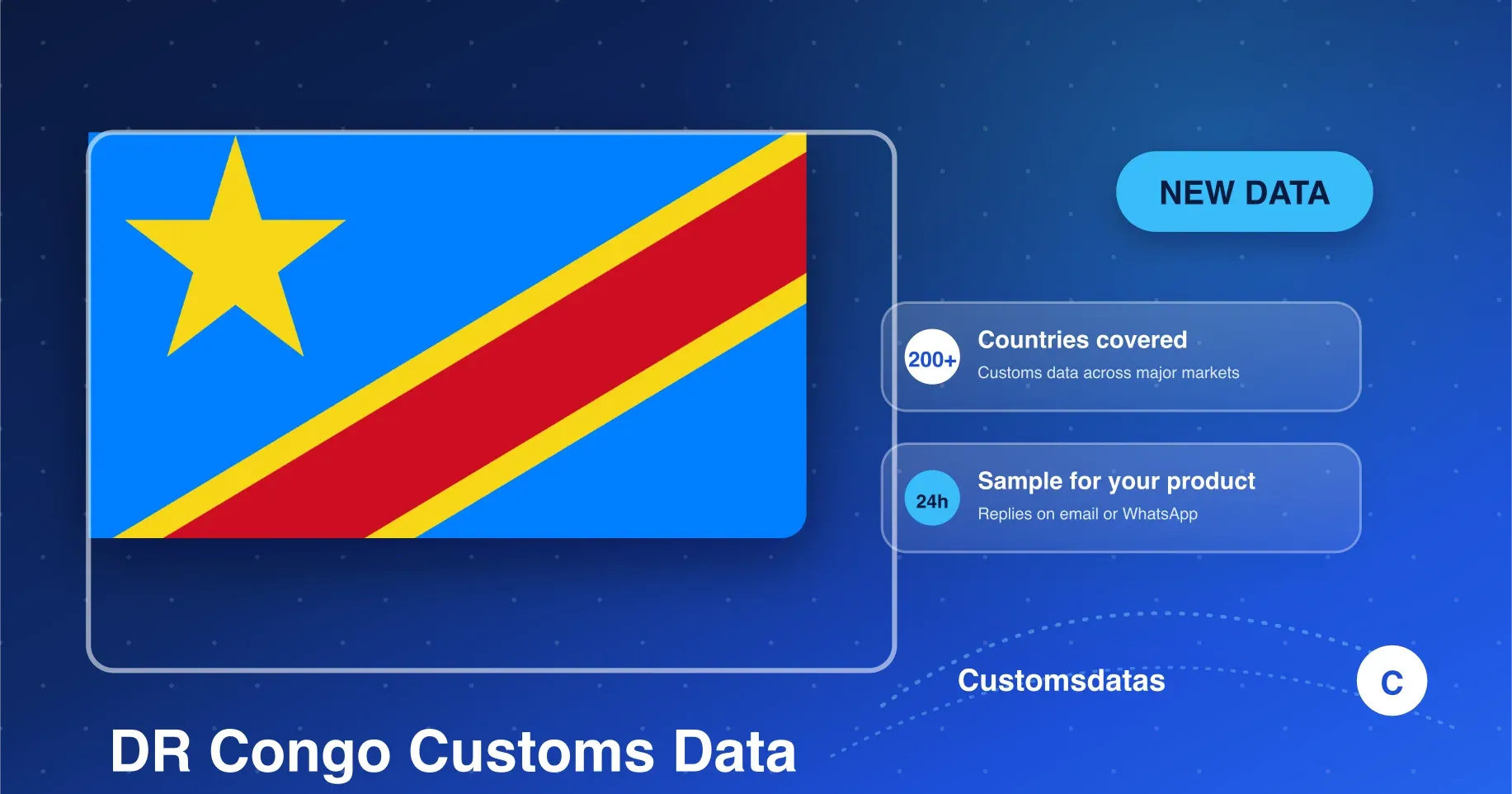
The Democratic Republic of the Congo arrives on Customsdatas under a NEW flag — trade coverage only — and it is one of the largest and most resource-weighted economies in central Africa. That shape changes how a category search should be run from the first query. This guide is about slicing a resource-driven market without drowning in its headline flows.
The two economies in the records
Resource-driven trade tends to show up as two distinct economies sharing one ledger. Expect the extractive core — minerals, metals and their concentrates — to dominate the headline volumes under a narrow set of codes, carried by a small circle of specialized parties. Around it runs everything else: the consumer goods, equipment and materials that a large population and its industries require.
For most sellers, the real opportunity is in the second economy, not the first. The extractive core is relationships business, sold on finance, logistics and compliance few general suppliers can offer. The everything-else economy is where ordinary categories compete — and the fence is what makes its size and shape readable.
Slicing past the headline flows
The practical technique is a hard code fence. Search your code family and exclude the resource headings, rather than reading country-level totals that blend the two economies into one number. How much of the category a search will surface is confirmed on a sample run; with the fence calibrated, every later read stays clean.
Buyer tip: when you first pull DRC totals, expect them to be dominated by a handful of extractive lines. Treat that as orientation, not information — the useful picture starts after the fence is up.
Reading the consumer and equipment side
With the fence in place, the second economy reads like any import market: which categories flow, which parties recur, and how the rhythm runs across periods. What is unusual is the growth texture — demand tied to a large population and to project-driven industry tends to move in steps as projects land, rather than in smooth seasonal curves.
That texture favors suppliers who can respond to step demand: holding stock through quiet stretches and moving quickly when a wave arrives. The records show the steps; the supplier who plans around them wins the orders inside them.
Import channels and their logic
Large resource economies concentrate imports through a limited set of experienced channels — parties that already know the logistics, the documentation and the payment reality of the market. For an outside supplier, those channels are the practical door: they buy across categories, they move real volume, and they reduce a difficult market to a workable relationship.
Expect the channel list to be short enough to read completely. Work each channel's categories rather than pitching a single product — a channel relationship opens several doors at once, which is exactly what a stepped-demand market rewards.
Buyer tip: approach DRC channels with the market's reality in the offer — terms, logistics and after-sales all read as seriously as price in a market where getting goods in is the hard part.
Patience as a parameter
Newly covered, resource-weighted and channel-concentrated: the DRC read rewards suppliers who treat the market as a position to build rather than a quarter to win. The records make the patience concrete — every refresh shows whether your category's import base is widening, and widening demand in a channel economy eventually reaches new suppliers.
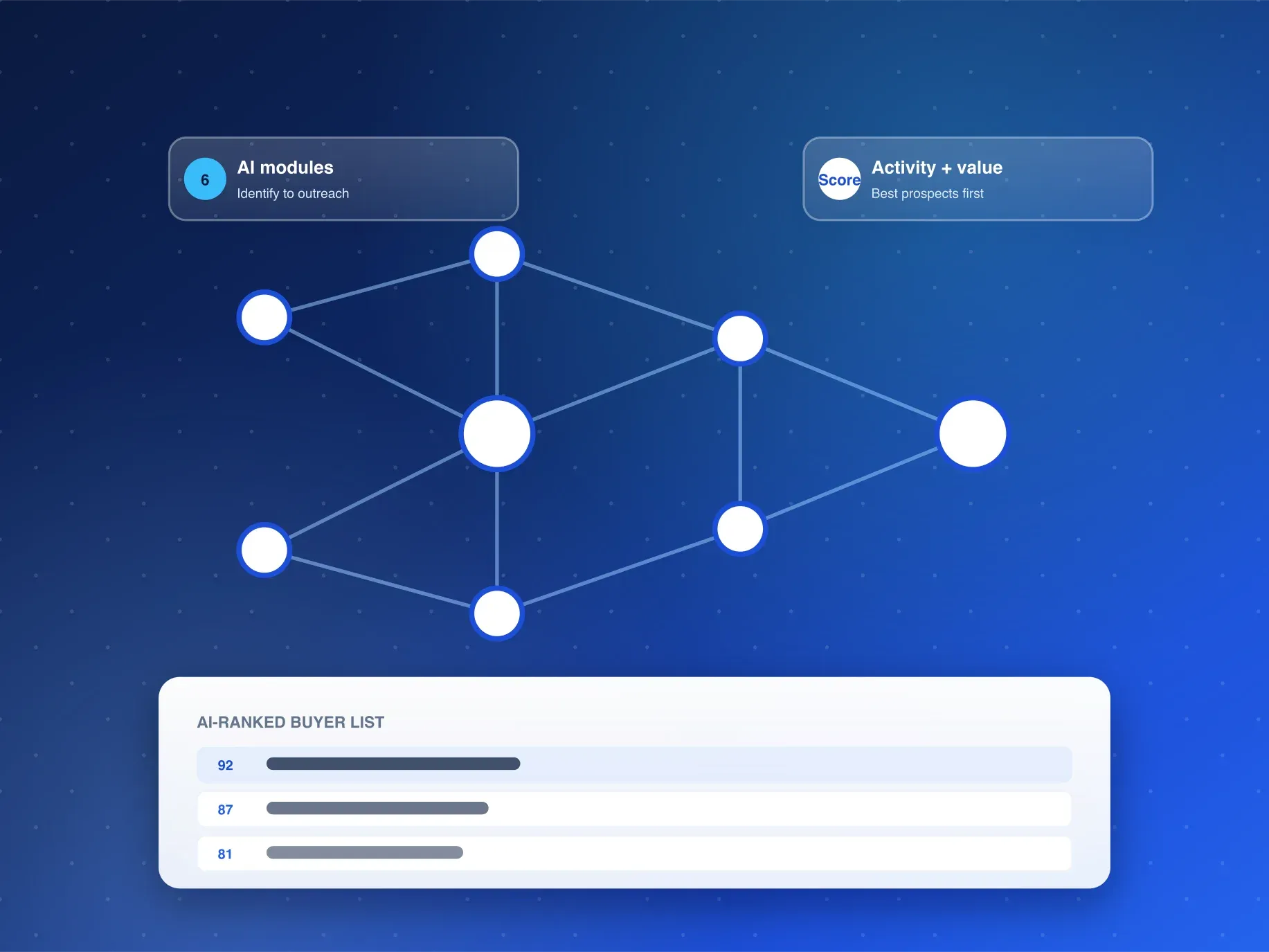
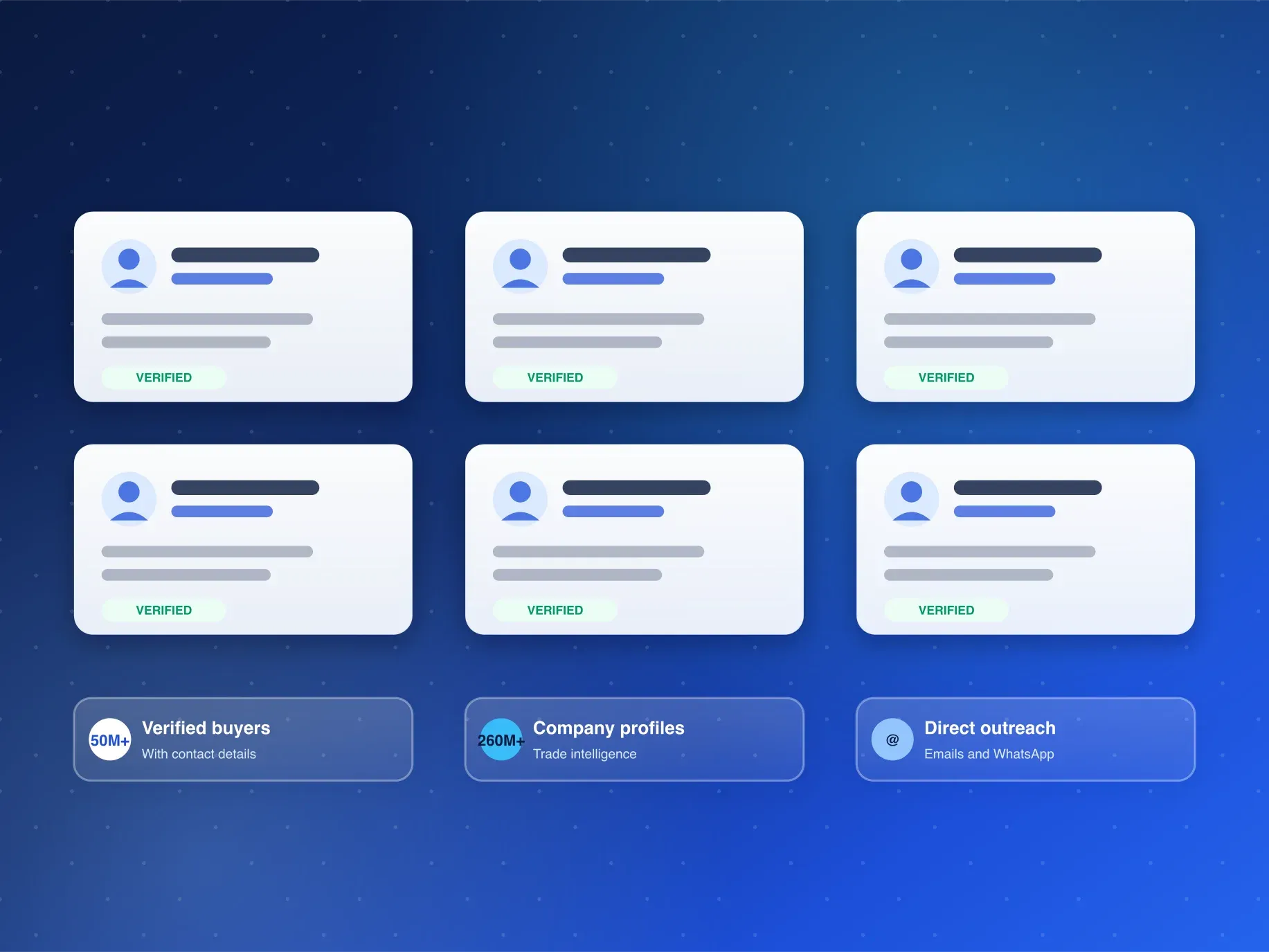
Once the channel shortlist exists, the AI Buyer Discovery Suite takes over the finishing steps — identification, activity and opportunity-value scoring, market recommendation, similar-buyer discovery, outreach lists with emails and WhatsApp contacts, and competitor buyer detection — so the shortlist grows deliberately rather than by luck.
The core economy as context
Fencing the extractive lines does not mean ignoring them. The core economy is the context every other read sits in: it explains the exchange-rate reality behind declared values, the infrastructure pressure behind logistics expectations, and the corporate geography behind which channels exist at all. Read the core once for context, then work the fenced view for the category.
Buyer tip: if your product serves the extractive economy itself — safety equipment, industrial consumables, camp supplies, transport services — the fence flips. Those categories live inside the core economy's procurement, and the specialized parties you excluded from the general read become exactly the target list.
New coverage, long horizons
A final calibration note: the DRC window is newly added, so early reads establish your baseline rather than prove trends. Hold conclusions lightly until a second and third refresh arrive — in a stepped-demand market especially, one window can look like a trend when it is really one project.
Teams that log their first reads and compare across refreshes will get the market's real shape sooner than teams waiting for certainty before engaging. The position costs little to hold and appreciates as the coverage matures.
And one line on the competitor angle, which resource-weighted markets make unusually valuable: because the channel list is short, watching which channels your rivals move through is fast, and the competitor-buyer module does it continuously. In a market where a handful of doors open most categories, knowing which doors are already spoken for is half the entry plan.
Frequently Asked Questions
What coverage does the DRC have on Customsdatas?
Trade declarations, under a NEW flag marking recently added coverage.
Is the DRC market only about mining?
The headline flows are extractive, but the records also carry the broader import economy — consumer goods, equipment and materials. Fence off the resource codes and the ordinary market becomes searchable.
How do I request records for my category?
Send your product name or HS code through the inquiry form or WhatsApp. The team replies within 24 hours (Mon-Sat, GMT+8) with records matched to your product line.
Want to read past the headline flows? Request a free sample from Customsdatas and slice the DRC market on your own code within 24 hours.