Oct 8, 2026Guides
Does Customs Data Actually Work? It Depends on How You Use It
The question comes up in every trade forum, and both extremes are wrong. Customs data works — for three specific jobs — and fails predictably at three others.
Ask in any foreign-trade community whether customs data works, and you will get both answers with equal confidence. One group says it found their best customers with it; the other says they bought a subscription, sent hundreds of emails, and got nothing. Both are telling the truth about their own experience, which is the clue: customs data is not a yes-or-no tool. It works for specific jobs, done in a specific way, and fails in predictable ways when used for jobs it was never meant to do.
This guide names the three most common failures first — because recognizing your own workflow in them is the fastest diagnosis — and then the three uses where the records consistently earn their keep.
Failure one: treating rows as ready leads
The most expensive mistake is reading a record as if it were a lead. A row names a company that once moved goods; it does not say the company is buying now, in your price band, or through your channel. Teams that export the rows straight into a mailbox and start sending are skipping the qualification step that makes the record valuable in the first place — the proof of past movement is the asset, and it needs reading before it earns a message.
Failure two: volume outreach to a qualified list
The second failure does everything right until the last step. The category is right, the buyers are real, and then the same generic letter goes to all of them at once. The records contain exactly what would make each message specific — what the account buys, how often, how recently — and leaving that on the table converts a warm list into spam. Informed volume works; uniform volume trains buyers to ignore you.
Failure three: judging by one search
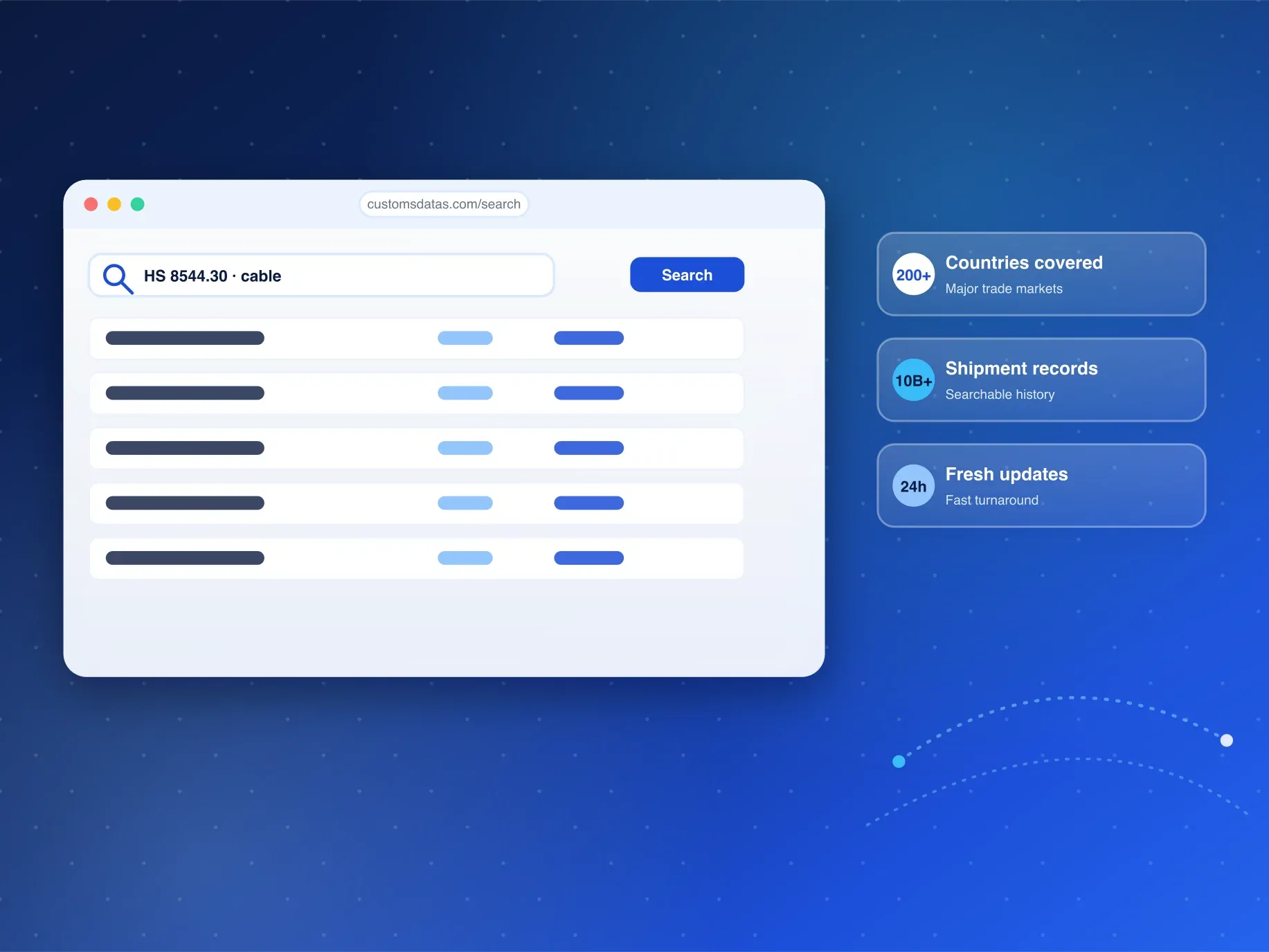
The quietest failure is giving up early. A single search, in one phrasing, over one window, returns what it returns — and thin results get read as a thin market. Records reward iteration: a synonym, a broader code, a longer window. A market declared dead after one query was usually never actually tested.
Buyer tip: before deciding the data does not work for your category, log every search you ran — terms, codes, windows. The log usually shows one attempt, not a fair trial.
Where it works: reading demand as evidence
The first reliable use is qualification. Records show which companies repeatedly import a category, at what scale, how recently — the three signals that separate a standing buyer from a one-time project. No directory or ad platform offers that kind of evidence, because it comes from what actually crossed a border rather than from what someone claimed on a form.
Where it works: watching a market move
The second is market reading. Entry of new names into a category, the taper of an old one, a shift in the mix of origins — these are visible in the records before they reach any news source, and they decide which accounts to approach first and which conversations to prepare. Used this way, the file is less a mailing list than a monitoring instrument.
Buyer tip: rerun your best three searches on a fixed monthly cadence — same terms, same codes, same window — so month-over-month differences reflect the market and not your query.
Where it works: making first contact informed
The third is the one that ties the other two together: outreach that references observed fact. A letter that names the category, the window and the scale the record showed lands differently from any template, because it demonstrates the sender did homework that competitors did not. The records do not send the message; they give the message something true to say.
Buyer tip: run the loop in that order — qualify with evidence, watch for movement, write from the record. Teams that reorder it wonder why the data does not work; teams that keep the order rarely ask.
A short diagnosis helps place your own experience. If the data seemed useless, check which failure came first: a list mailed without qualification points to failure one, replies that never came despite good qualification points to failure two, and a category abandoned after one search points to failure three. Most disappointments are one of the three, and each has a different fix.
It is also worth saying what success looks like early, because the loop produces signals before it produces deals: a shorter, better-qualified list than the one you started with; a market read that survives a colleague's questions; and first replies that reference the facts you cited. Those arrive within weeks; the orders follow them, on the buyer's calendar rather than yours.
The gap everyone hits, and the fix
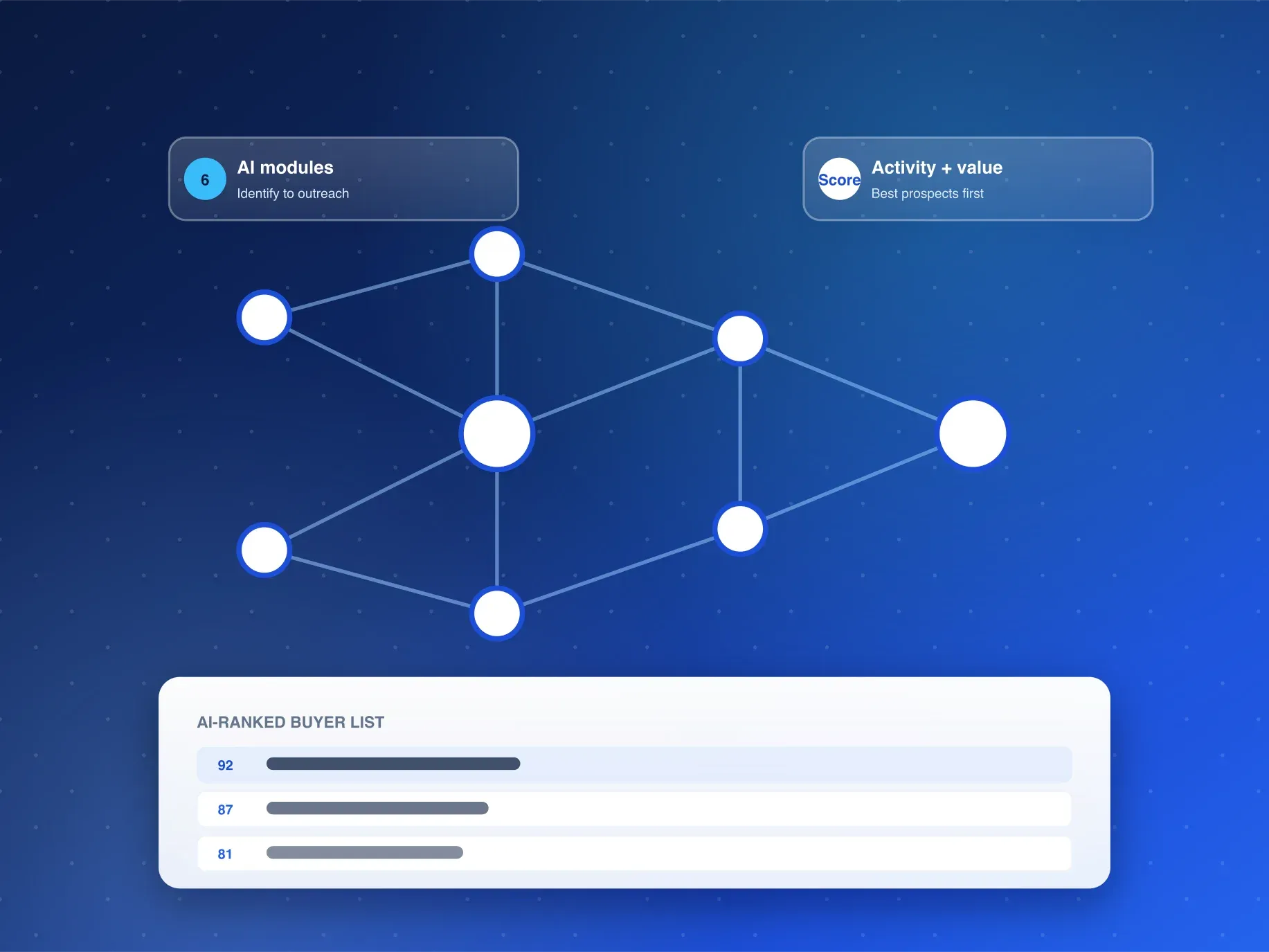
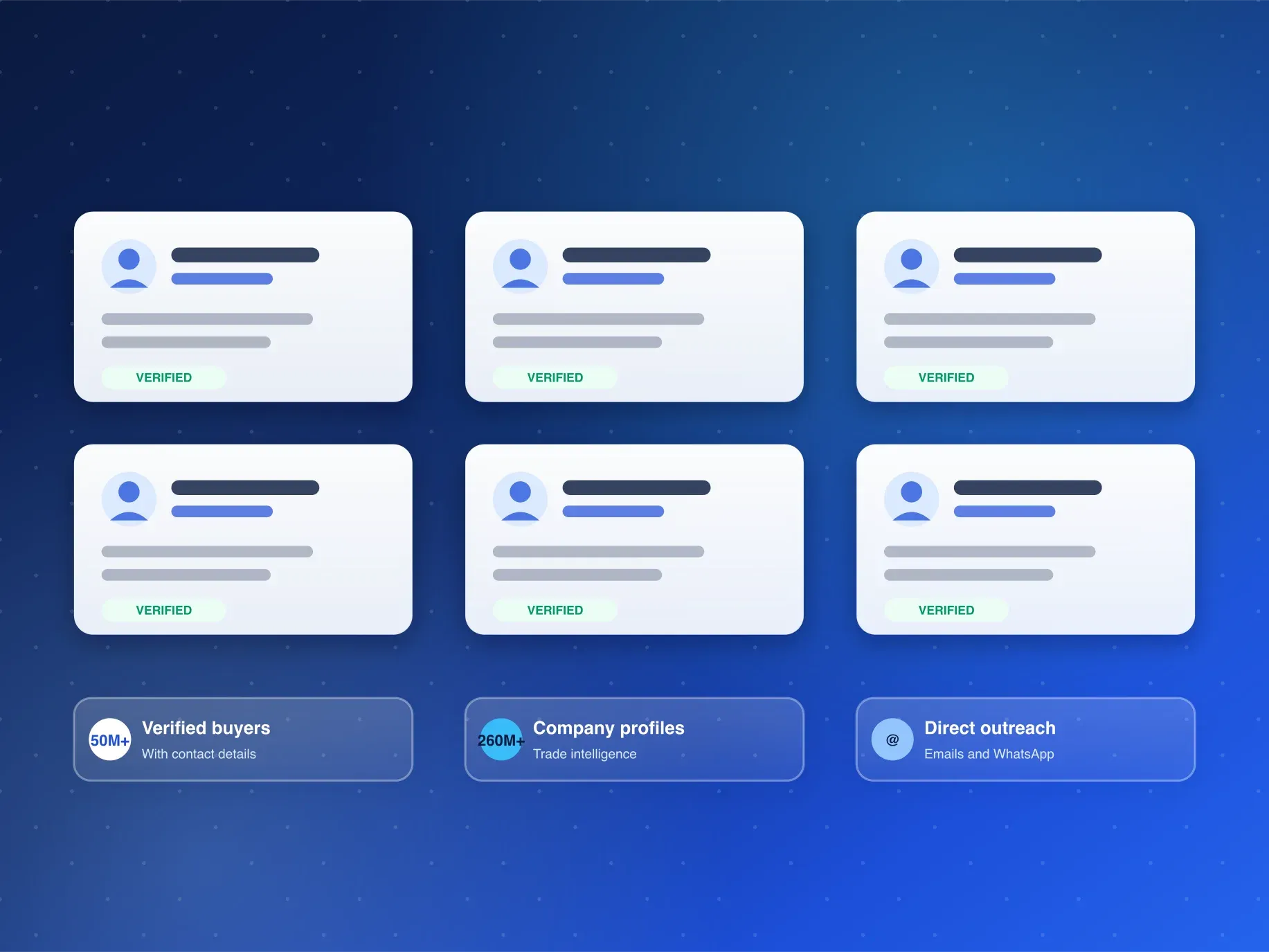
One honest caveat belongs here: records name companies, not people, and bridging from company to decision-maker is its own workflow — manual or automated. That gap is structural to the data, not a flaw in your usage, and it has known solutions; the automated path on Customsdatas runs the bridge end to end through the AI Buyer Discovery Suite — identification, activity and opportunity value, market recommendation, similar-buyer discovery, outreach lists with emails and WhatsApp contacts, and competitor buyer detection.
A verdict that holds for both camps
So: does customs data work? As a lead vending machine, no — and the disappointment of every failed subscription says so. As evidence for qualification, as a market monitor, and as raw material for informed first contact, it works reliably, provided the workflow runs in that order. The tool was never the problem; the job description was.
Frequently Asked Questions
How long before the data shows results?
Long enough to run the loop properly: qualification, monitoring, informed outreach, then replies. Teams that skip to the outreach step usually judge the tool on its weakest use.
Is the data useful for small categories?
Often more useful than in big ones — fewer parties mean each record carries more weight. The failure mode in small categories is usually a search that was too narrow, not an empty market.
How do I test the workflow on my own product?
Request a free sample through the inquiry form or WhatsApp; the reply — records matched to your product line — arrives within 24 hours (Mon-Sat, GMT+8).
Still wondering whether it works for your category? Request a free sample from Customsdatas and run the loop on real records within 24 hours.