Sep 22, 2026Country Guides
Brazil Customs Data (2026): Working the Four-Layer Stack
Brazil is the one HOT market stacking trade, statistics, directory and opportunity layers. How to work the stack from flows to openings.
Brazil is flagged HOT on Customsdatas, and it is the one market in the current coverage where four data layers stack together: trade declarations, statistics, a company directory, and an opportunity layer. Most markets offer two or three of those. The fourth changes what you can do with the other three.
Here is the practical difference. A typical country page answers "what is trading and who is behind it." Brazil's fourth layer answers a question closer to the deal: where the near-term openings are, read straight off the record stack. This guide walks the stack from bottom to top.
Layer one and two: the flows and the declared parties
The base of the stack is familiar: Brazilian trade declarations on the import and export sides, searchable by the exporting party, the product description, the HS code, the quantity and the value. Five fields, both directions — enough to find the counterparties in any category and read their scale.
Statistics sit beside them, giving the market view: import and export trend lines for your category, and the movement of trade between Brazil and its partners. Read the trend first and the parties second, and your search list inherits the context it needs.
Buyer tip: keep a currency-neutral frame when you read Brazilian value figures. Ranking accounts by relative share inside their own category beats ranking by raw value across categories.
Layer three: the company directory
The directory layer turns party names into companies. Where the trade records identify who declared a shipment, the directory gives you the firms behind those names: what they are, where they sit in the supply chain, and what kind of business they run. It is the difference between a counterparty string on a form and a target with an address.
For qualification, the directory is where first-pass screening happens efficiently. You can locate Brazilian importers and exporters by profile before spending outreach effort, and cross-check that a recurring name in the records is a substantive company rather than a transient entity.
Layer four: the opportunity layer
The opportunity layer is Brazil's distinguishing feature, and it is forward-looking: instead of showing only what already moved, it surfaces commercial opportunities — demand signals and business openings that the record stack supports.
Treat it as a prioritization instrument rather than a shortcut. Run your category searches on the lower layers first, build the candidate list, and then use the opportunity layer to sort that list by where the near-term openings appear. The stack works in that order — context, names, firms, openings — and reversing it produces impressive-looking lists with nothing behind them.
Portuguese wording and a refreshed air cargo file
Brazilian records are in Portuguese. HS code searches cross languages without friction, and for description-level searches, prepare Portuguese terms or let the first code-level results show you the wording the declarations actually use.
Air freight coverage is included, which matters for higher-value and lighter goods, and the data is refreshed regularly. A Portuguese-language search habit plus the four-layer read is the difference between a Brazilian list that impresses and one that converts.
Buyer tip: for Brazil specifically, log which layers each qualified account appeared in. Accounts that surface across trade, directory and opportunity layers are the most thoroughly evidenced prospects in the stack.
Who you find in Brazilian records
Three counterparty profiles recur in Brazilian trade data, and each asks for a different opening. Importers and distributors appear on the inbound side, carrying categories they resell domestically — the volume patterns show which lines they live on. Trading companies appear across multiple codes with wide but thinner flows, useful as market connectors. Industrial buyers show narrow but deep codes, and their declaration rhythm tracks production cycles rather than retail seasons.
Reading which profile you are looking at changes the opening offer: distributors want margin and exclusivity conversations, traders want availability and terms, and industrial buyers want specification and delivery reliability. The four-layer stack supplies the profile signals; the pitch follows.
A first week across the four layers
Start at the base: run your product line and rank the declared parties by recurrence. Read the statistics beside them to see which category is carrying momentum. Cross the top names through the directory to confirm the firms behind them are substantive. Finish with the opportunity layer, sorting the confirmed list by where near-term openings appear.
Four days, four layers, one ranked list — and every account on it rests on evidence from a different level of the stack. That is the structural advantage Brazil offers, and it rewards teams who do not skip to the last step.
Closing the loop with scored outreach
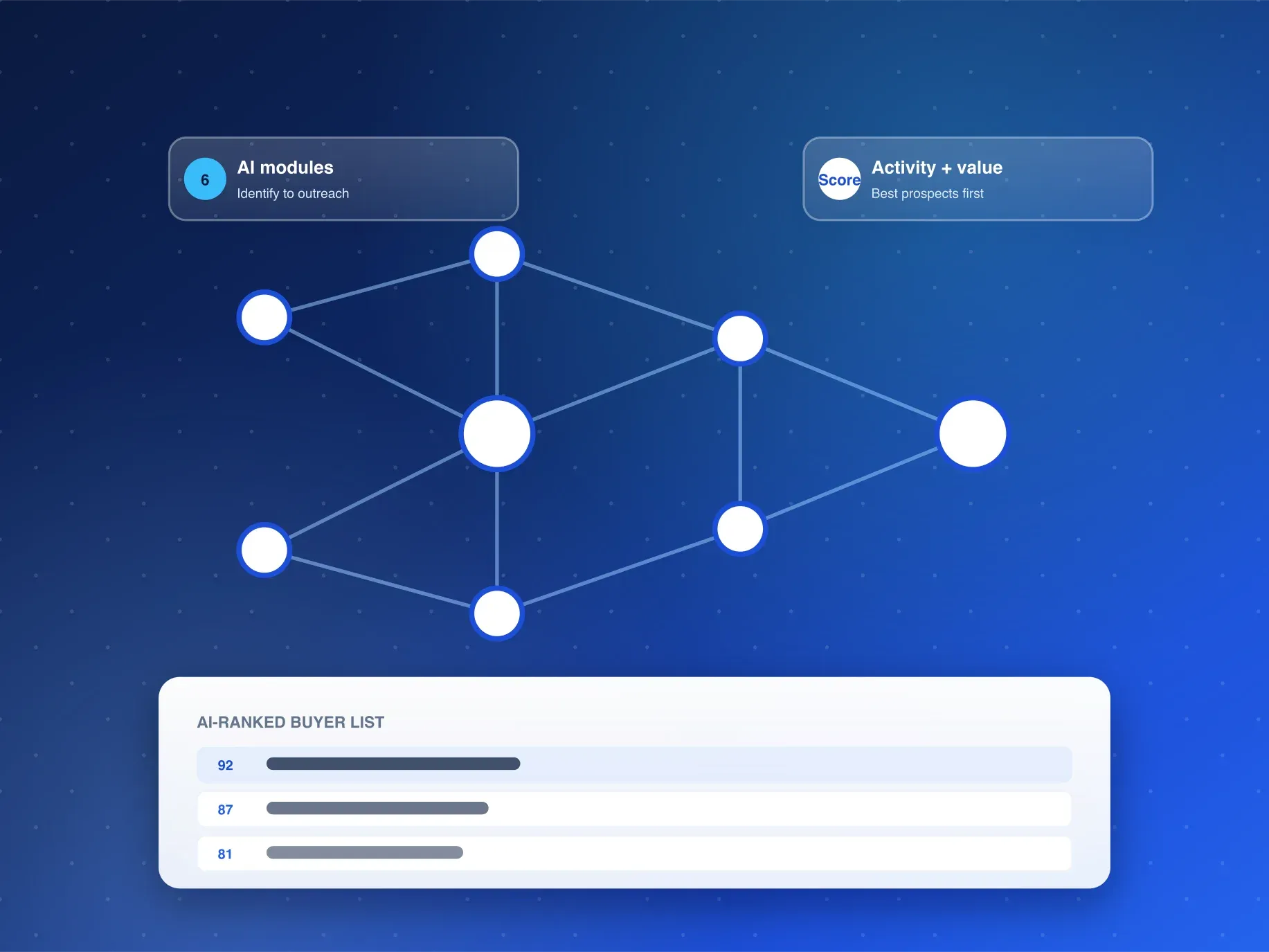
Once the layered list is built, the AI Buyer Discovery Suite takes it through six modules: identification, activity and opportunity-value scoring, market recommendation, similar-buyer discovery, outreach lists with emails and WhatsApp contacts, and competitor buyer detection. On a file this size, the score decides which accounts earn the first call.
One more note on working the stack over time: refresh the statistics read each quarter before you rebuild the list. Brazilian flows shift with commodity cycles and exchange rates, and a category that led last quarter can lag this one — the layered method only compounds if the bottom layer gets a fresh reading.
Frequently Asked Questions
What makes Brazil's data different from other markets?
Four layers where most markets carry two or three. The company directory is what upgrades a declared party into a firm with a profile, and the opportunity layer adds forward-looking signals on top of the trade and statistics base.
Which fields can I search in Brazilian records?
Import and export declarations are searchable by exporting party, product description, HS code, quantity and value — five fields in both directions.
Do I need Portuguese to work with Brazilian data?
Code-level lookups ignore language entirely; for description-level searching, Portuguese terms help — prepare a short list, or read the wording off a first sample.
Ready to work Brazil's full stack — flows, firms and openings — on your own product line? Request a free sample from Customsdatas and see the layers within 24 hours.