Oct 7, 2026Country Guides
Bahrain Customs Data (2026): One Category, Read All the Way Down
Broad scans produce wide lists and shallow answers. Taking a single category through both documented layers — completely — is a different and often better use of a session.
Bahrain comes onto Customsdatas with shipping and statistics documented and the coverage table silent below those two names — the record specifics wait for a sample run against current data. The bet this guide makes is on depth: instead of scanning many categories for breadth, take one category and read it all the way down through both layers until nothing in it is unexamined.
Breadth has its place — market selection needs comparisons. But breadth stops at the first useful answer per category, and the first useful answer is rarely the full story. A category read to exhaustion produces something a scan cannot: a complete account of who is in it, how it is structured, and where its openings are, with no unread rows left to contradict the conclusion later.
Why one category deserves the whole session
A wide scan treats every category as a question of whether to proceed. The deep read treats one category as a question of how to proceed — which is the question that actually costs money. Everything a campaign needs downstream (the honest competitive picture, the realistic entry points, the parties worth a first letter) lives below the scan line.
Buyer tip: choose the category the way you would choose a well to drill — on evidence from the scan, committed once. Re-opening the choice mid-read is how deep reads die.
A fixed order, nothing skipped
The read runs in a fixed order so nothing is skipped. First the statistics layer: the category's aggregate weight and shape, read as the container. Then the movement layer, completely: once the sample run has shown what the entries carry, every entry in the window is worked party by party — how often, at what regularity — until the roster is complete and each name carries a note. No sampling: sampling is breadth's habit, and this is not a breadth exercise.
The discipline that makes it work is writing as you go. A party worked but not noted is a party that must be re-worked; the note is the read.
The details a scan averages away
Complete reads surface the things sampling is built to skip. The second-tier parties behind a headline name. The account that appears at perfectly regular intervals — a rhythm worth respecting in outreach timing. The stretch of the window where the category went quiet, and whether anyone kept moving through it. None of these is exotic; all of them are exactly what a first glance averages away.
Buyer tip: give every party in the completed roster one of three marks — regular, occasional, once. The three-mark roster is the read's summary, and it takes one glance to use.
The silo and what is inside it
Working both layers on one category keeps their roles crisp: the statistics layer is the container — how big the category is, how it moves across periods — and the movement layer is the contents — who is actually inside, doing what. Read container first, contents second, and compare: a large container with thin contents and a thin container with busy contents are different situations that a single-layer read would merge.
When the full read changes the plan
An exhaustive read sometimes concludes against the category — the roster is dominated by arrangements a new supplier cannot serve, or the movement is thinner than the aggregate promised. That conclusion is a success, not a failure: it cost one session and prevented a quarter of misdirected effort. The deep read's value includes the exits it certifies.
Handing over the dossier
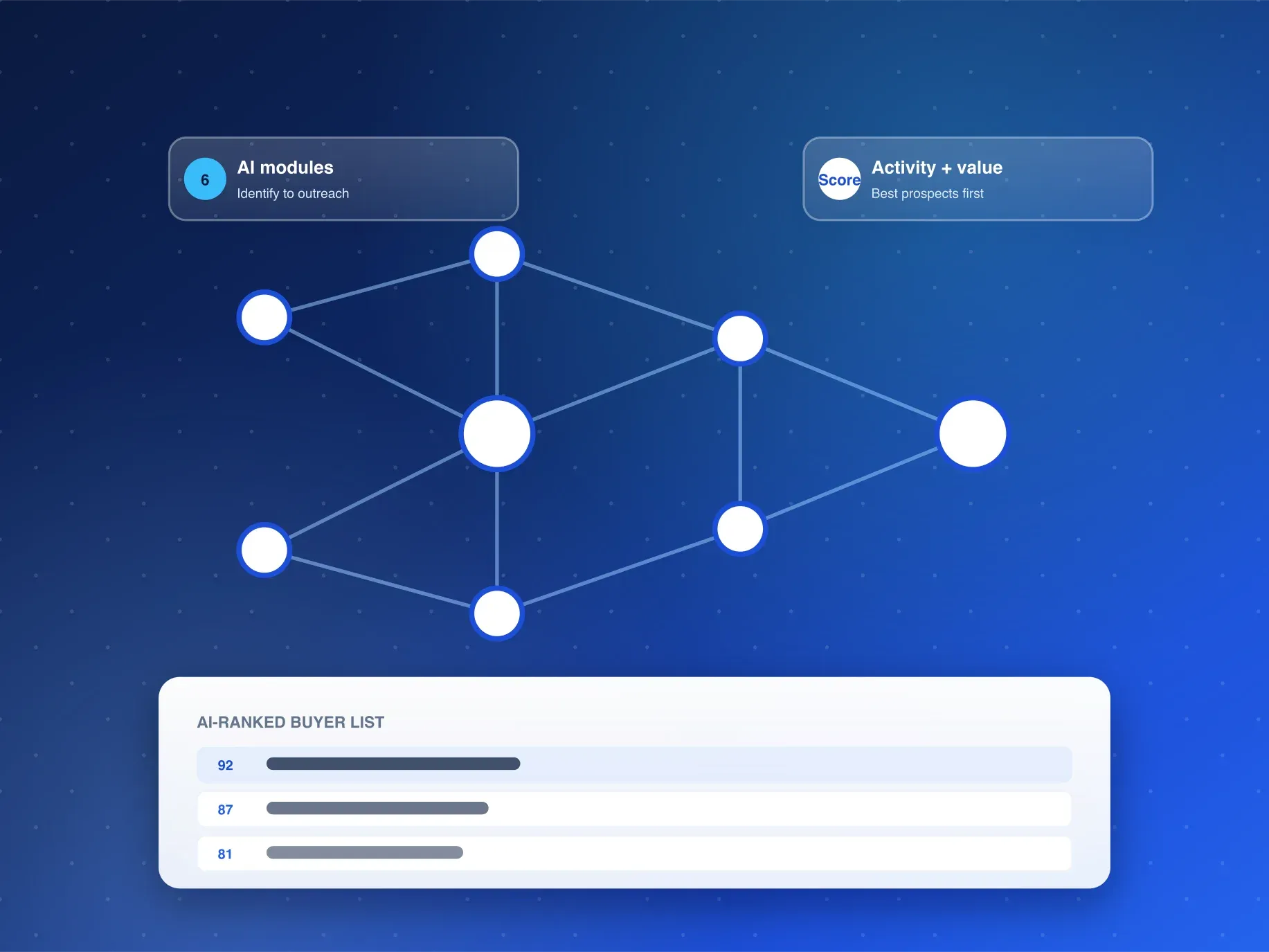
The work product is the three-mark roster plus the container notes — a complete, self-contained dossier on one category. The AI Buyer Discovery Suite takes the dossier's parties from there — scoring first, then the contact pass: identification, activity and opportunity value, market recommendation, similar-buyer discovery, outreach lists with emails and WhatsApp contacts, and competitor buyer detection — and since every row was read, the resulting list has no unread rows waiting to surprise it.
Limits of the session, stated up front
The sample run against current data settles the practical limits: what the two documented layers carry, how the window is dated, and how the movement entries are shaped — the facts that decide how far down a full read can actually go. Run it on your chosen category, not on a generic one; the calibration and the first working pass can be the same sitting.
Depth also compounds in a way breadth cannot. A second full read of the same category, on a later pull, compares against the completed roster rather than starting fresh — every change is a finding: names added, rhythms shifted, the quiet stretch moved. Over a few passes the dossier becomes the category's biography, and the campaign inherits an argument no fresh scan could produce.
The limit of the method is honest about itself: one category read completely tells you nothing directly about the category next door. That is the price of the depth, and the usual cure is simply a second dossier — the method repeats cleanly, one session per category, each as complete as the first.
Frequently Asked Questions
What layers does Bahrain's coverage include?
Shipping and statistics, as documented. Neither layer's record detail is itemized in the coverage table; what fills it in is the sample run against current data.
Why depth instead of a broad scan?
Because scans answer whether to proceed while depth answers how — and the second question is the expensive one. A completed deep read also certifies its own exits: rejecting a category after a full read costs one session, not a quarter.
How do I start a deep read on Bahrain?
Send your request through the inquiry form or WhatsApp — inside 24 hours (Mon-Sat, GMT+8), the answer carries Bahrain records matched to your product line.
Want one category read all the way down? Request a free sample from Customsdatas and complete the first full pass within 24 hours.