Sep 23, 2026Country Guides
Armenia Customs Data (2026): Reading a Compact Market by Value Density
Armenia pairs trade declarations with statistics under a NEW flag. A depth-first workflow for compact markets where density beats volume.
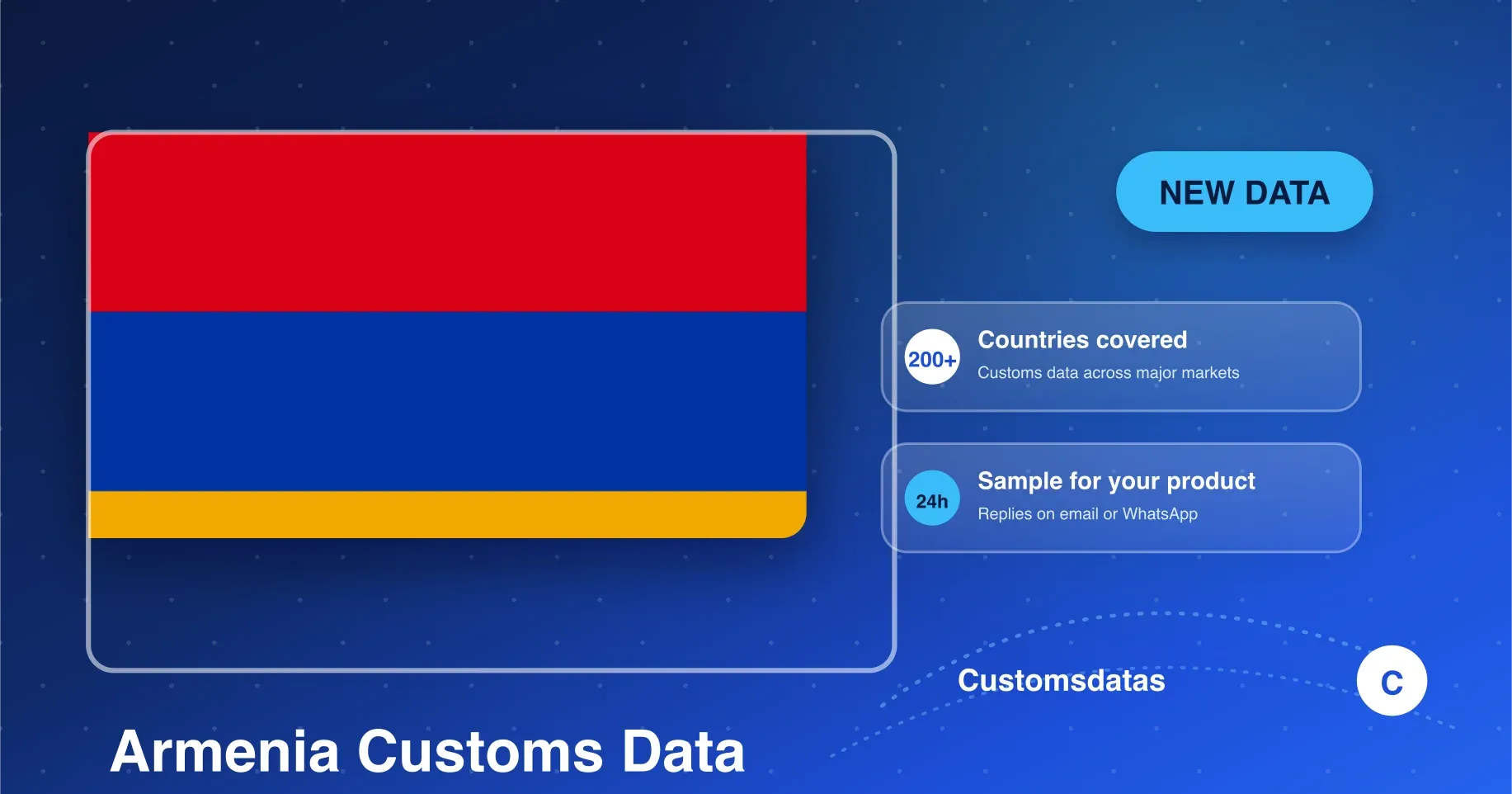
Armenia carries a NEW flag on Customsdatas with trade declarations and statistics coverage. It is a compact market — and in data work, compact markets are not small stories; they are deep-read stories. Fewer accounts, read properly, tell you more than long lists ever will.
This guide is about the discipline compact markets demand: filtering with statistics, reading declaration records account by account, and treating value density as the primary signal instead of raw volume.
Value density beats volume in compact markets
In large markets, volume answers most screening questions — enough parties, enough flow, you work the top layer and move on. Compact markets invert the logic: total volume looks modest, and the useful signal is density — how much value moves through how few channels.
A market where significant value concentrates in a narrow set of recurring import relationships is a workable market for a focused seller. The statistics layer shows you that concentration before you spend any outreach effort on the declaration side.
Buyer tip: rank Armenian categories by value per transaction, not by total flow. The dense end of that ranking is where single relationships can carry meaningful revenue for a supplier your size.
Statistics first, declarations second
Run the two layers in sequence. First the statistics: which categories import with stable value, and whether the trend is flat, growing or fading. Then the declarations: the parties behind those flows, read individually rather than in bulk.
For the declaration side, what your product line can be searched by is confirmed on a sample run — that is where you learn both the searchable columns and how local records describe goods. In a compact market, this step is also your vocabulary lesson: a small pool of entries teaches the local phrasing quickly.
The sequencing matters. Statistics keep you from over-investing in categories that cannot carry a relationship; declarations keep you from under-investing in the few accounts that can.
A Eurasian crossroads in the record stack
Armenia sits at a geographic and commercial crossroads between Europe and Asia, and a market in that position tends to carry a more international mix of counterparties than its size suggests. Expect records spanning several regions, with counterparties dealing in categories that serve both local demand and cross-border flows.
For sellers, the practical implication is that Armenian buyer lists reward category focus. A compact crossroads market can absorb a specialist supplier in a specific category far more readily than a generalist, because the specialist plugs into flows that already exist on both sides.
Buyer tip: when you build the Armenian shortlist, look for counterparties that recur under several related codes. In a compact market, multi-category parties are the ones with real trade depth behind them.
Two layers, two questions, one afternoon
The two Armenian layers are cheap to run and hard to overwork, so run them as a single afternoon exercise. Statistics answer whether the category is worth a shortlist at all; declarations answer who belongs on it. An afternoon is enough because compact markets do not need volume sweeps — they need the questions asked in order.
Buyer tip: write the afternoon's conclusion as one sentence — a category, a concentration reading, and a named list of channels. If the sentence cannot be written, the market is telling you it is not ready; if it can, you have everything needed to open conversations.
One more note on scale expectations: a compact market will rarely justify a dedicated campaign. Its value is precision — one or two durable relationships in the right category, carried for years. Teams that accept that arithmetic find Armenia productive; teams hunting volume find it thin and move on.
Depth over breadth with few accounts
Compact markets fail when teams apply big-market habits: long keyword sweeps, volume-sorted lists, broad first-touch campaigns. They succeed when every qualified account gets a real read — buying cadence, category consistency and the shape of its orders — before outreach.
That depth is affordable here. A tightly read list of a handful of accounts, each opened with a specific observation from the records, positions you as informed rather than mass-market — which is exactly the impression that converts in markets where everyone knows everyone.
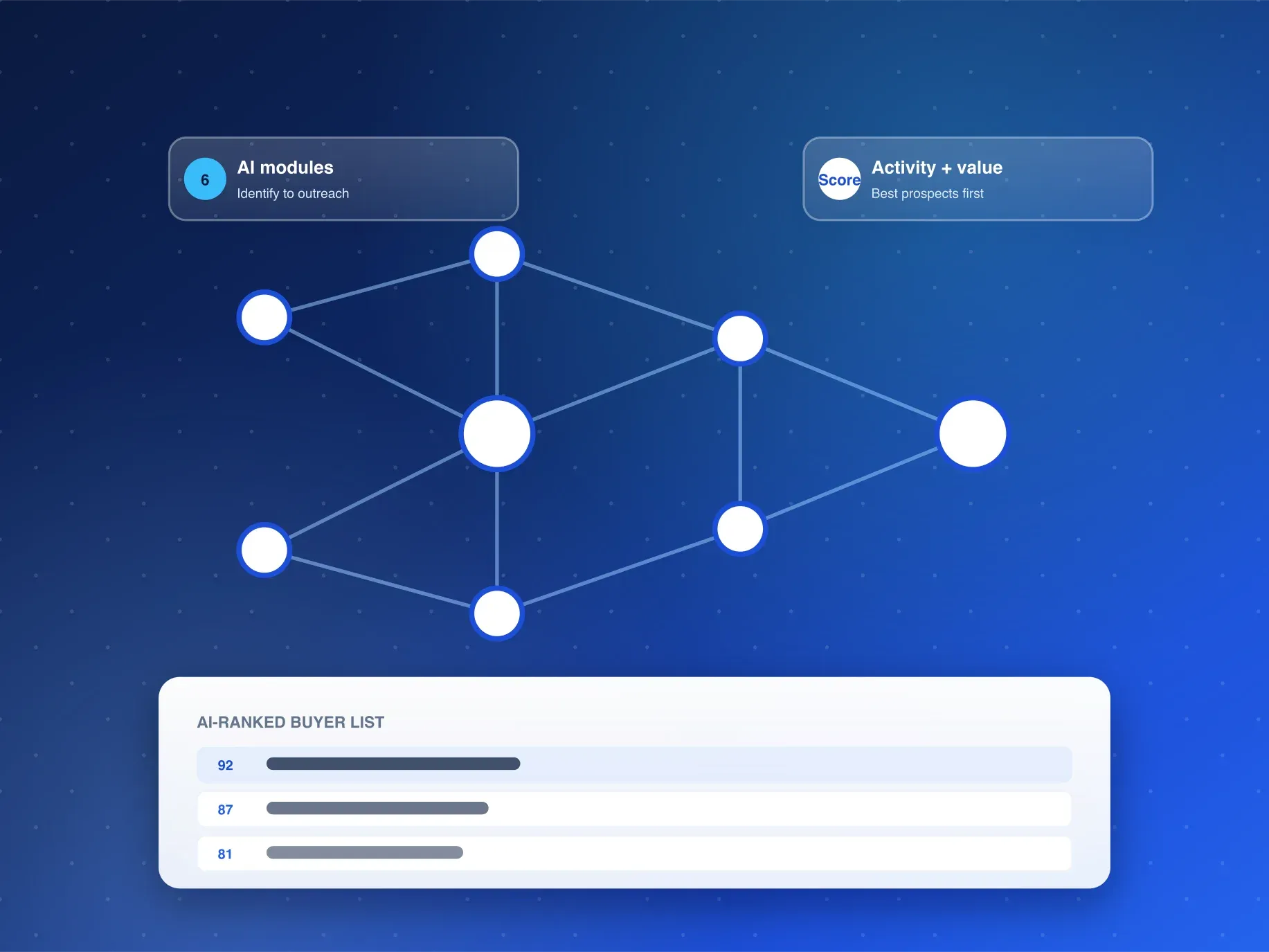
When the shortlist is ready, the AI Buyer Discovery Suite supports the finishing steps: scoring by activity and opportunity value, and contact lists with emails and WhatsApp details, with the similar-buyer module available to extend the pool if the first read suggests more depth.
Finally, keep a one-page market note for Armenia once the first read is done: the category you chose, the concentration figure that justified it, and the channels you opened. Compact markets stay productive for the teams that keep their conclusions — and get re-litigated by the teams that do not.
With trade declarations and statistics both open, the Armenian read is a repeatable exercise rather than a one-time study: refresh the note each cycle, and the record of your own reads becomes the trend line the market's size never provides.
Frequently Asked Questions
What coverage does Armenia have on Customsdatas?
Trade declarations plus a statistics layer, under a NEW flag marking recently added coverage. The statistics layer screens categories; the declarations identify the parties.
Is a compact market worth working with trade data?
Yes — with the right discipline. Read on value density rather than total volume, work each qualified account deeply, and a compact market can support focused, durable relationships.
Can I preview Armenian records first?
Request a free sample through the inquiry form or WhatsApp. The team replies within 24 hours (Mon-Sat, GMT+8) with Armenian records matched to your product line.
Want to depth-read a compact market on your own category? Request a free sample from Customsdatas and see the Armenian records within 24 hours.